AI Models Agencies and How They Make Money
$17M on Virtual Influencers with AI
👋 Hey, I’m Stepan and welcome to a ✨ subscriber-only edition ✨ of Creators’ AI. By subscribing, you directly support Creators' AI's mission to deliver top AI insights & practical knowledge without ads or clutter. Your subscription allows us to grow our dedicated team and curate the most important AI Tools, Stories, and Tutorials in one place. - Stepan
Intro
Virtual Influencers are gaining popularity on social media. With the rise of AI tools, just about anyone can generate their own blogger. You've probably heard of v-tubers and the sensational Miquella story we wrote about in one of our previous newsletters.
But how are AI Influencers doing in terms of business? Spoiler: pretty good. For example, Aitana, which we will cover in the first case study, brings in over €10,000 a month for its creators by telling about her fictional life and sharing racy photos.
Today, I offer you a go from less to more. We will explore virtual influencers from the perspective of agency creators: start with the most basic AI influencers and then move on to ambitious projects. And at the end, I'll try to give a prospect on the future of virtual creators.
We'll discuss content monetization options, why they are superior to their "live" counterparts in many things, and check out predictions from reputable analysts.
With this newsletter, you will learn:
- Three ways to build a business around AI Influencers;
- Ways to monetize virtual bloggers;
- How Virtual Model agency works;
- What the future holds for the Virtual Influencers Market.
And now we're getting started.
Racy & Lifestyle content from the Spanish AI Model
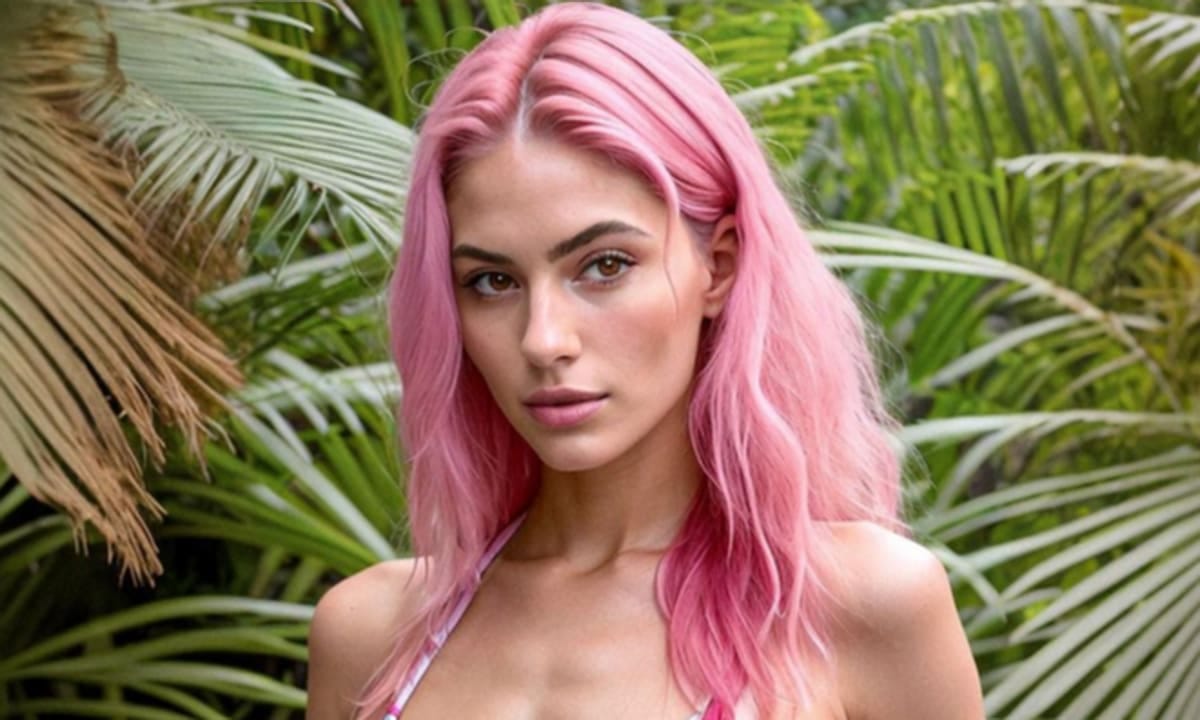
The first type of AI influencers is the most basic path for creators. I'd even say it's a case study series. But that doesn't mean it's bad. On the contrary, if you plan to create your own virtual blogger, this can be the most profitable and fastest way.
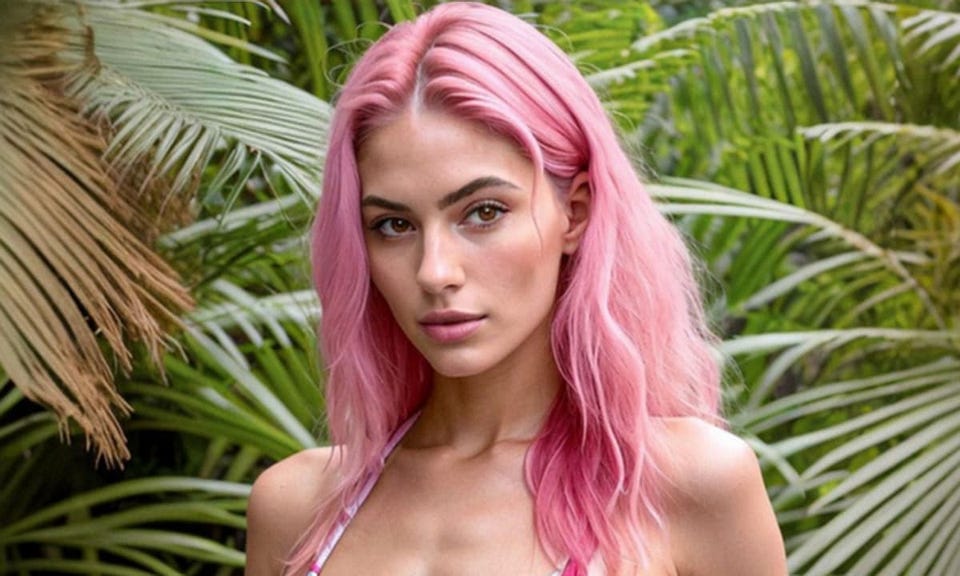
We will use The Clueless Agency and Aitana Lopez as examples for this case study. You may have heard of her when she made some noise in the news a few months ago when her creators shared information about their earnings. Aitana is a 25-year-old vivacious girl from Barcelona whose looks are close to perfection.
She shares her achievements in life and sports on social media, supporting third-party brands' marketing campaigns and posting racy photos in lingerie. She now has over 290,000 followers on Instagram. As Aitana's creators admit, although it is stated in the profile description, not everyone realizes she is a virtual person. She often receives date invitations and offers to talk.
How The Clueless makes money

The Clueless relies on several avenues to monetize its content. First, like a regular blogger, Aitana offers native integrations on customized terms. A company can approach Clueless and agree to publish a photo of Aitana with a relevant product and a short review. According to the creators, this type of content brings it up to €10000 per month.
Another monetization option is "sensitive content". Since last year, Onlyfans has tightened the rules regarding virtual personas, so the creators found a way out in the Fanvue platform. It was created specifically for those who work with artificial intelligence-based solutions. Here, an Aitana subscription costs $15 per month.
If you want to create your own AI Influencer for content creation, check out this newsletter. There are step-by-step instructions here:
And here it is worth adding that Clueless doesn’t use one popular, among racy content creators, type of interaction with followers. For example, virtual model creators Aika Kattie and Kimochi AI have developed telegram chats to communicate with their fans. By talking to them, users can tell how he or she is doing, speak to an AI influencer, or purchase racy photos.

Yes, that's the power of modern neural networks.
Glimpse Into the Future with Virtual Girl from Tokyo
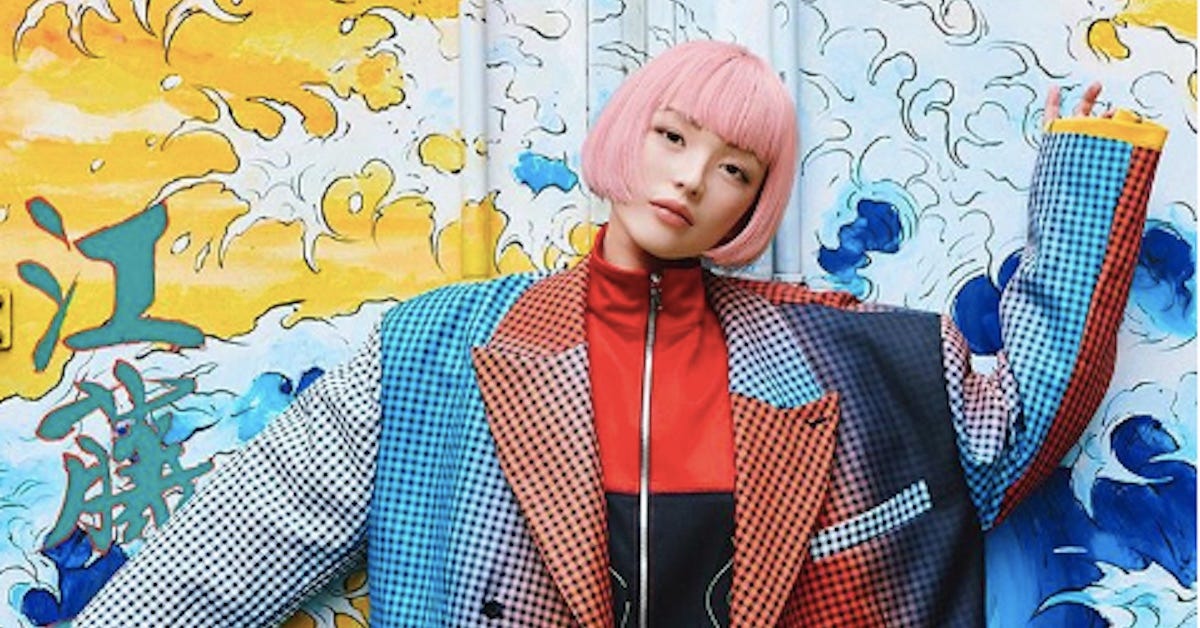
Our second case is a Japan-based company, ModelingCafe, and it's Imma.gram. Imma is a virtual girl from Tokyo. She is a model and producer who collaborates with top brands worldwide and discusses her daily life on social media. Let's review Imma's story in more detail.
ModelingCafe specializes in audio and video content production (including AR/VR). Developing Imma, the company wanted to show what modern AI technologies can do for image generation and animation. As a persona, they chose a virtual model whose life is connected with fashion, beauty, and an active lifestyle. But the experiment got out of hand (in a good way).
Sharing is caring! Refer someone who started a learning Journey in AI!
Imma's social networks quickly went viral, causing the virtual girl to outgrow the recognition of her creators. As befits a budding blogger, Imma began looking for ways to monetize her content as her audience grew.
But like the creation story, this character's path to professional life differs from our previous guest. She became a cultural trendsetter. Imma builds her following by engaging with Japanese pop culture and fashion trends. This makes her attractive for brand collaborations with companies looking to tap into those markets.
Imma has over 390,000 followers on Instagram and has become the face of major brands. Including Amazon, Valentino, Dior, Puma, Nike and IKEA.
A couple of years ago, Japan Economics Entertainment also listed her as one of the "100 New Talents to Watch", and Magnum China partnered with Imma to launch a new ice cream flavor, Magnum Matcha.
Not to improve the old but to go to the new
Imma believes web3 is the best way to strengthen the connection with fans. She produces NFT collections in which she experiments with digital art and creative concepts and sells a piece of her personality to others.
Imma also created her Clone X with RTFKT Studios, allowing fans to interact with her on the Zepeto gaming platform. As she expands her digital persona in Web3, fans can discover new sides to Imma's personality.
~$4800 per post from a Japanese model
And if you want to collaborate with Imma (in the form of an Instagram post), it will cost you $4800. She often appears in videos of famous companies, dresses in branded clothing, and uses partner electronics. Here's an example of a collaboration with Ikea:
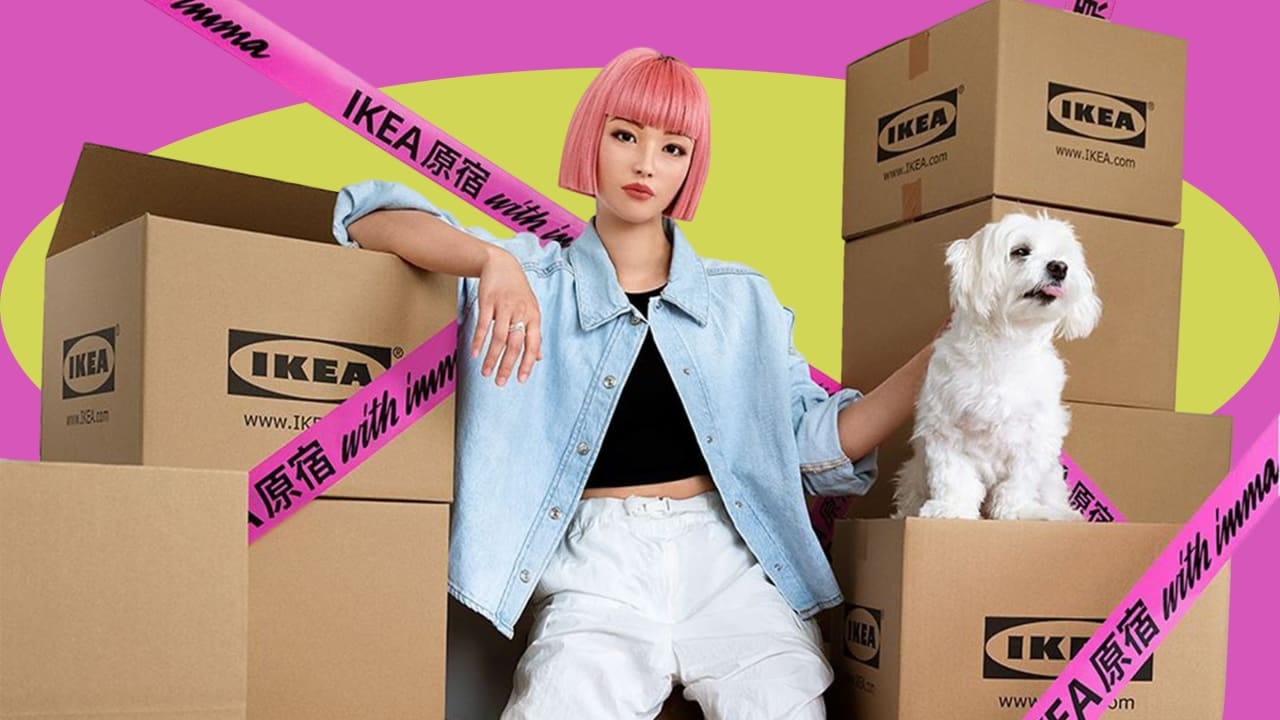
ModelingCafe's long-term goal is to combine this computer design with an autonomous artificial intelligence program capable of creating real-time animations. In this way, the creators of Imma will be able to release their AI influencer into free-floating, giving it many more opportunities to interact with the real world.
Creators’ AI could be a valuable gift for your friend, colleague, or family member. Gifting books is bright, but giving an AI newsletter is a superb move 😎
Digital Supermodel for Luxury Brands
For the last case study, we saved an extraordinary story. It is about how working on the verge of burnout can lead to the creation of a unique business.
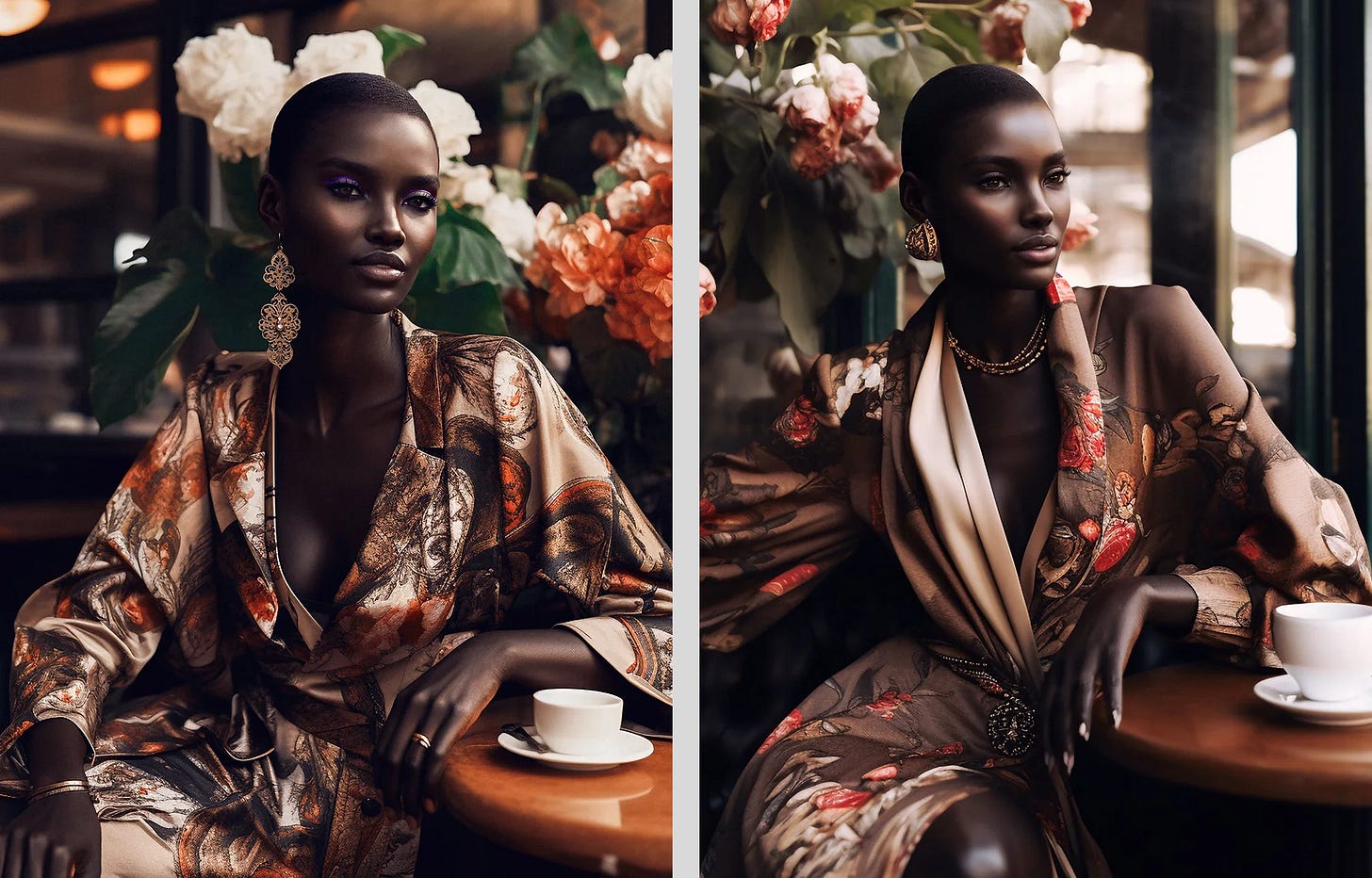
Shudu is a generated supermodel by photographer Cameron-James Wilson, founder of The Diigitals. This virtual influencer is active on social media, collaborates with major global brands, and appears on the covers of fashion magazines. In short, Shudu leads the life of a real model. Well, except for the fact that she was generated.
Despite being a virtual person, Shudu's founding story is more akin to the launch of a startup. In 2017, famous photographer Wilson was close to burnout. Although he was in demand, he felt he lacked creative control. His clients only added fuel to the fire by picking on every detail.
Wilson decided to take a temporary break from his career and get involved in creative work. Specifically, he wants to devote time to image generation software and 3D modeling. Experimenting with different platforms, he realized he could finally reach his potential by creating an artificial model.
Wilson designed several humanoids and then created Shudu. According to the creator, various elements of Shudu were copied from other real models. For example, her eyes were “taken” from Somali Zara model Mohamed Abdulmajid.
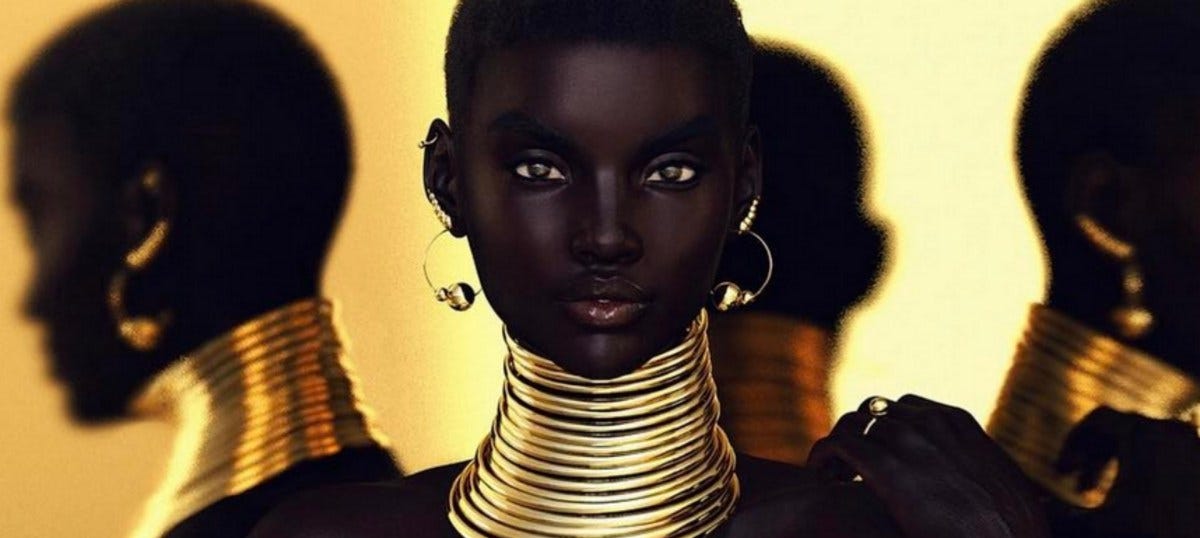
But the main appearance, says the creator, was inspired by the special-edition Princess of South Africa Barbie doll.
He then posted some images of Shudu on Facebook to see what his friends thought. One friend immediately reposted the picture, and then Rihanna's Fenty Beauty reposted it. In that moment, Wilson's life has changed.
$3300 per post on Stories
He founded The Diigitals, created social media pages for Shudu, and started promoting her as a digital supermodel without hiding her "artificial origin". Shudu's Instagram has gone viral. Famous bloggers reposted the model because of her impressive looks and outfits, which attracted the attention of brands. Wilson signed a series of contracts for Shudu to appear in advertisements and began offering posts on her social media.
In terms of actual cases, in just two years since her creation, Shudu has appeared in Vogue, featured in Balmain and Ellesse ad campaigns, and graced her first red carpet at the 2019 BAFTA Film Awards. At the time, she wore a Swarovski gown. She now has more than 241,000 followers on Instagram.

The author does not share the cost of Shudu's participation in marketing campaigns, but the cost of posts in her Stories is known. Such a post costs customers $3300. Given the speed of generating new images with Shudu, their number is limited only by the creator's requirements. The AI influencer makes 5-10 such publications monthly.
How Virtual Model Agency Works
Let's take a look at the work from The Diigitals agency's perspective. And we also should go into namedropping and list all of Wilson's partners here. Still, we'll just mention some of the most notable companies: Coca-Cola, Mercedes, Asus, and Hyundai. Now, let's understand the workings of the agency.
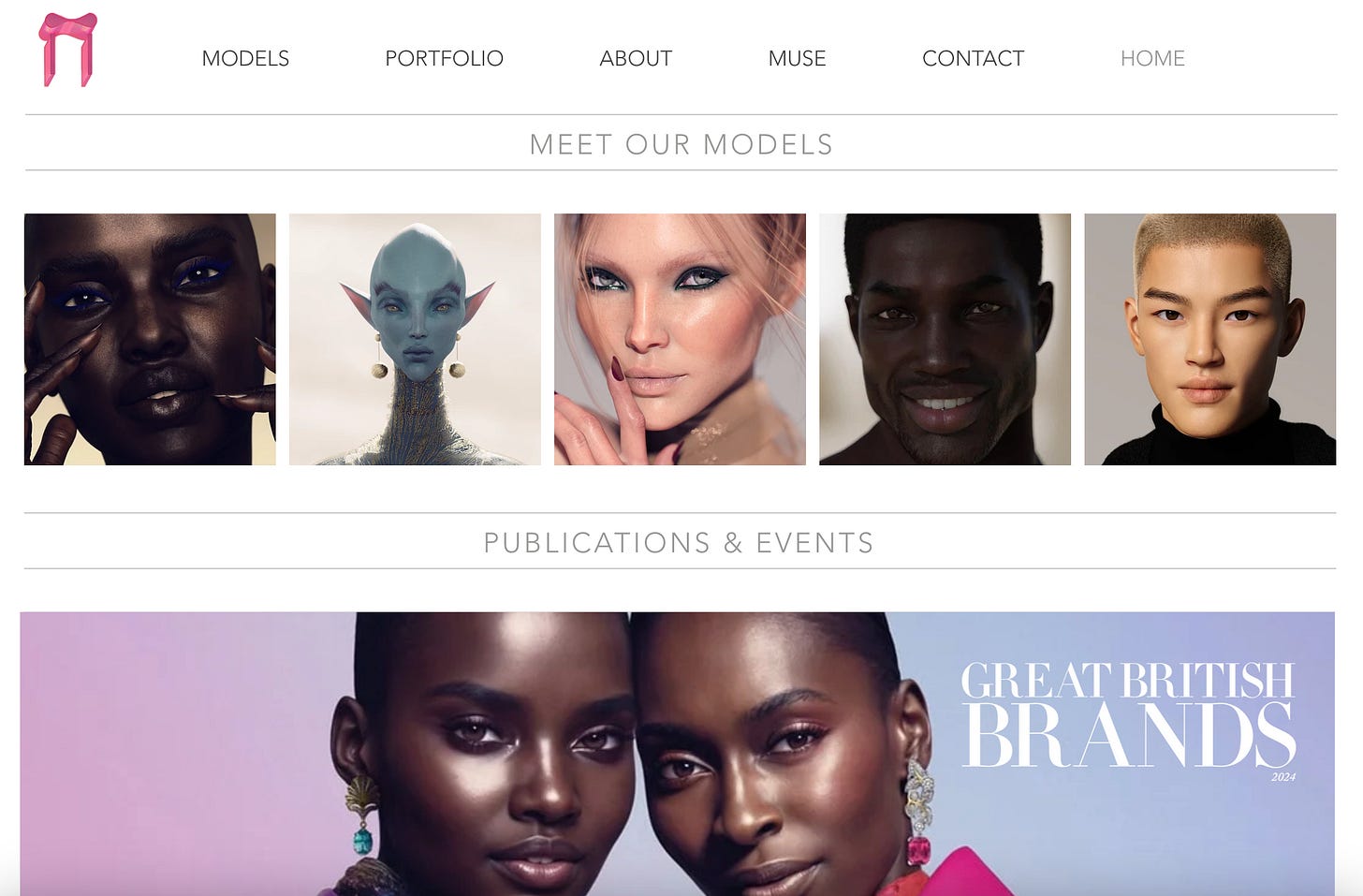
When conducting a major shoot, an agency relies on several AI-enabled tools. Blender, Daz 3D, Clo 3D, and Magnific AI are the main apps. The process looks different from what many people are used to. Instead of cameras, lighting rigs, and backgrounds, there are people in front of computers and a few fashion designers. It's like a typical IT company or a studio developing video games.
Wilson and his colleagues, Kaylee and Michelle, transfer Shudu's model into the program and tweak the physics of the body. They use Clo 3D to digitize real clothes and give them the qualities we see in real life. This takes into account the weight of the fabric, its elasticity, drape, and much more.
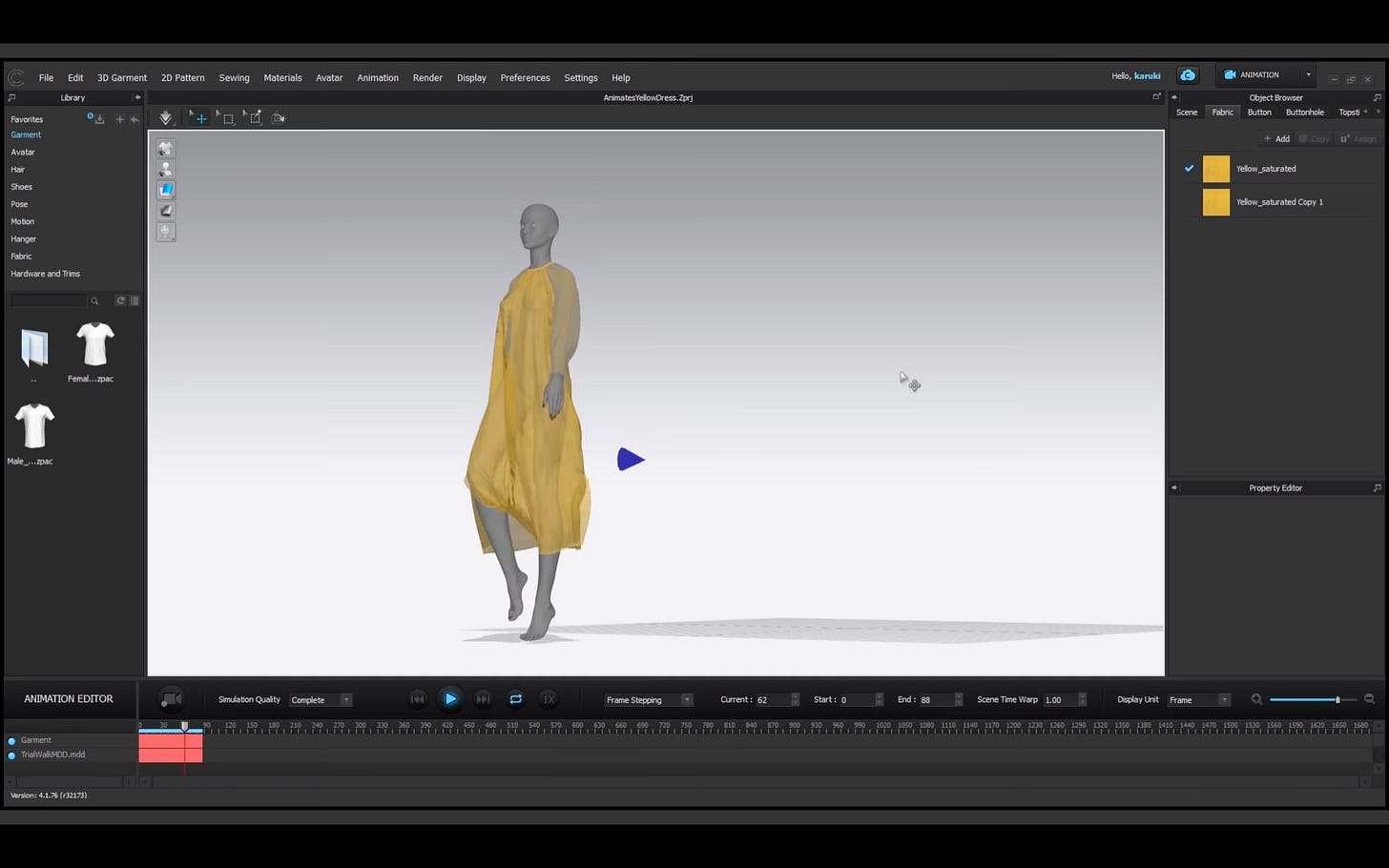
AI allows you to do all the work in a matter of minutes, so virtual items fully copy the behavior of their physical counterparts.
Then, the AI clothes meet the AI model. Shudu is synchronized on a single platform and transferred under Wilson's control. He paid close attention to detail, including the texture of her skin and hair and how the fabric fits around her body. In addition, the creators at Diigitals apply Magnific AI to scale the resolution. The AI makes ready-made photos more contrasty and crisp without editing images in third-party apps.
When Shudu is ready, Wilson puts her in various poses and takes pictures of her in the virtual environment.
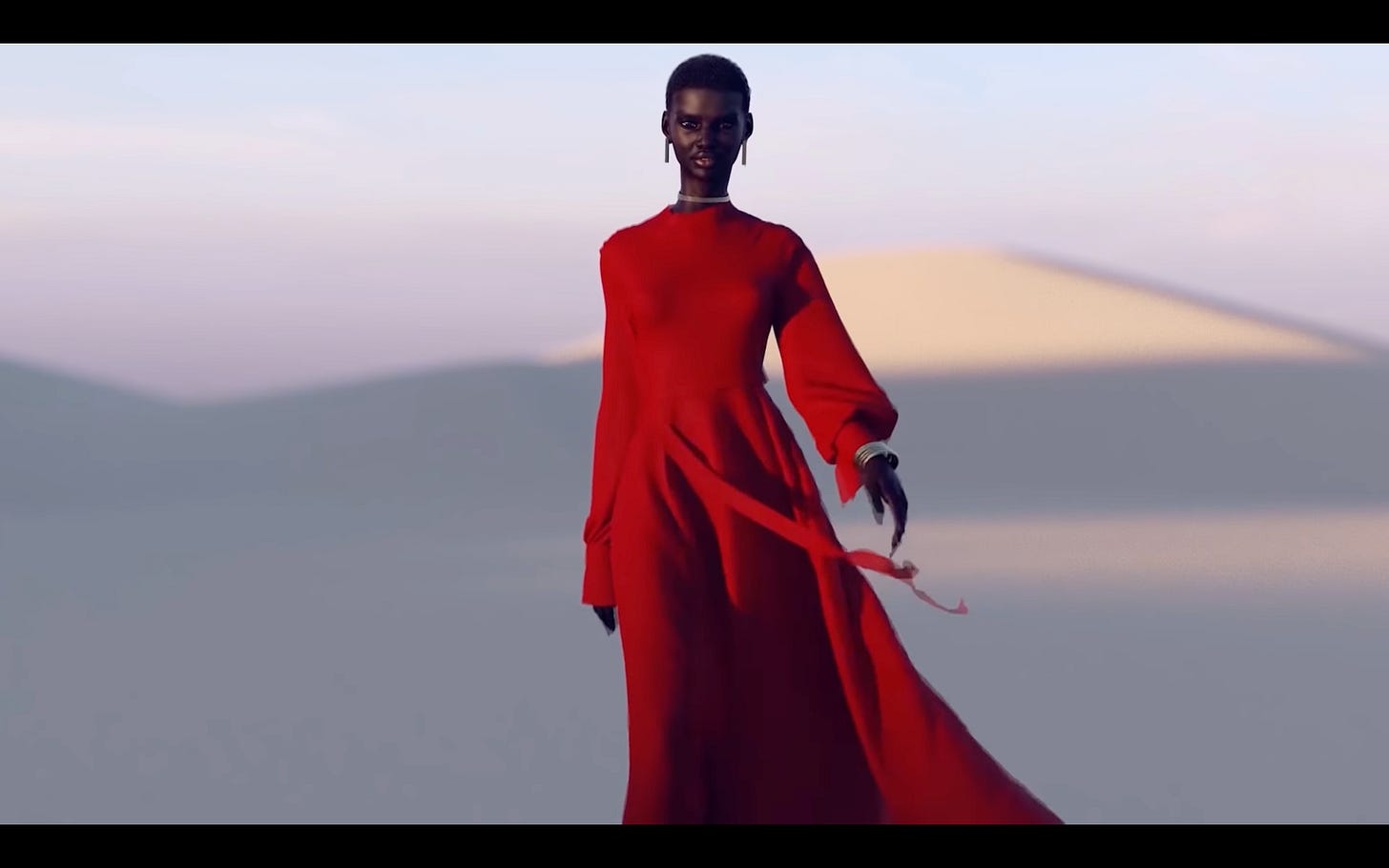
He has complete control over the lighting, background, and other shoot elements. One day, the shoot is done. And no expensive equipment, tardiness and delays, expensive crew, and no harmful producer.
Wilson is now developing in a few directions with one goal - to create a platform allowing brands to do away with real-world models. He discusses what new models should look like with his subscribers and digitizes accurate models, turning them into AI influencers. In this way, he opens new income sources for people and improves the fashion industry.
You can learn a bit more about his vision from this interview:
And the third direction is perhaps the most unusual. Wilson is a big technology enthusiast. He believes AI Influencers will soon go beyond their social networks and start appearing on podiums as holograms.
When that happens, virtual models will level the playing field with real models.
Ways to Monetize Content + Tools
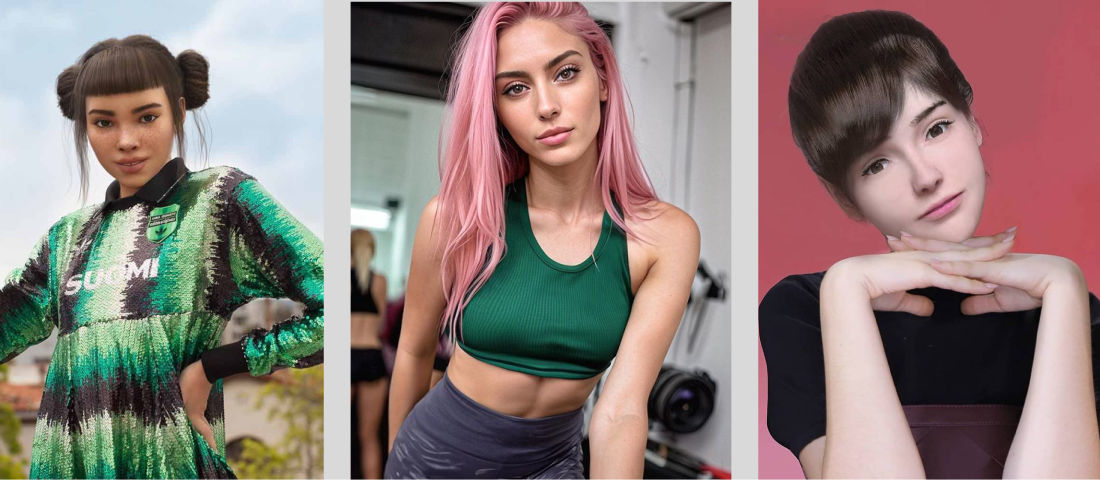
So, how far can virtual influencers go? Well, it's not news; they've already gone far enough. Major brands have embraced such content creators, which means we also have to. It’s possible to understand these companies: virtual influencers win over humans in many ways.
In particular, they are not conflicting, are customizable for different tasks, perform their work faster, and can work on multiple projects simultaneously. Sounds like a worthwhile deal. As for monetization for virtual influencer creators, I distinguish earning options in the form of the following categories:
- Affiliate Marketing
Affiliate marketing is one of human and AI influencers' most common monetization strategies. At the same time, AI influencers better promote products or services by integrating affiliate links or special discount codes into their content. This is one of the most popular trends in this area.
- Brand Partnerships and Sponsorships
The second most popular trend is brand partnerships. Companies partner with these virtual personalities to promote their products or services uniquely and engagingly. Because AI opinion leaders can be customized to a specific brand, they can deliver carefully controlled messages and reach a highly targeted audience.
- Product Creation and Merchandise
The popularity of some AI influencers leads to loyal fans willing to buy merchandise related to their favorite digital personalities. AI influencers can capitalize on this by selling NFTs, branded merchandise, and subscriptions like Patreon or Onlyfans.
Tools
As for tools, you can use hundreds of different services to create a virtual character for social networking. However, we will offer you a few of the most high-quality and popular among creators.
Character Creation:
- This Person Does Not Exist: Generates highly realistic and unique human faces using GANs;
- Artbreeder: Create portraits by blending existing images and adjusting features;
- Reallusion: A tool for building 3D characters, clothing, and animations.
3D Modeling:
- Blender: Open-source, 3D creation suite for modeling, animation, and rendering;
- Daz3D: Specializes in 3D human models with extensive customization options;
- Clo 3D: a tool for designers. It helps to "dress" your virtual influencer.
Content Generation and Animation
- DALL-E (OpenAI): Create realistic or stylized images from text descriptions.
- Midjourney: Text-to-image tool known for its artistic and dreamlike visuals.
- Mixamo (Adobe): Provides free 3D character models and animations.
- Rokoko: Motion capture solution for more complex and realistic animations.
If you also want to give voice to your AI influencer, we suggest using these tools: Amazon Polly, Google Text-to-Speech, and Replica Studios.
Conclusion and Final Thoughts
As for the dry numbers, virtual influencers are also showing impressive growth. According to Grand View Research, this market is estimated to be $3.60 billion in 2022. At the same time, analysts are confident that this industry will grow at a compound annual growth rate of $3.60 billion.
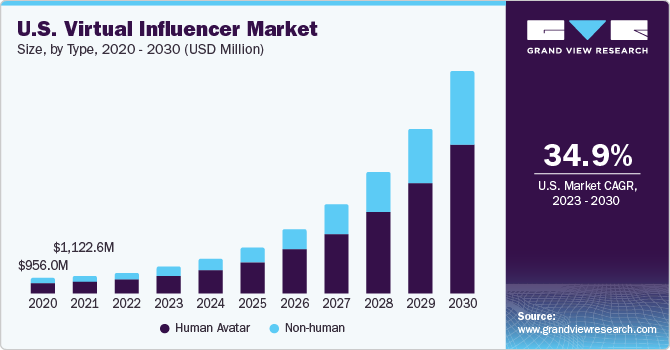
AI influencers represent just one avenue of AI's rapid integration into our lives. Whether they remain a niche marketing tool or reshape the very definition of celebrity is still unknown. But one thing is sure: AI is poised to become a regular part of our social fabric, and its influence, in every sense of the word, will only expand from here.
And here's another question, a more philosophical one. Many people say influencers aren’t honest enough because they only display the good sides of their lives. But if we are talking about virtual creators, can we say that well-known fakeness makes their relationship with the audience sincere? What do you think about that?
What do you think about AI influencers? Tell us in the comments!
This article was first published in the Creators AI newsletter. View the original edition.