AI Startup Ideas for 2025
What do investors and customers expect from AI startups?
As the new year approaches, it's time for new ideas and startups. We've reviewed new requests for startups from YC and other companies, collected relevant projects with traction, and now we're sharing these finds.
In this issue:
👨💻 What VCs and customers expect from AI startups in 2025
🚀 Which projects are already meeting expectations
⚙️ Best AI tools to help you with idea realization
🎄🎁 Merry Christmas! Get 25% OFF our Annual Subscription and stay updated on AI trends all year round!
How We Choose
It's great when you have an idea you believe in. But if that is the only factor, it is rather presumptuous to expect great success. Therefore, when compiling the list, we relied on those connected to the market and with a good idea of promising niches. First and foremost, on requests by YC, a16z, PwC, KPMG, and others.
As a general direction, we chose software projects as they are easier to implement and don’t require huge investments to launch.
We also didn’t choose too narrow niches, such as using AI to support nuclear power plants. If you plan to work in such a field, you will probably manage without our hints. And good luck!
And if you want to learn more about YC’s startups, we have these posts:
Government Software
The first (unexpected even to us) idea is to develop AI for government services. While GovTech has historically been considered a controversial and narrow category, there is now a lot of demand and a severe lack of supply in this space. That's the view of Harj Taggar, group partner at YC, who has advised more than 1,000 companies over the course of 17 batches.
According to Taggar, the government (primarily the U.S.) is actively seeking ways to cut costs and work more efficiently. And today's AI platforms are powerful enough to automate much of the administrative work the government spends billions on. A startup offering a good solution in this area will definitely find a customer.
Hazel | AI Procurement for Government

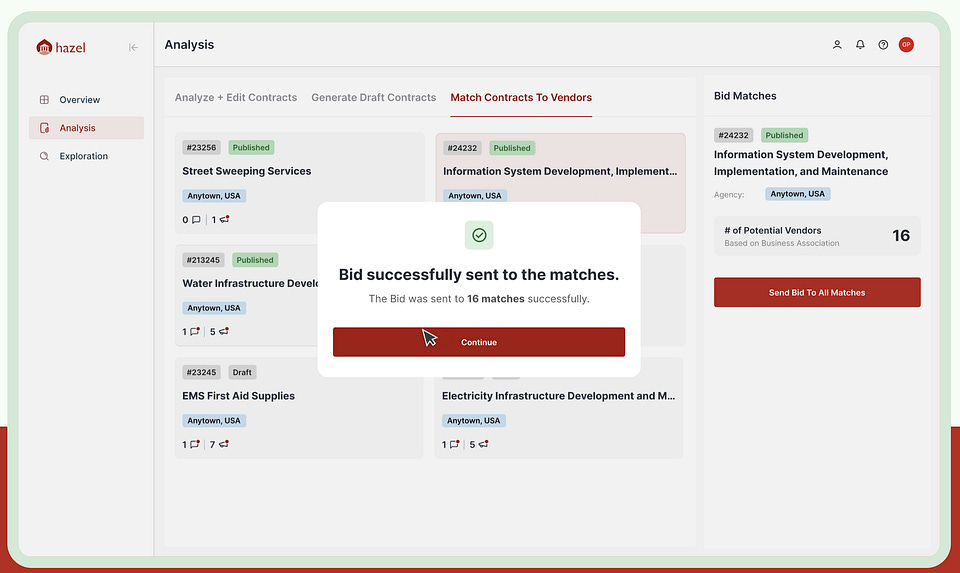
Hazel, founded by August Chen and Elton Lossner, is a good example of such a startup. This company was launched last year. Hazel sells AI-powered procurement software to the 19,000+ local, state, and federal government entities that procure $2.7T a year. The startup promises to write solicitations 10x faster and find 10x as many vendors, saving time and money.
Chen's and Lossner's company is just getting started, so they are not sharing results yet. However, Hazel managed to get into the W24 batch right after its founding and received $500,000 in pre-seed investment from Y Combinator.
AI Copilots for Enterprises
Venture capital firm a16z predicts that AI copilots for enterprise businesses are one of the top trends for 2025. Partner James Da Costa claims that soon, “every white-collar will have an AI copilot.” The foremost opportunity for startups here is in automating vertical workflows.
This is supported by research: OpenAI and the University of Pennsylvania found that with access to an LLM, about 15% of all worker tasks in the U.S. could be completed significantly faster at the same level of quality.
Read AI
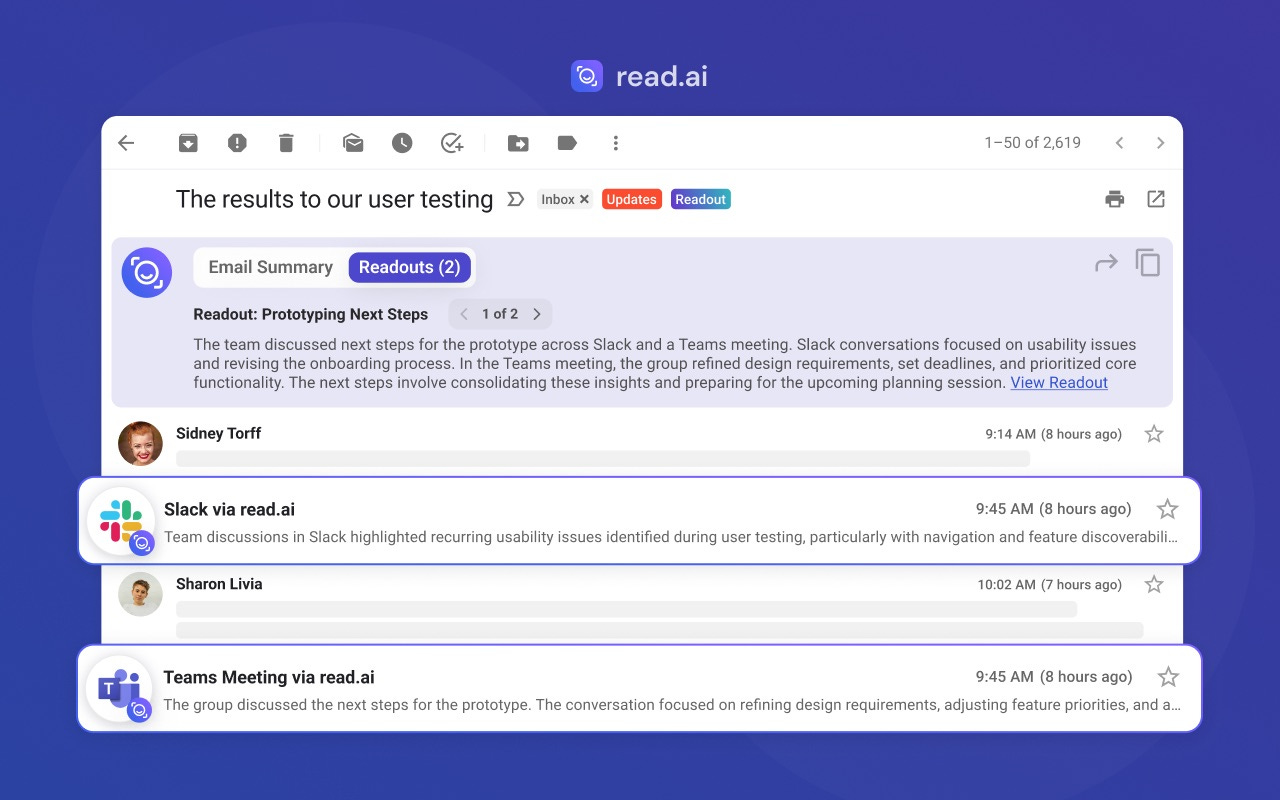
Seattle’s startup Read AI, launched by David Shim, shows how it works in practice. It sells AI tools to improve companies' productivity. Specifically, Read analyzes emails, messaging threads, and calls and then suggests action items based on its information analysis.
Founded three years ago, the startup got off to a pretty shallow start, but things have picked up as generative AI has evolved. It now connects 100,000 new accounts to its database every week. About 75% of Fortune 500 companies use Read AI products on an ongoing basis. The startup raised $81M in the last year.
Interesting fact: Read AI didn't spend any money on marketing. This was possible because the startup hit the target audience perfectly. To figure out how to do the same with AI, follow these links:
🎄🎁 Merry Christmas! Get 25% OFF our Annual Subscription and stay updated on AI trends all year round!
FinTech with AI Assistants
Of course, fintech will not go anywhere in 2025 and will remain a popular trend among startups (and investors). But how exactly should AI materialize in this niche? Dalton Caldwell, another YC partner, believes that small startups, unencumbered by outdated infrastructure, will have a good chance in insurance, investment banking, wealth management, and international payments.
Comulate | AI for Insurance Brokerage Sector

Comulate, founded by Jordan Katz and Michael Mattheakis, is one such startup. It uses AI to automate insurance statements, processing, reconciliation, revenue recovery, and forecasting. Specifically, Comulate reduces 90%+ of manual and error-prone accounting work with end-to-end automation of direct billing. In this way, the startup increases revenue for insurance companies and frees them from unnecessary tasks.
Within the first 18 months of operation, Comulate managed to go from zero to “millions of ARR.” The company does not disclose more precise data, but a recent investment of $5M, an extensive client list, and a constant search for new specialists hint at a favorable state of the project.
Creating an AI is a key but not the founder's only task. To figure out how to spend the least amount of time on the rest, understand wrappers & boilerplates:
AI for Legacy Enterprises | Legal AI
Tom Blomfield, Group Partner at YC and co-founder of Monzo, believes in LLMs for manual back office processes in legacy enterprises. LLMs allow entire categories of manual processes to be automated in ways that, until recently, were not possible. This makes them particularly useful in areas where serious confidence in decision making is important. And next year is a great time for such models.
EvenUp | Legal AI for Personal Injury
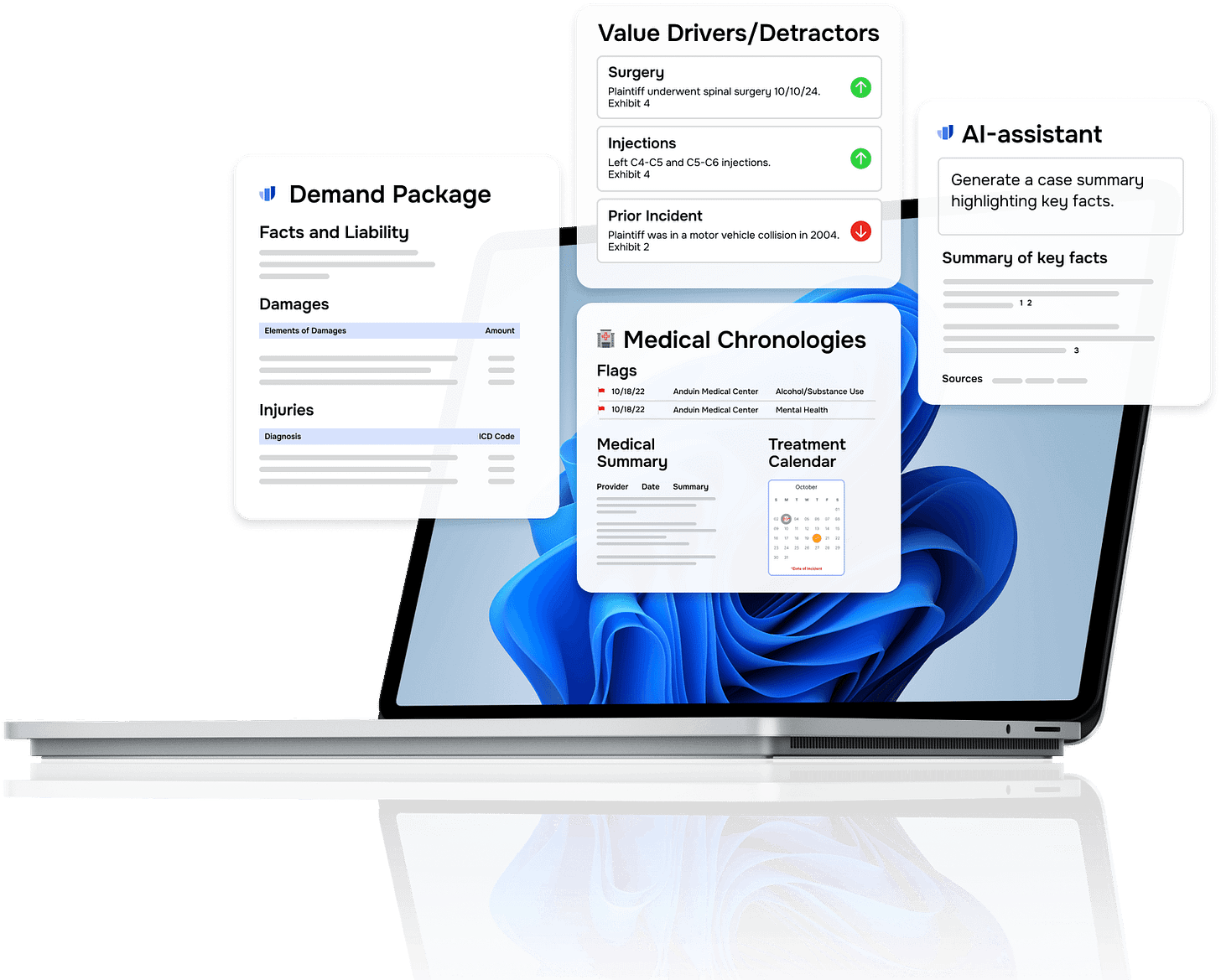
We could cite many different companies here. But as a case study, let's take a pretty vivid example - EvenUp. It's a San Francisco-based startup that has trained AI on hundreds of thousands of personal injury cases, medical records, and legal documents. Using said data, EvenUp helps people prepare statements and negotiations.
The startup was founded in 2019 by three entrepreneurs Rami Karabibar, Raymond Mieszaniec, and Saam Mashhad. Since then, the company has raised $220M, received a $1B valuation, and generated $35M ARR in July 2024, according to The Information. By the end of this year, EvenUp is expected to reach $50M ARR.
To determine the demand and outlook for legacy businesses, you need to process a huge amount of data. The optimal AI tool for this task is NotebookLM.
Share this post with friends, especially those interested in AI Insights!
ML for Simulating The Physical World
And we close our list of ideas with the most difficult niche. However, we cannot ignore it. I'm talking about using machine learning to simulate the physical world. This is a pretty broad category that includes weather prediction, developing new drugs, designing aviation, and more. Investors Diana Hu and Jared Friedman believe it's time for startups to replace existing simulations with ML-based ones.
Jua | AI for The Natural World

Swiss startup Jua, launched by Andreas Brenner and Marvin Gabler, is taking an extremely ambitious approach to using AI in the real world. But it's starting small. This year, it entered the market with a weather forecasting toolkit. The system uses AI to generate 31-day forecasts in any region, including those struck by climate change.
Once the company has mastered this area, it will move on to developing its models in materials science, biomedicine, and chemistry.
This unusual approach was appreciated by investors, resulting in the startup raising $16M in February 2024. Going forward, Jua plans to develop its platform through partnerships with insurance, energy, and government organizations.
Final Thoughts
To summarize, I'd like to say a probably not the most pleasant thing. Although we know that AI is a trend and clearly the next big thing, even the best niche cannot guarantee success. The best we can do is act fast and be all in. And then we'll have a chance.
What we can do on our part is to inform you! So, if you want to dive deeper into the topic of building good AI startups, I suggest you check these posts out:
Share this edition with your friends!
This article was first published in the Creators AI newsletter. View the original edition.