Boilerplates for AI Startups
Let's not waste time on trivia and finally build our product.
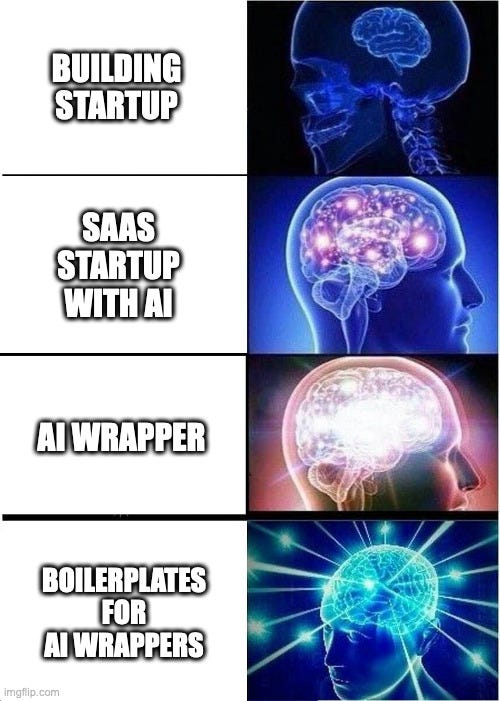
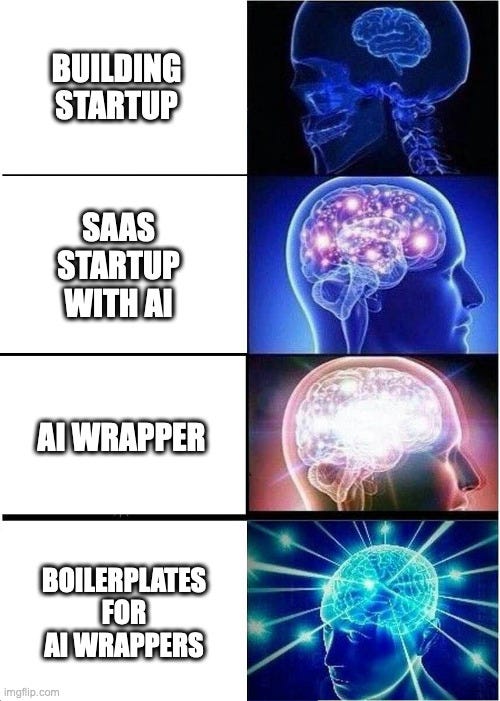
When I was writing a previous post about AI wrappers (it's here, in case you missed it), I discovered the world of boilerplates. It's not that I didn't know such projects existed, but I certainly didn't realize how much hype there was around this area. But it's easy to understand.
These platforms allow creators to focus on products, have fun with the process, and avoid months of working on the technical side—all for a couple hundred dollars.
Sounds like a great deal, right? Let's break it down.
In this newsletter:
- What Startup Boilerplates Can Offer You
- How Creators Build and Monetize Them
- How to Choose One for Specific Needs
- 5 Useful Boilerplates for Your Startup
Why Boilerplates are The New Trend
It’s always about time. (and headaches)
So, what is boilerplate? It’s a pre-built foundation or a standardized code that can be used for different tasks on a website or mobile app. Boilerplates exist in different variations and for various products, but essentially, they provide a starter kit for a quick launch. For example, you have an excellent idea for a SaaS startup and even know how to implement it, but you've never run an online business.
This is what a good boilerplate can offer you:
- Admin Dashboard
- Subscription & Payment System
- Order Statistics & Analytics
- Component Library & Example Pages
- Documentation to Set up Your Product
- Support from the Developer
To summarize, it's back end + front end, development support, and documentation.
These platforms offer considerable savings in time and nerves. With boilerplates, you can refuse the services of a freelancer team or free your hands for something more useful. An additional advantage: unlike software that you will develop for yourself, boilerplates have already been tested “in the field.”
And there are quite a few such platforms.
Keep your mailbox updated with practical knowledge & key news from the AI industry!
Actually, boilerplates are very actively gaining momentum right now. If you go to Product Hunt, you will see many successful startups with similar business models, like Next Starter AI, NextBase, and StartKit AI. Moreover, this community already has its own leaders, like ShipFast. Let's take a closer look at this project.
ShipFast by Marc Lou
ShipFast is a platform founded by Marc Lou last August. It is a NextJS boilerplate that helps creators launch their AI and SaaS projects quickly. According to Marc, ShipFast saves developers more than 20 hours when setting up key features. Specifically, it is about user authentication, payments, design, and more.
The platform works on a “pay once, use forever” model rather than a subscription basis. Packages range from $169 to $199. When users pay, they get access to the NextJS starter with the boilerplate code they need to run a business, documentation, and access to Marc's Discord. So far, more than 4,400 makers have used ShipFast to build AI tools, SaaS startups, and other products.
By the way, ShipFast has turned out to be one of Marc Lou's most successful #buildinpublic projects. A month after its launch, this boilerplate brought the creator $36,400, and this spring its MRR reached $133,000.
Maybe we should dedicate a post to his case study?
Sharing is caring! Refer someone who started a learning Journey in AI!
But lest you think that everything is perfect with boilerplates, I will allow myself to speak about the disadvantages of such solutions. Technically, they can be divided into several points, but they all boil down to one thing: lack of flexibility.
Developers rely on versatility to reach the broadest possible audience, so not all boilerplates will be suitable for a narrowly focused product. Besides, it will not be easy for you to make changes, and some features may turn out to be useless.
However, the advantages still outweigh the disadvantages. The main thing here is to figure out how to choose the most suitable boilerplate for your startup.
Let's talk about how to do this.
How to Choose One for Specific Needs
Let's try to cover all the key points. If we miss anything, let us know.
Consider Your Tech Stack
First and foremost, ensure the boilerplate is compatible with your preferred technologies. The tech stack is the foundation of your startup, and choosing the wrong boilerplate can lead to unnecessary rewrites or compatibility issues.
Look for options that align with:
- Your programming language (e.g., JavaScript, Python)
- Frontend framework (e.g., React, Vue.js)
- Backend framework (e.g., Node.js, Django)
- Database system (e.g., MongoDB, PostgreSQL)
Evaluate AI Integration Capabilities
For an AI startup, prioritize boilerplates with built-in AI functionality. AI features are at the heart of your product, and having these capabilities pre-integrated can significantly reduce development time. You should pay attention to:
- AI API Integration: Look for pre-configured integrations with popular AI services like OpenAI, Anthropic, or Gemini.
- Fallback Mechanisms: Consider options that offer seamless switching between AI providers to ensure reliability.
- AI-Specific Features: Seek boilerplates that support functionalities like PDF chat or image generation with DALL-E 3.
Assess Core SaaS Features
Ensure the boilerplate includes essential SaaS components fundamental to any SaaS product, allowing you to focus on your unique value proposition. The specific list is up to you, but I would point out the following aspects:
- User authentication and authorization
- Subscription management and billing integration
- API rate limiting and usage tracking
- Email integration for transactional messages
- Analytics and monitoring tools
Examine Scalability and Performance
Choose a boilerplate designed for growth. Your startup's needs will evolve as you scale, so it's important to select a solution that can grow with you.
Here's what you'll need:
- Modular architecture for easy feature additions
- Performance optimization features
- Support for cloud deployment and scaling
Review Documentation and Support
Opt for boilerplates with robust support systems. The quality of documentation and community or customer support can significantly impact your development speed and efficiency. So check this out:
- Comprehensive, up-to-date documentation
- Active community support or dedicated customer service
- Regular updates and maintenance
Assess Customization Flexibility
As I mentioned earlier, not all boilerplates support customization. If you have the option to choose a flexible offering, choose it. The ability to tailor the boilerplate to your needs can significantly impact your product's success:
- Code Structure and Modularity: A well-structured boilerplate should have a modular codebase, which allows you to add, remove, or modify features.
- Customizable Themes and UI Components: If user experience is a priority, look for boilerplates that offer customizable themes and UI components.
- Extensibility with Plugins or Add-ons: The ability to extend the boilerplate with plugins or add-ons can be a significant advantage. This means you can easily integrate new features as your product evolves without overhauling the core system.
Reputation and User Feedback
It's never a bad idea to check up on your partner. Just follow a set of simple rules, and you will not be fooled:
- Read user reviews and testimonials
- Check for case studies or success stories
- Consult developer communities for opinions
Consider Cost and Licensing
Finally, evaluate the pricing model and ensure it fits your budget. Some boilerplates offer one-time purchases, while others may have subscription-based pricing. Based on the previous points, you can put together a spreadsheet that will allow you to choose the best deal.
5 Boilerplates for Your Project
Without getting sidetracked, let's examine a few popular offerings in the boilerplate market that you might find useful. They all have the same goal: to support a jumpstart for SaaS or AI startups.
Bullet Launch
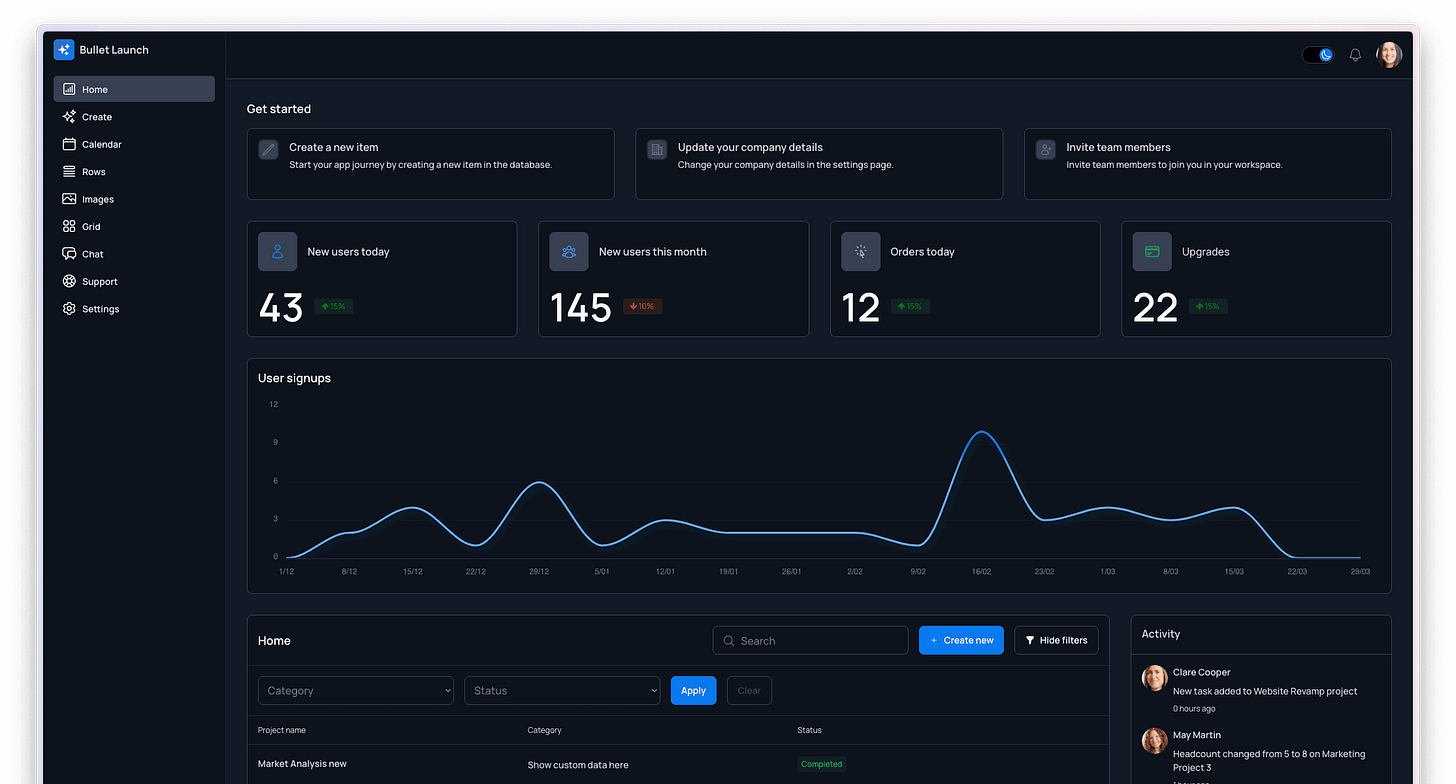
Bullet Launch is a boilerplate Bubble.io app for building apps without coding skills. It has ready-to-use OpenAI and Replicate API calls, so it is suitable for text and image generation, text-to-speech, and other popular AI solutions. After purchasing the boilerplate, the user can access lifetime updates and use it in unlimited projects.
ShipGPT
Price: from $149 to $399
ShipGPT offers ready-made templates for various AI use cases. It relies on NextJS and utilizes the Node Express Js and Stripe frameworks. Currently, the platform supports all OpenAI models, and the developers promise to add support for Google Gemini and Anthropic in the coming months.
StartKit
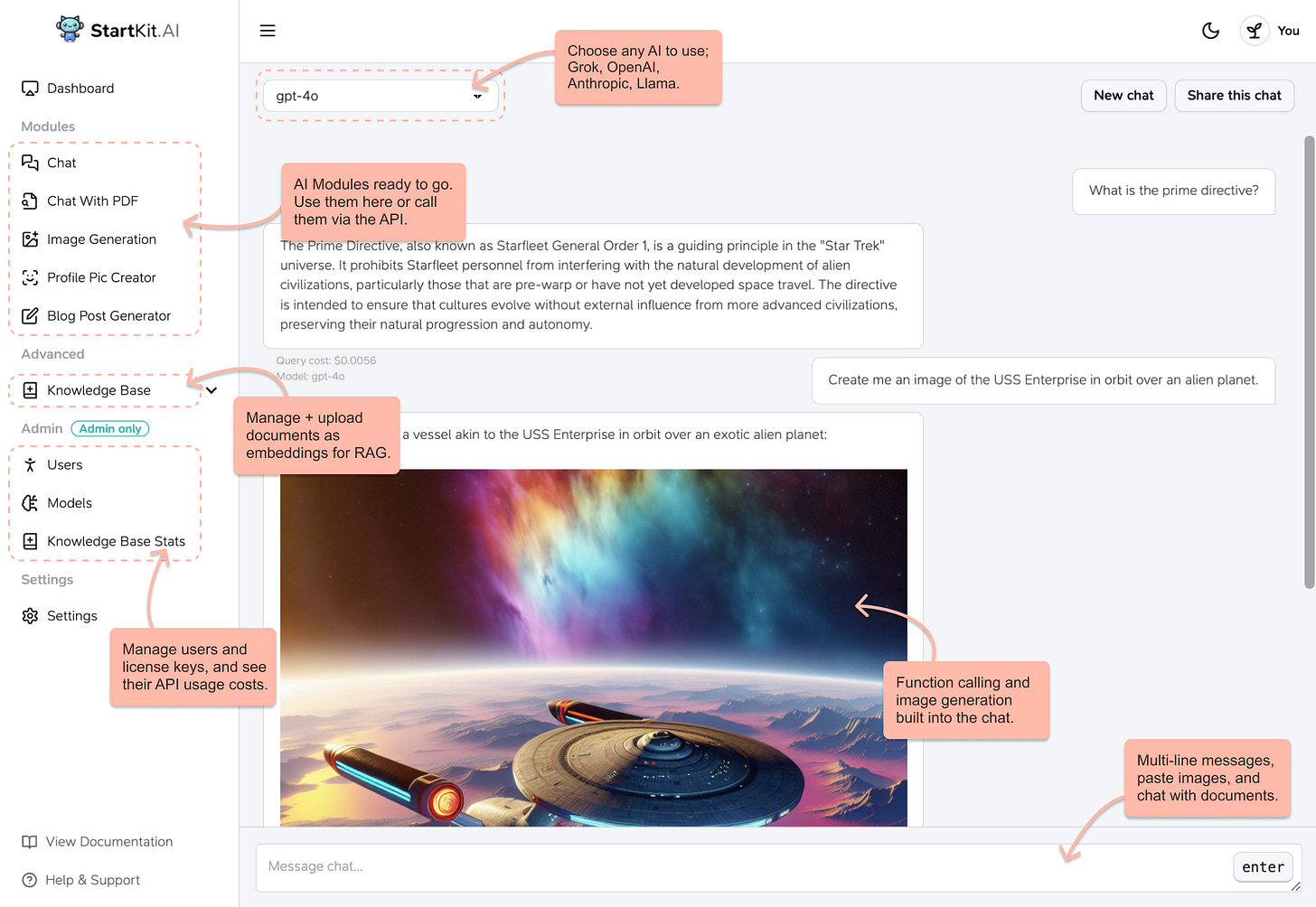
Price: from $149 to $249 (+ $7995 special offer)
Startkit is a SaaS boilerplate tailored for startups looking to leverage AI. It offers many tools, including pre-built AI integrations, user authentication, and subscription management features. With a focus on flexibility, Startkit allows you to customize various aspects of your application, ensuring it fits your business needs.
LaraFast
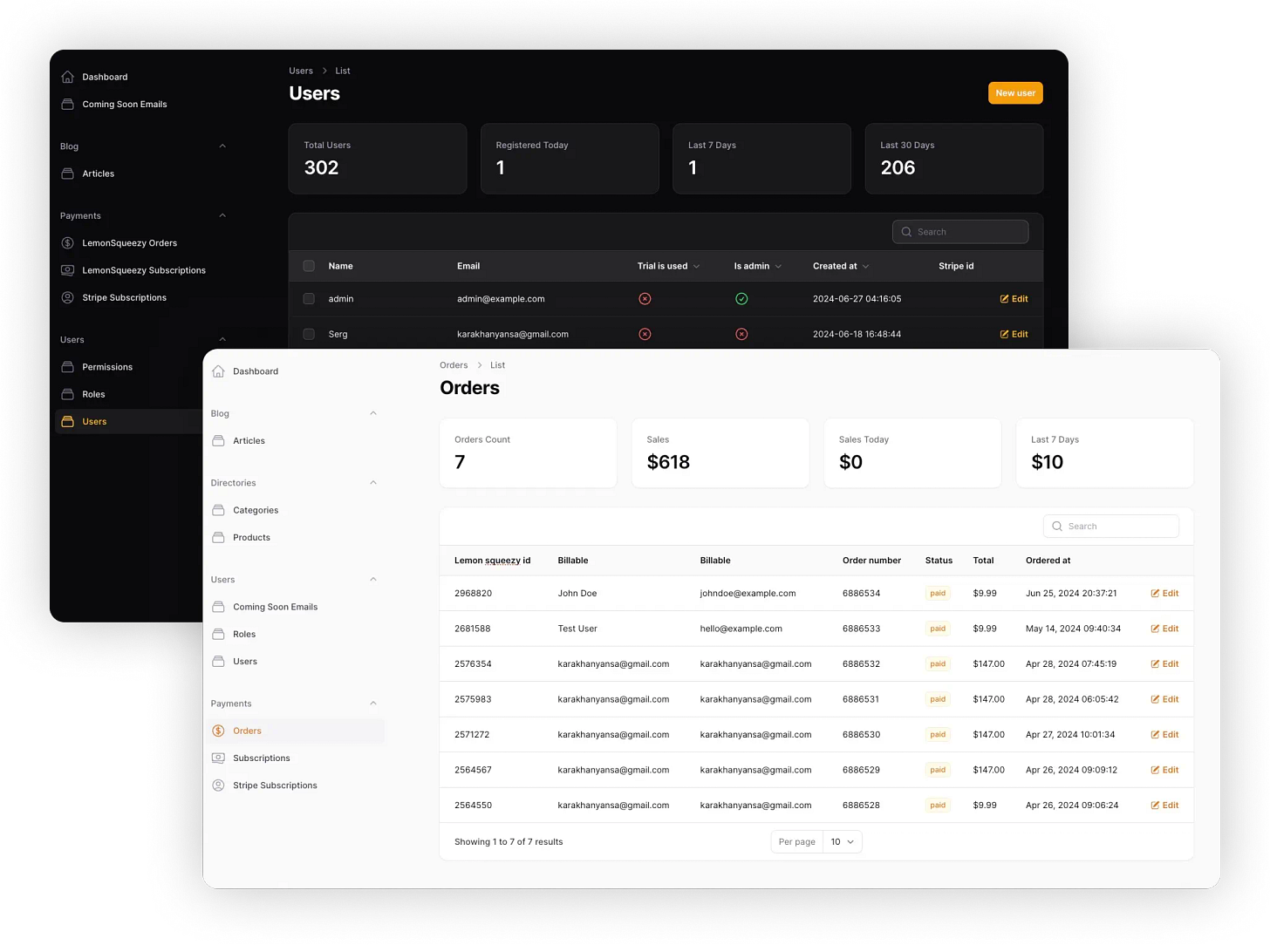
Price: from $169 to $199 (+ $1199 special offer)
Larafast is a one-stop solution for those who want to launch a SaaS project, AI Wrapper, or web application. Key components of this platform include payment integration, user authentication, admin panel, SEO tools, blog functionality, and OpenAI service. It provides two repository options: TALL stack and VILT stack. Both repositories are built on Laravel 11 and follow a typical Laravel application structure.
Launch Code
Price: from $67 to $199 (+ free basic SaaS kit)
Launch Code is perhaps the most unusual platform on our list today. Unlike previous solutions, this boilerplate focuses on course creation. It offers a Next.js Course Bundle that includes landing & waitlist pages, featuring video and image upload capabilities, providing optimal service to start your learning platform.
And we have a post on that topic, too. If you want to create your course with AI, follow this link:
Final Thoughts
I think it is important to note one point when summarizing the conversation about boilerplates. The approach when using these platforms should be the same as when working with AI: work together rather than trying to step out of the process.
If you decide to use one of the above tools (or find another), don't assume it will do all your tasks. Dive into the topic, determine what suits you best, and you definitely won't be disappointed with the result.
Share this edition with your friends!
This article was first published in the Creators AI newsletter. View the original edition.