Building $600K/Mo SaaS in One Year
A strong product or just leveraging a personal brand?
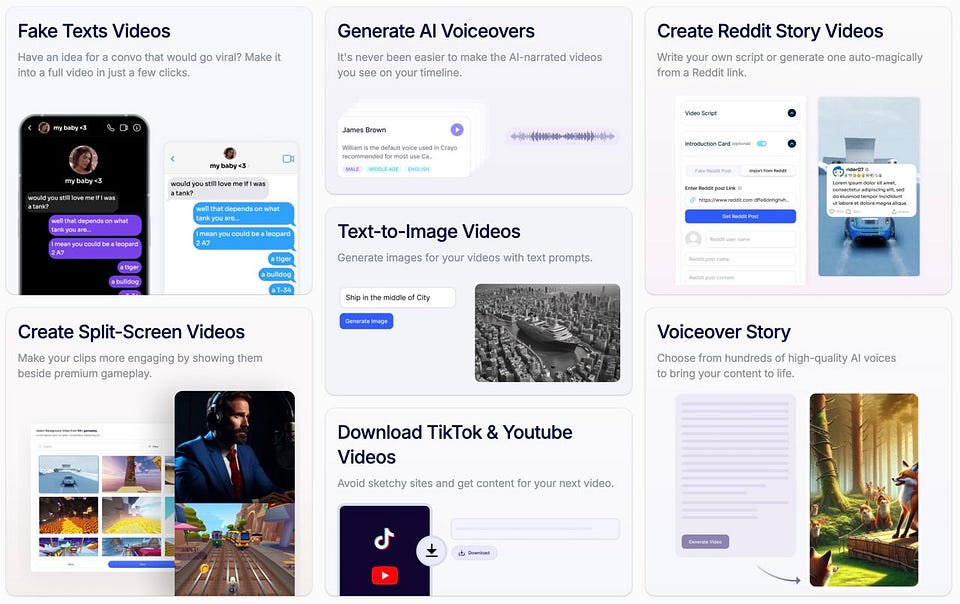
Hi! A few days ago, I came across the Crayo AI. At first glance, it's a standard AI content creation tool. But after studying it, I saw outstanding numbers ($600k/mo!) and many videos about a successful young founder (17 y.o!).
And at this point, I realized we had to discuss this story.
So, in this issue:
- An overview of Crayo AI & its features
- The journey of the founder & his team
- Strategies & insights that contributed to Crayo’s success
Keep your mailbox updated with practical knowledge & key news from the AI industry!
What is Crayo AI?
This time, I propose to take an unusual path. We will start with a brief overview of the product, then rewind a bit and go through its creation.
Crayo AI provides tools for content creators who want to produce short-form videos faster. By automating tasks such as adding subtitles, animations, and music, it addresses a pain point for the core audience.
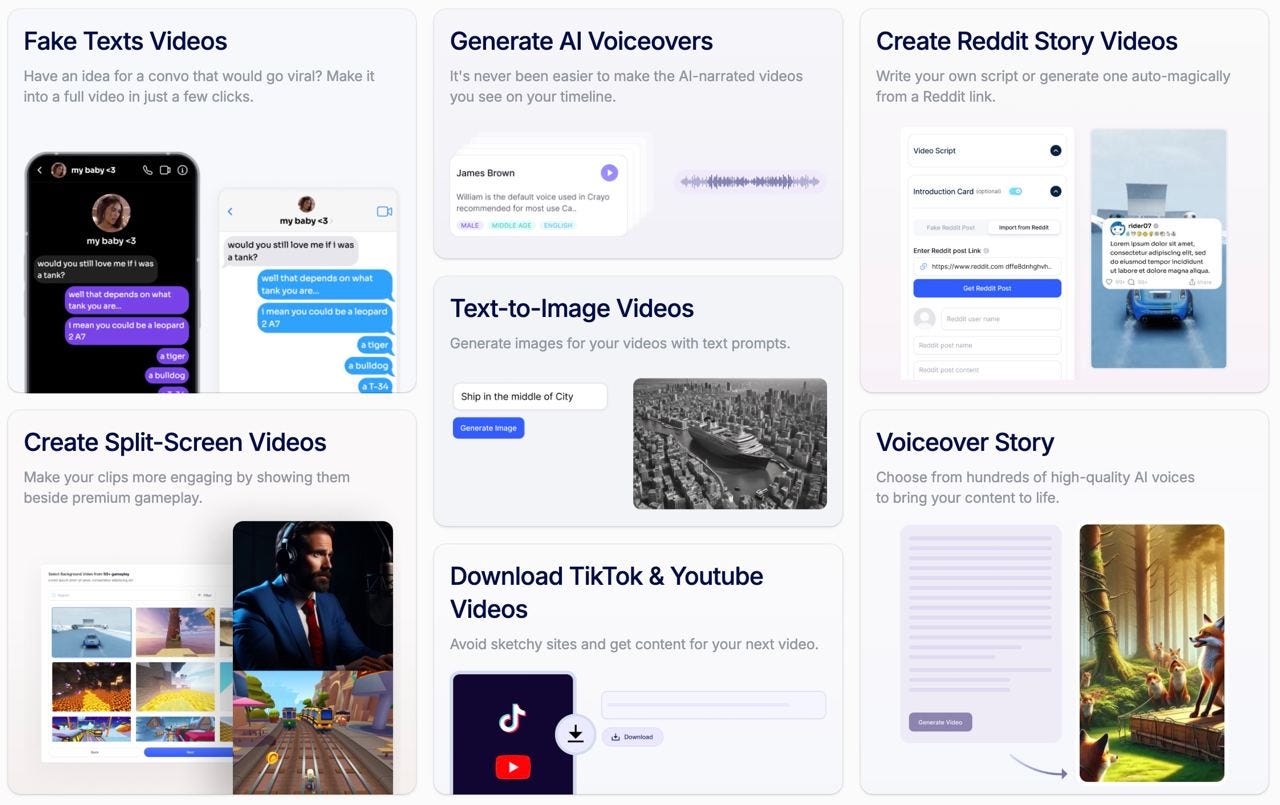
The platform calls itself an “all-in-one tool for creating AI voiceovers, engaging subtitles optimized gameplay, and more.”
The idea is that novice and experienced creators from TikTok, Instagram, and YouTube Shorts can generate viral content using just one SaaS product. First and foremost are the faceless videos that garner millions of views. Crayo sells the idea that anyone can create and monetize such channels.
Here are its key features:
- Story Video Generator: Creates AI-generated story videos from custom scripts or Reddit URLs, with an integrated AI writer for script development.
- Split Screen Video Generator: Produces engaging split-style videos using YouTube or TikTok URLs, enhancing viewer interaction.
- Subtitles Automation: Crayo automatically generates accurate subtitles, helping creators reach wider audiences, including those who watch videos without sound.
- Animations & Music Integration: Users can enhance their videos with professional-quality animations and music, all with just a few clicks.
According to the founder, more than 2.5M videos have been created using Crayo AI since launching about a year ago, which continues to rack up views on social media.

If you linger on TikTok, Reels, or Shorts, you've probably seen clips like this.
Regarding revenue generation, the platform relies on a subscription model (there is no free version). Users pay monthly for access to the software and receive credits. Right now, Crayo AI has three plans: Hobby ($19/mo), Clipper ($39/mo), and Pro ($79/mo).
Sharing is caring! Refer someone who started a learning Journey in AI!
The interesting aspect of Crayo is that the small platform is still prominent with an abundance of strong competitors. If you visit different AI tool sites, you will see that many picks compare new tools to this particular product. Coupled with its impressive growth rate, it makes me wonder how Crayo managed to do it.
Here are some good alternatives so you don't feel like we're trying to elevate this AI tool over others:
- Smart Media Cutter: This tool offers video and audio cutting without quality loss. Features include automatic transcripts, speech detection, and support for various media formats, all while ensuring data privacy with offline AI.
- DreamCut: This AI video editor offers lifelike voiceovers, dynamic backgrounds, real-time editing effects, and customizable 4K export, supporting tutorials and gameplay recording.
- FastCut: This tool turns your video into reels using AI, featuring transitions, effects, support for 4K, custom overlays, and an ad-free experience.
If you want to get stronger into video content creation, try starting by using these AI tools:
How They Built a $600K/Month AI App
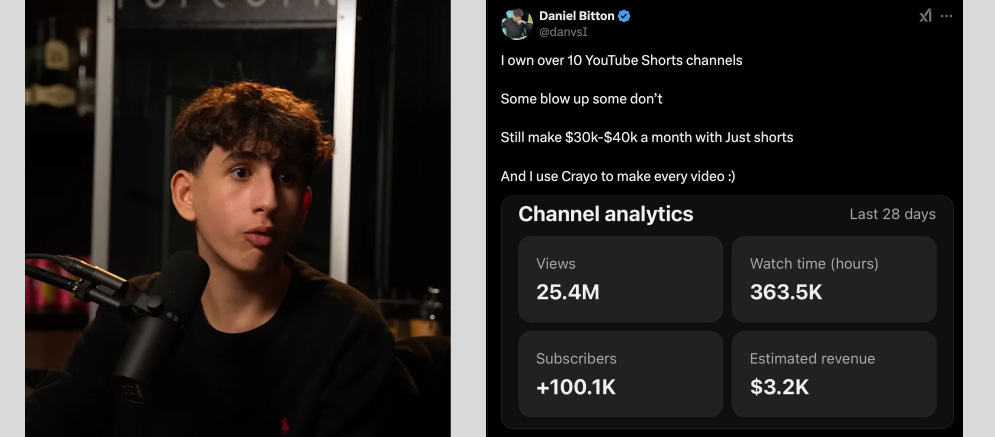
So, meet Daniel Bitton. A founder and creator from Cyprus. Many podcasters and bloggers in the “successful success” genre often extol him, but we won't do that.
More to the point, Crayo's development strategy can't be called completely honest.
At 15, he found success with Snapchat shows, earning six figures monthly. Daniel created news-based content on media discussions, which earned him 10M followers.
However, when the algorithm changed, his income suffered, prompting him to abandon Snapchat in favor of YouTube (100k subscribers). Daniel’s shift to Shorts highlighted the effort required for video editing, and (according to interviews) he decided to address this issue with an AI solution.
The story then splits into two sequels: one in which Daniel is pretty much a solopreneur, developing the product with minimal help from others (the popular version), and one in which Crayo is supported by a full-fledged team.
To back up the second option, just go to X and look at what people associated with Crayo are saying about the project:
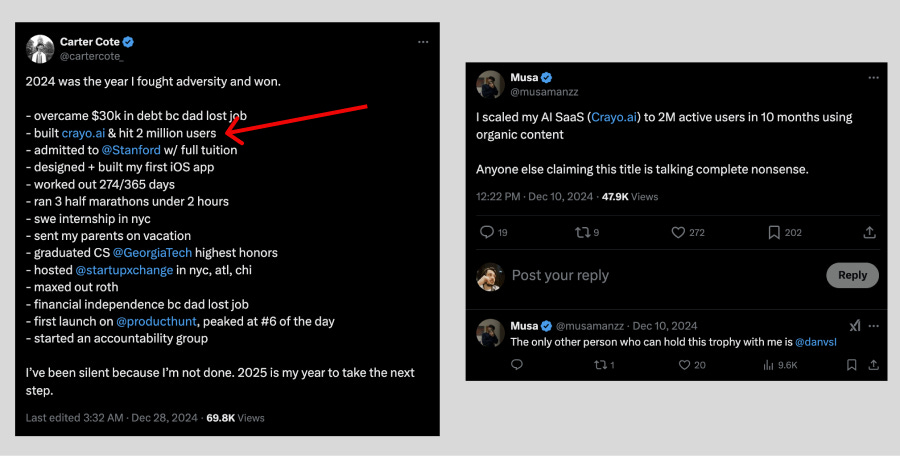
So, how many founders does Crayo have?
And that's Crayo's main trick. The company is selling not an AI tool but an easy way to make money online. And this strategy is not very popular among competitors (although it works great).
Now, let's talk about how this strategy is implemented.
Personal Branding
The startup uses Daniel’s personal brand to enhance its credibility and attract a target audience. He shares content on various platforms that boosted his authority in the industry and linked his entrepreneurial journey with Crayo’s growth.
It's much easier to attract users when you have a 17-year-old guy who has achieved everything on his own.
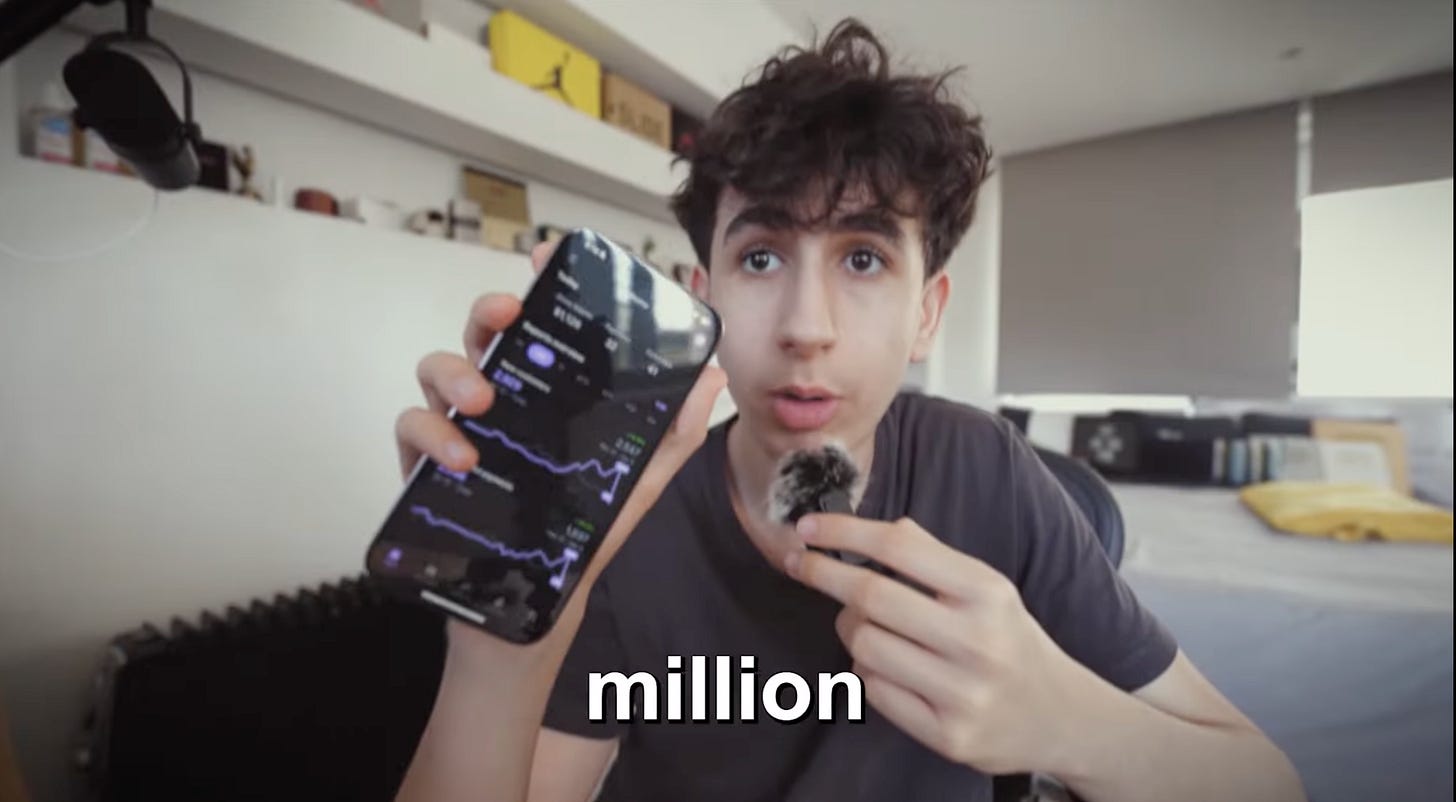
By presenting himself as a thought leader, he engages his audience to explore recommended tools and strategies. Of course, Crayo serves as the key platform for success. This allows the company to engage with the audience on a personal level, building trust and attracting users without paid advertising.
Creators’ AI could be a valuable gift for your friend, colleague, or family member. Gifting books is bright, but giving an AI newsletter is a superb move 😎
Affiliate Marketing
Crayo also utilized an affiliate marketing program to expand its reach.
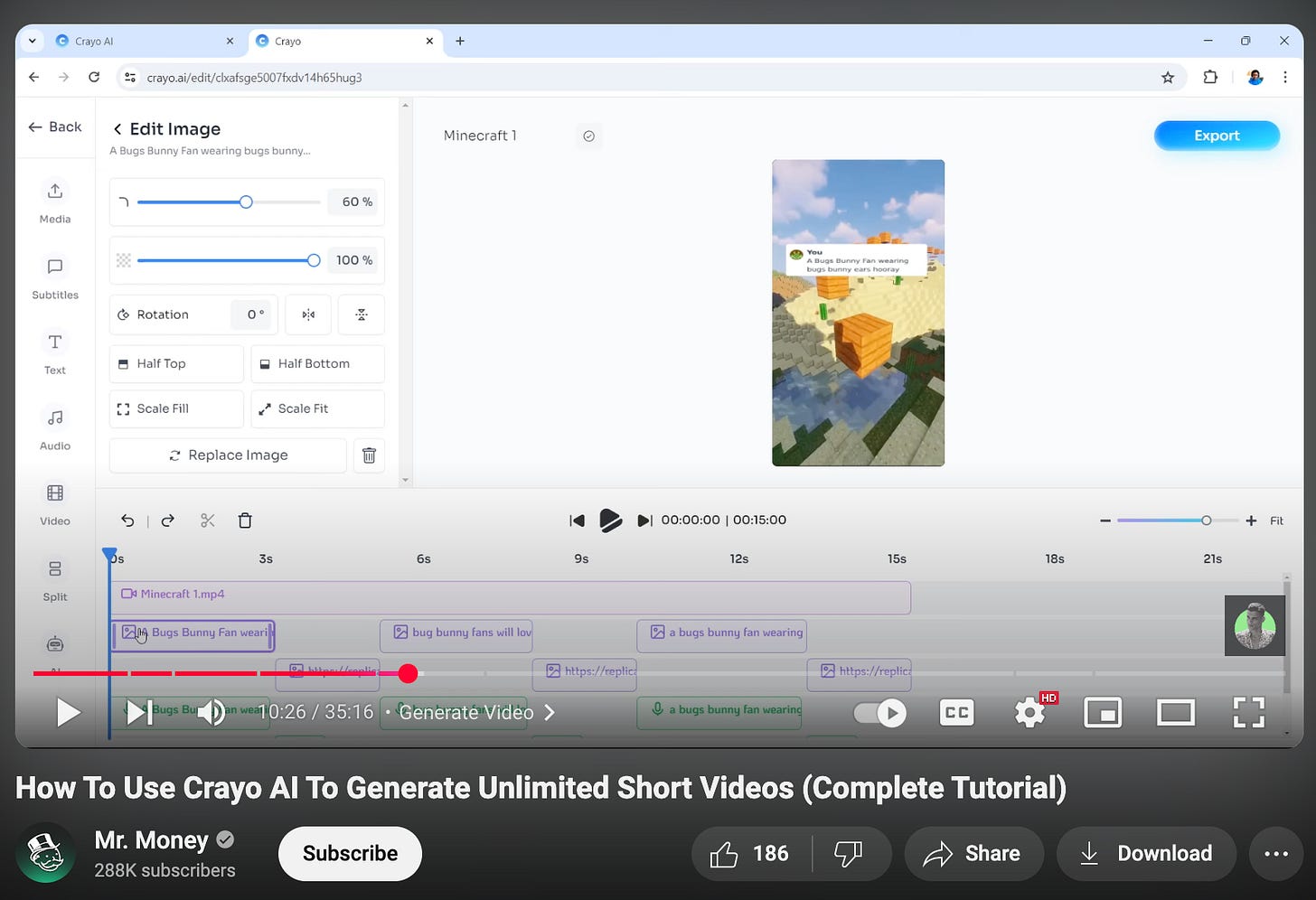
The company partnered with content creators who promoted the software by making videos about making money with short-form content and recommended Crayo as a tool.
Among the most notable partners is the YouTube channel Mr. Money, which regularly promotes various AI tools.
It leveraged the existing audiences of established creators, providing new users with social proof and credibility. This method drove organic growth without incurring traditional advertising costs.
If you want to know how to bootstrap your marketing with AI, follow these posts:
Educational Courses
The most unusual part of the strategy is in the educational courses.
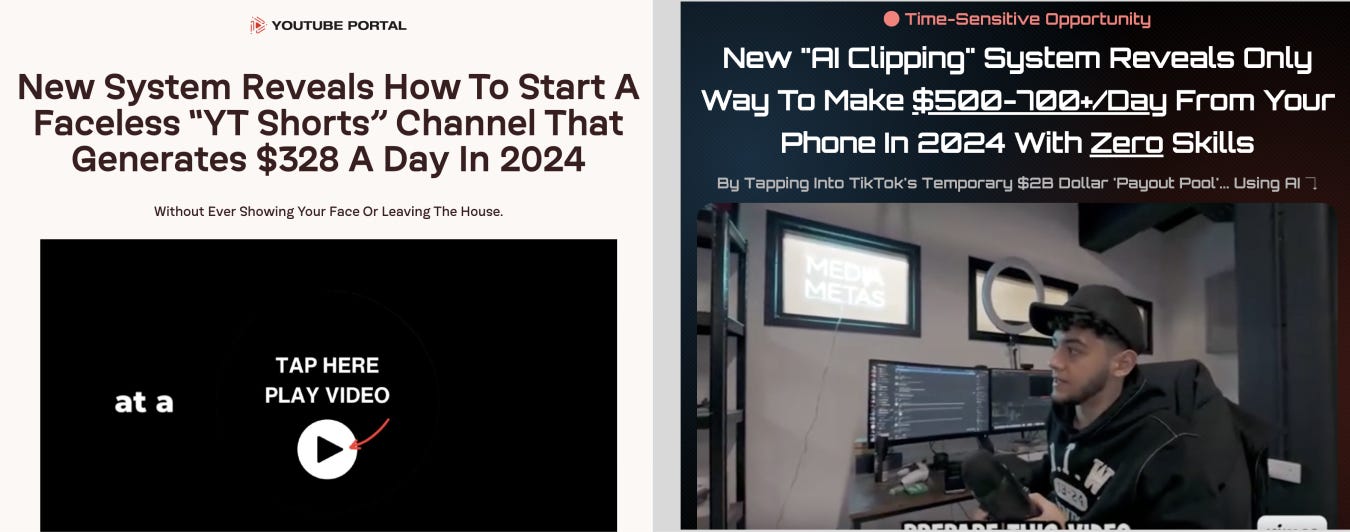
Crayo’s influencers (Daniel, Musa, and others) create courses focused on helping people succeed with short-form content. They were designed to teach users how to create engaging content and naturally lead them to use Crayo’s software.
The message is general and simple: People make thousands of dollars on faceless content, so you can too. Here's your guide to what's popular and temporary access our AI tool.
By integrating education with product usage, users viewed the software as an essential tool for their content creation success.
The company updates these courses according to trends from TikTok and Shorts, using the app as the one true tool that can solve any problem.
The courses acted as a marketing funnel, guiding users to adopt Crayo for their projects.
Creating courses is a great way to become a creator that keeps the audience engaged:
In addition to these three main strategies, Crayo also employed an organic content strategy. They engage with customers through newsletters, YouTube, and other sources. This direct communication allowed them to showcase Crayo's practical uses and build a community around the brand.
The result: in the summer of 2024, the number of users exceeded 2M. Currently, the platform makes about $7.2M a year.
Conclusion
Merging AI products, educational courses, and personal branding into a single marketing funnel has proven highly effective for Crayo. Here are two things I think is important to emphasize:
- This startup turned its niche expertise into a self-sustaining ecosystem by combining tools with targeted education. However, this approach raises questions about how public narratives match the realities behind the scenes. While Crayo is marketed as a creation of a single founder, multiple individuals have contributed to its development.
- Using creatorship as the primary distribution strategy for SaaS is an interesting and growing trend. Crayo’s focus on short-form video editing aligns well with its target audience. At the same time such reliance on personal branding can obscure the more complex dynamics of business growth, including hidden partnerships and funding sources.
I have to admit that Crayo’s success story managed to fool me. After reading several interviews and listening to podcasts, it seemed to me that we were dealing with a prodigy who creates flawless products. But it turned out to be simpler than that.
Do you agree? Tell us in the comments!
Share this edition with your friends!
This article was first published in the Creators AI newsletter. View the original edition.