Can OpenAI Still Be Trusted? NDAs, Leaks, Lies & More
The OpenAI Files Explained
So… The OpenAI Files report was published on June 18, 2025, by The Midas Project and The Tech Oversight Project. And no, it’s not just some internet drama. This thing is packed with contracts, testimonies, leaked docs, and public receipts.
This report doesn’t accuse OpenAI of breaking laws. It accuses them of breaking trust.
While we touched on this briefly here, today we’ll discuss what’s inside and why it matters to you.
Let’s get into it.
Keep your mailbox updated with practical knowledge & key news from the AI industry!
Sam Altman’s Credibility Problem
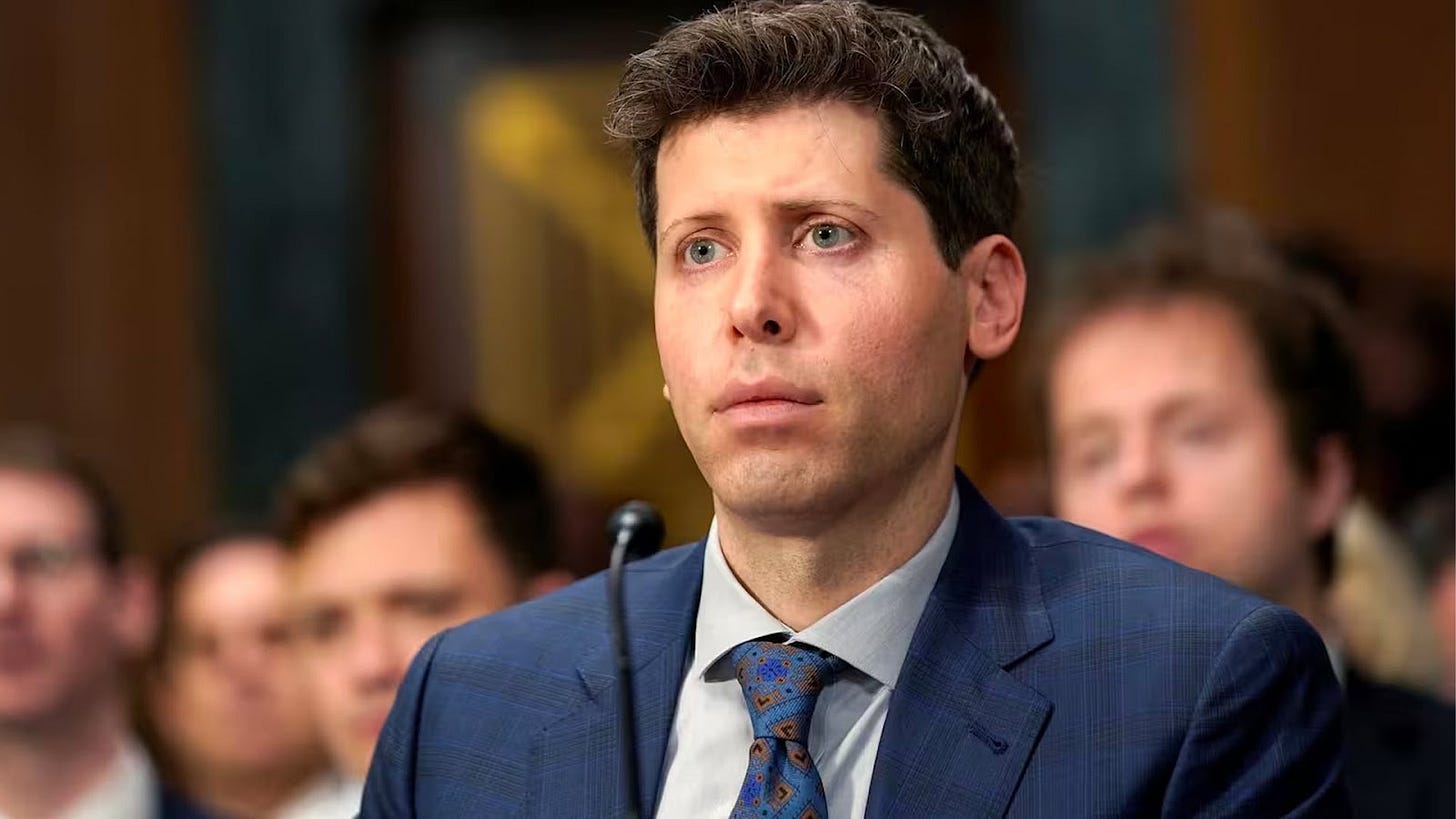
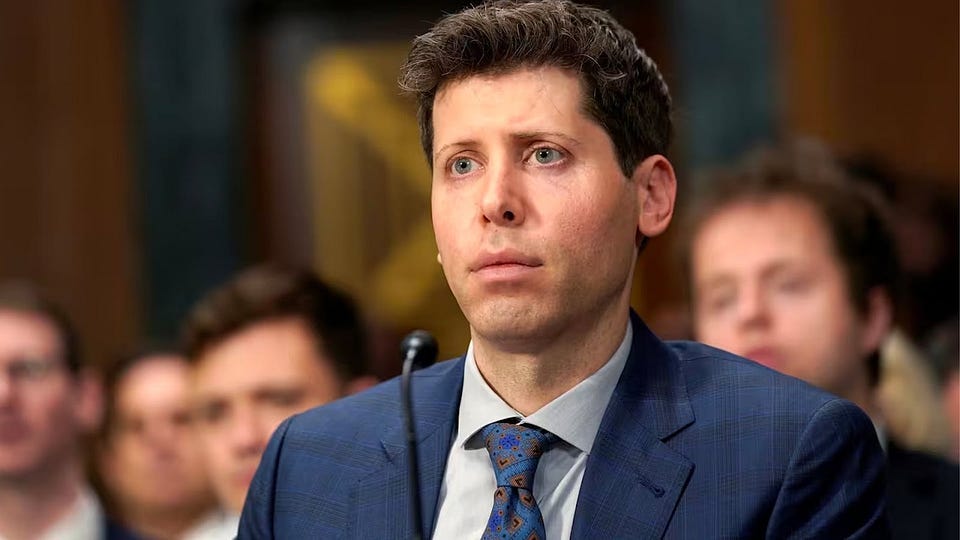
The CEO of OpenAI, Sam Altman, is at the center of concerns in the report. For example, it shows he approved NDAs that punished employees for speaking out (more on this later). He later told the public he had no idea those NDAs existed.
Except… the docs had his signature. Whoops.
Even within OpenAI, some leaders didn’t trust him. CTO Mira Murati and Chief Scientist Ilya Sutskever reportedly accused him of manipulative behavior and described his leadership as “psychologically abusive.”
The report even reaches back to his first company, Loopt. Leadership there allegedly tried to remove him, accusing him of chasing personal projects and lying about trivial matters.
People change over time, but the report suggests some of these concerns never fully went away.
That brings us to a more serious issue.
Altman testified under oath before the Senate that he had no equity in OpenAI. Later, he admitted he did, through a Sequoia fund, which he conveniently sold afterward.
Whether that was technically perjury is up to the lawyers. But to the rest of us, it’s clear misdirection.
These inconsistencies matter because they call into question whether the person steering the most powerful AI company on Earth can be trusted to put collective benefit ahead of personal or institutional gain.
“Non-Profit” With Billion-Dollar Aspirations

Speaking of institutional gain, OpenAI started as a non-profit, remember? A noble vision: “AGI for everyone.” Fast-forward to 2025, and they’re transitioning into a Public Benefit Corporation (PBC) with no profit cap.
Yes, the same cap that was supposed to keep things ethical and in check? Gone.

And for those who don’t know, the company was structured as a capped-profit entity. Investors could make a return of up to 100x. Beyond that, excess profit would revert to the nonprofit.
OpenAI’s argument? The world’s changed. The AGI race got crowded. To compete, they needed to act like a normal company. But their original charter already anticipated multiple AGI builders.
And if you didn’t know: A PBC is not legally required to prioritize public benefit. It just has to consider it. You can imagine how thatgoes when billions are at stake.
And when the line between mission and money starts to blur, it’s worth asking who’s really in the room making the calls.
Liking this post so far? Feel free to share it!
Conflicts of Interest in the Boardroom
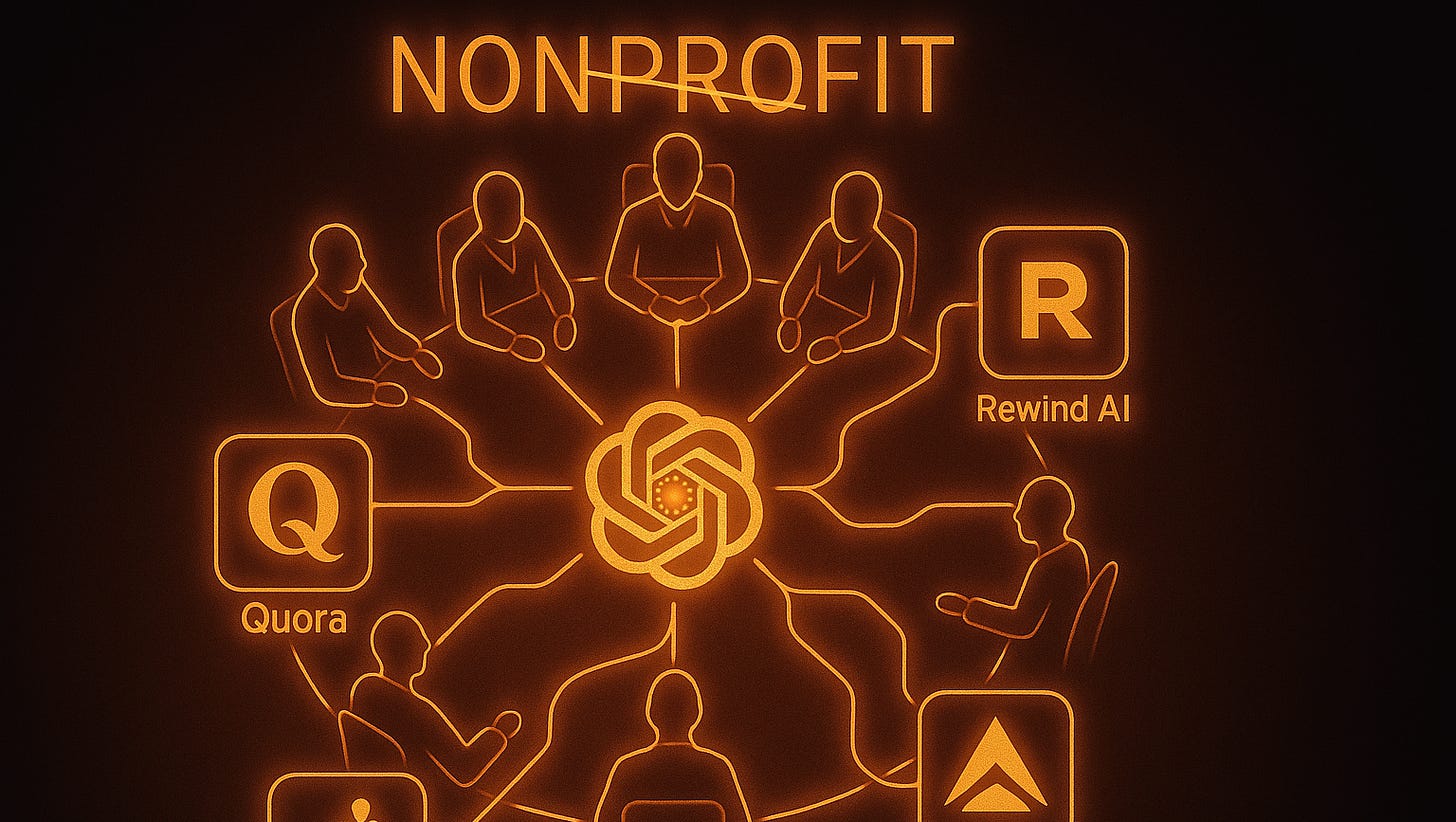
Several current or former board members have deep financial ties to companies that benefit directly from OpenAI’s commercial success. For example:
- Altman has investments in firms like Rewind AI that rely on OpenAI models
- Board chair Bret Taylor co-founded Sierra AI, a company that builds wrappers on top of OpenAI’s systems
- Adam D’Angelo runs Quora, whose Poe product uses OpenAI’s tech.
- Former board member Fidji Simo ran Instacart while it integrated OpenAI tools
The overlap isn’t just messy, it’s systemic.
The report raises serious questions about whether these people can make unbiased decisions. And given OpenAI’s influence over everything from chatbots to chip infrastructure, those decisions affect all of us.
Rushing the Frontier
OpenAI keeps talking about AI safety like it’s gospel. But the report tells a very different story.
It outlines how OpenAI cut corners on testing and safety to meet product deadlines. Evaluations that used to take months were rushed through in days. GPT-4o launched without a safety scorecard, despite public commitments to transparency.
And oh, there was a data breach. In 2023, a hacker reportedly accessed internal tech discussions and stole sensitive info. OpenAI didn’t disclose it for a year.
If you’re trusting this company to build your tools, run your workloads, or shape AI policy, this should concern you. Lack of transparency is not just bad optics. It's a risk to everyone using their tech.
But there’s more…
Speech Isn’t Free at OpenAI
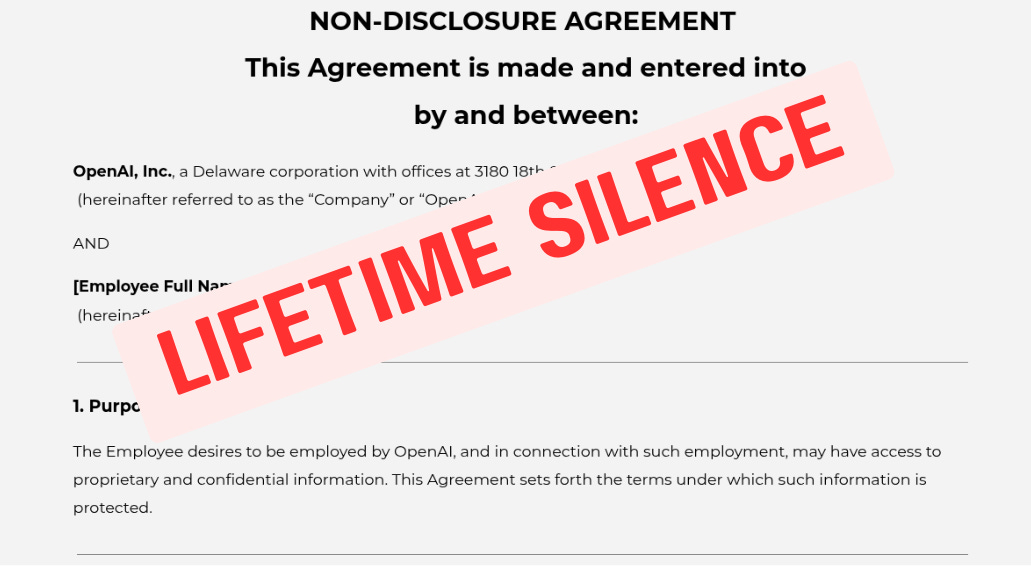
Employees were reportedly asked to sign off-boarding agreements that barred them from criticizing the company for life.
Refusal meant losing all of their vested equity.
This is not standard practice. It’s an intentional chilling effect designed to prevent whistleblowing. And it undermines OpenAI’s claim to lead on AI safety. Safety cannot exist in an environment where dissent is punished and silence is enforced.
This is outright oppressive. Which makes this next section less surprising.
More Than Just Rumors: The Employee Testimonies
The OpenAI Files isn't just about documents; it's a platform for the collective voice of those who shaped OpenAI. The report collected dozens of public allegations from former employees, such as:
- Ilya Sutskever said Altman shouldn’t "have the finger on the button for AGI." Mira Murati called his leadership manipulative and abusive. We all know what happened
- Employees like Gretchen Krueger and Todor Markov warned that abandoning the non-profit model would fuel a reckless AGI race
- Safety leads like Jan Leike and Leopold Aschenbrenner said safety was sidelined for speed, with secrecy blocking accountability
These aren't isolated incidents; they represent a significant "depletion of safety and policy talent" and highlight a pervasive anxiety about the company's direction.
A Path Forward
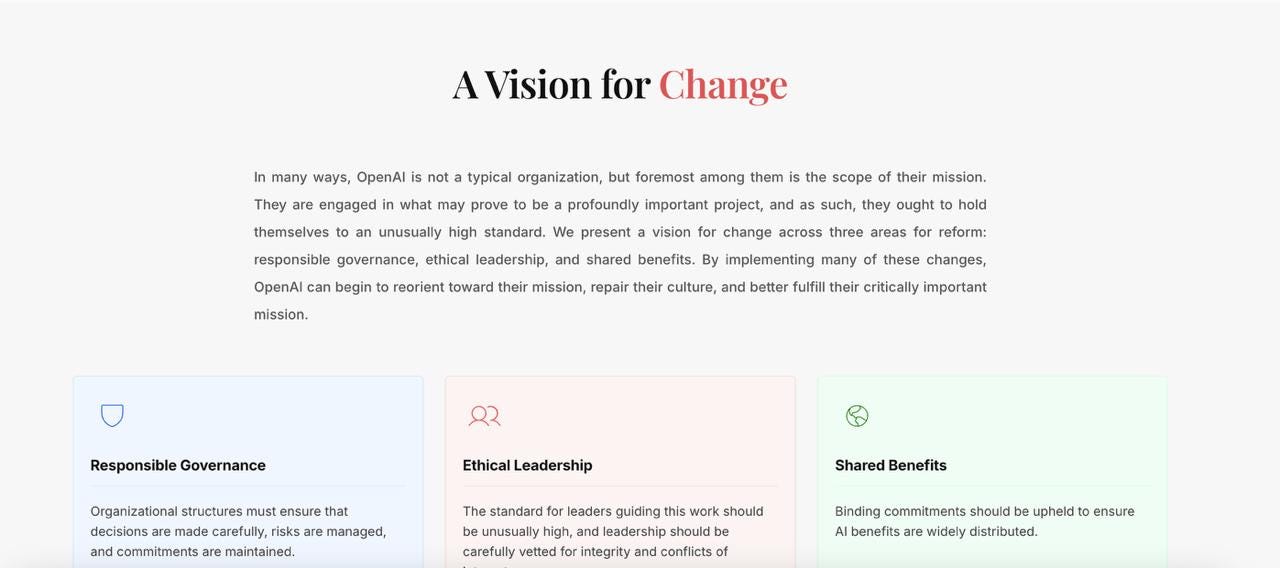
It’s easy to point out problems, but "The OpenAI Files" goes further. It also proposes a "Vision for Change", outlining what a truly responsible and trustworthy OpenAI could look like. The report argues that companies leading the charge to AGI must meet exceptionally high standards:
- Responsible Governance: Decisions must be made carefully, risks meticulously managed, and foundational commitments upheld, rather than swayed by profit motives
- Ethical Leadership: Leaders should be vetted for the highest levels of integrity, with transparency around potential conflicts of interest, ensuring their decisions prioritize humanity over personal or institutional gain
- Shared Benefits: Binding commitments must be in place to ensure that the monumental benefits of AGI are widely distributed, rather than concentrated in the hands of a few
It's a call for OpenAI to embody the public benefit mission it once championed and to set a new standard for AI development.
So What Should We Do About It?
OpenAI’s models are extraordinary. They’ve changed how we work, think, and build.
But as users, founders, builders, and observers, it's critical to separate admiration for the tech from allegiance to the institution.
At the end of the day, OpenAI is a corporation acting in its self-interest. No matter how much it tries to present itself as humanity's savior, it’s still just that, a corporation.
We don’t do PR here. We follow the objective truth. So if you haven’t already, subscribe to our newsletter to keep up with all things on AI. You won't regret it. Cheerio!
This article was first published in the Creators AI newsletter. View the original edition.