Can You Really Make Money with AI Vids on YouTube?
A Detailed Experiment and Tutorial
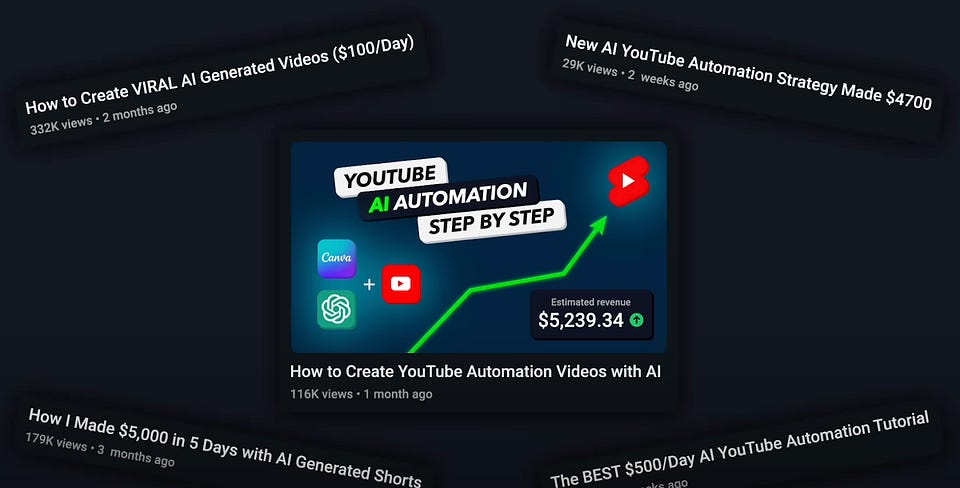
I’ve seen tons of YouTube videos promising $10k to $100k per month using AI. These videos usually sport clickbait titles and flashy thumbnails promising easy money, but there's often a glaring lack of evidence to back up their claims.
And it’s not only AI Marketers who promote their products for easy money. Some AI agencies promise huge profits too, claiming they can boost returns by 300% or more. Of course, many of these claims are exaggerated.

Intrigued yet skeptical, I decided to dig deeper and found a YouTuber who actually put this to the test. His case study was eye-opening, and I couldn’t wait to share it with you.
Stay ahead with the latest insights and tips on content creation by subscribing to our newsletter today!
The AI Challenge
The YouTuber I found started a simple experiment. The objective? To see if an AI could run a YouTube channel better than he could.
To do this, he created two channels: one fully automated using AI and another where he manually crafted each video. On both channels, he posted videos of “Quotes of the Day” and “Interesting Facts” formats.

The AI Toolbox
To create the AI channel, he used a combination of tools:
- ChatGPT to generate video scripts.
- 11 Labs AI for text-to-speech voiceovers.
- Pexels API for fetching stock footage.
- Vosk for subtitle generation.
- FFmpeg for video editing.
The idea was to automate as much of the process as possible, including the entire editing workflow.
The idea was to automate as much of the process as possible, including the entire editing workflow.
The Experiment: AI in Action
He started by asking ChatGPT for video ideas. After some testing, he settled on two styles: "Quote of the Day" and "Random Fact Compilation."
For the AI channel, he:
- Asked ChatGPT for thought-provoking quotes.

- Fetched beautiful background footage from Pexels.

- Used 11 Labs AI for the voiceover.
- Created subtitles using Vosk and edited everything with FFmpeg.

The final product? A soothing video with an inspirational quote, serene background visuals, and calming music, all generated by a single Python script.

For the Human Channel videos, he:
- Sourced interesting facts from ChatGPT.
- Used Pexels for relevant stock images.
- Combined these with gameplay footage from "Only Up" to keep viewers engaged.

Enjoyed this post? Share it with a friend and let them in on the insights!
Manual vs. Automated: The Showdown
On the manual channel, he replicated the same types of videos but did everything himself. He gathered quotes and facts from the internet, did the voiceovers, and edited the videos manually. This setup allowed for a direct comparison between AI-generated and human-created content.

Uploading and Initial Performance
Both channels got off to a slow start. By the end of the first week, the human channel was clearly outperforming the AI channel, boasting over four times as many views and subscribers. The main reason? A fact compilation video on the human channel that went viral, amassing over 10,000 views.

Ready to master YouTube content creation? Subscribe to our newsletter for exclusive tips and insights!
Adjusting the Strategy
Realizing that AI's strength lies in its ability to churn out content with minimal effort, he adjusted the AI channel’s upload schedule to three videos per day while keeping the human channel's schedule unchanged. This allowed the AI channel to leverage quantity, a key factor in gaining traction on YouTube.

Comparing Results
Learn about the experiment’s results and gain insights below
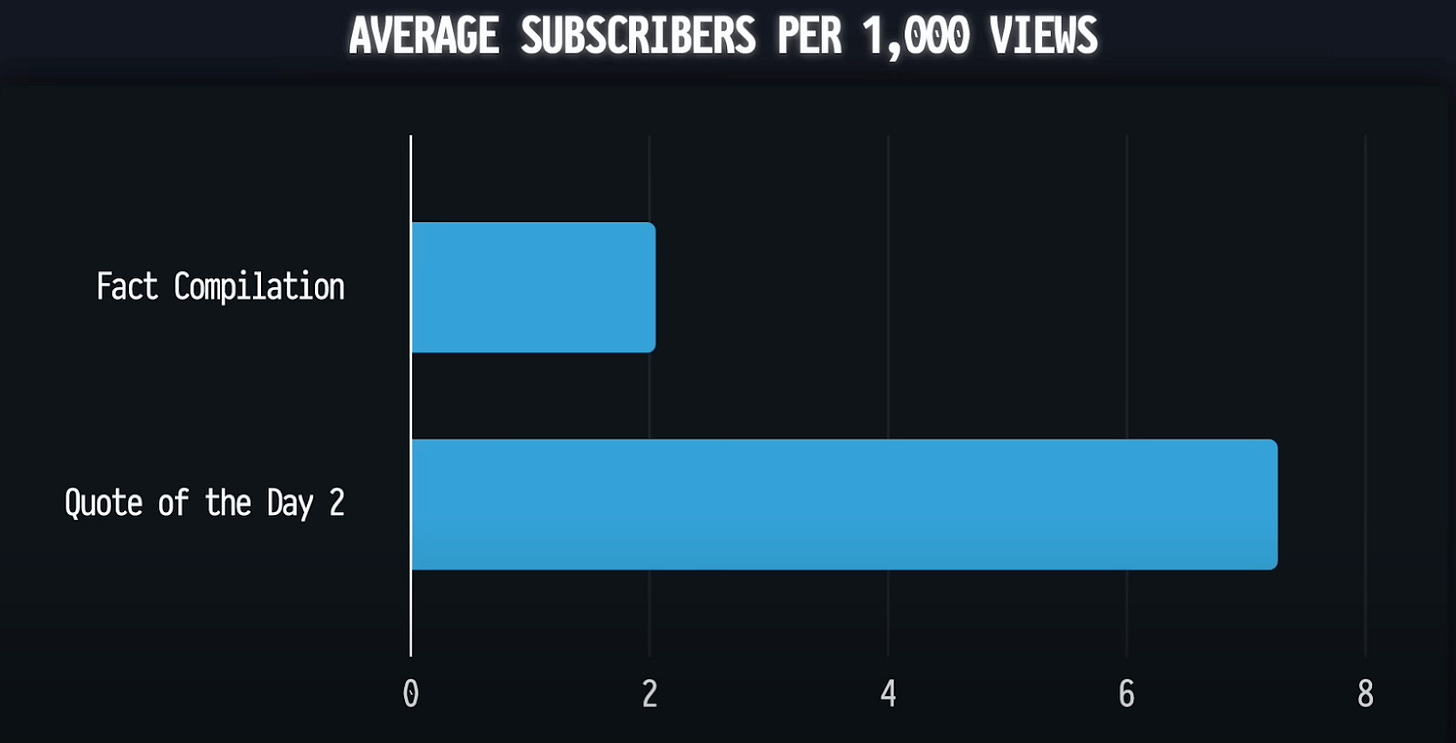
By the halfway mark, the human channel still had more views overall, but the AI channel had accumulated twice as many subscribers. Why? The frequency and new style of quote videos on the AI channel was a major hit. These videos featured a short intro and a recurring theme, which seemed to resonate more with viewers, leading to higher subscription rates.
To illustrate:
- Human Channel: 2 subscribers per 1,000 views.
- AI Channel: 7 subscribers per 1,000 views.
Give the gift of knowledge! Share our newsletter with a friend and help them stay informed and inspired.
The Final Stretch
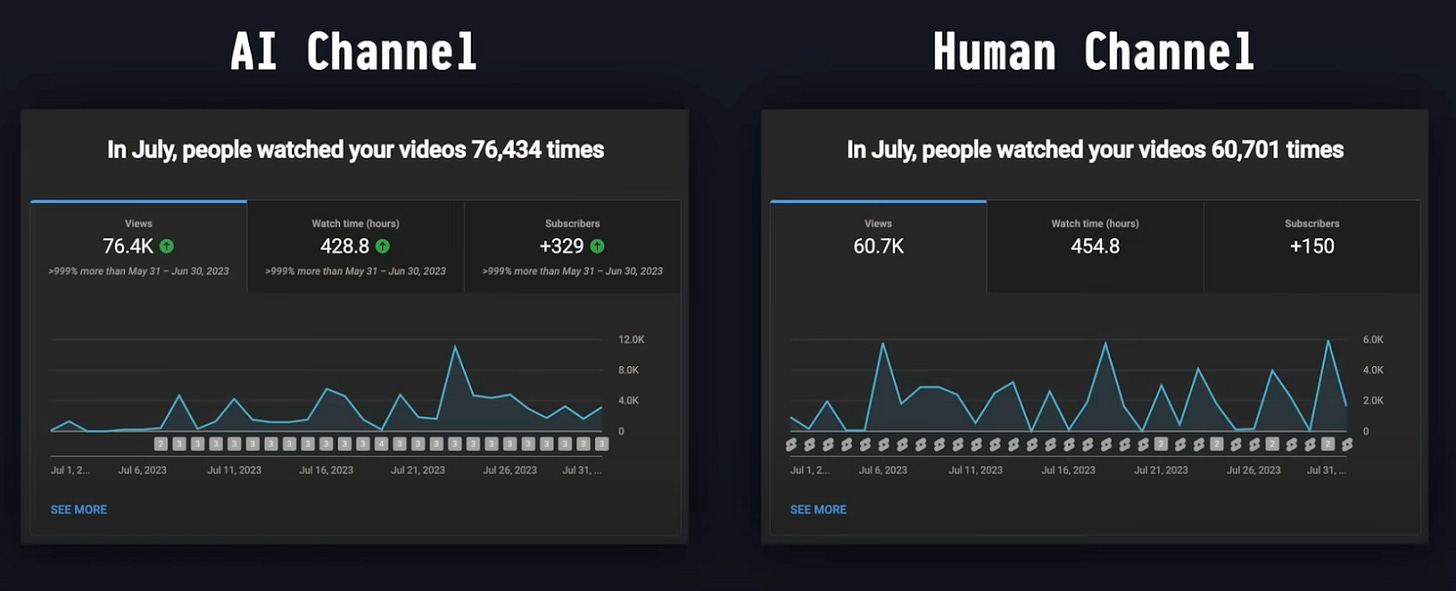
Despite tweaking the human channel to include the successful AI video style, the AI channel continued to pull ahead in views and subscribers. By the end of the experiment, the AI channel had over 76,000 views and 330 subscribers, compared to the human channel’s performance with 150 subscribers.
Full Automation and Beyond
Determined to push the boundaries, our YouTuber achieved 100% automation for the AI channel using AWS Lambda. This setup allowed the AI channel to upload daily without any human intervention. As of now, the AI channel has surpassed 100,000 views and 470 subscribers.
The Verdict: Should You Create an AI-Automated YouTube Channel?
Despite the AI channel's impressive performance, the YouTuber concluded that automated videos just don’t make for good content. The AI channel had more views overall, but its videos were lower quality and less engaging.
Key Insights:
- Engagement: Human-created videos had higher average views per video (1,700 vs. 900).
- Quality vs. Quantity: AI can flood the platform with content, but humans excel in creating high-quality, engaging videos.
- Monetization: Reaching the threshold for YouTube monetization (10 million shorts views in 90 days) seems impractical with purely automated content.
Final Takeaway (My Opinion)
AI can assist but not replace the creativity and nuance of human content creation. While it’s possible to build an AI-driven channel, it likely won’t achieve the same level of success as a channel nurtured by human ingenuity. As the YouTuber put it, "Automated videos just aren't good content." So, keep creating and let AI ease your process, but don’t rely on it entirely.
If you enjoyed this breakdown, consider leaving a like and subscribing. Thanks for reading!
This article was first published in the Creators AI newsletter. View the original edition.