Google VS AI SEO: How To Use AI for SEO in 2024
Creators Cases, New Google AI Rules and How To Survive Them With AI!
👋 Hey, I’m Stepan and welcome to a ✨ subscriber-only edition ✨ of Creators’ AI. By subscribing, you directly support Creators' AI's mission to deliver top AI insights & practical knowledge without ads or clutter. Your subscription allows us to grow our dedicated team and curate the most important AI Tools, Stories, and Tutorials in one place. - Stepan
Intro
Things are taking a serious turn: Google has declared war on generated and low-quality SEO content. Starting May 5, the search engine will receive more updates, after which the company will be much stricter in responding to user queries. And that scares a lot of creators who are using AI tools.
But is it all that bad? Today, I'm going to take you on a roller coaster ride. First, we'll look at successful cases where AI was used for SEO. Then, we'll explore Google's new rules and their dangers. Finally, we'll look at solutions and tools that are still relevant.
So, in this newsletter:
- Impressive Cases for AI SEO (How good it used to be)
- How Google Will Fight Algorithms (What will happen now)
- Relevant AI for SEO Optimization (How we should proceed in the future)
Let's begin!
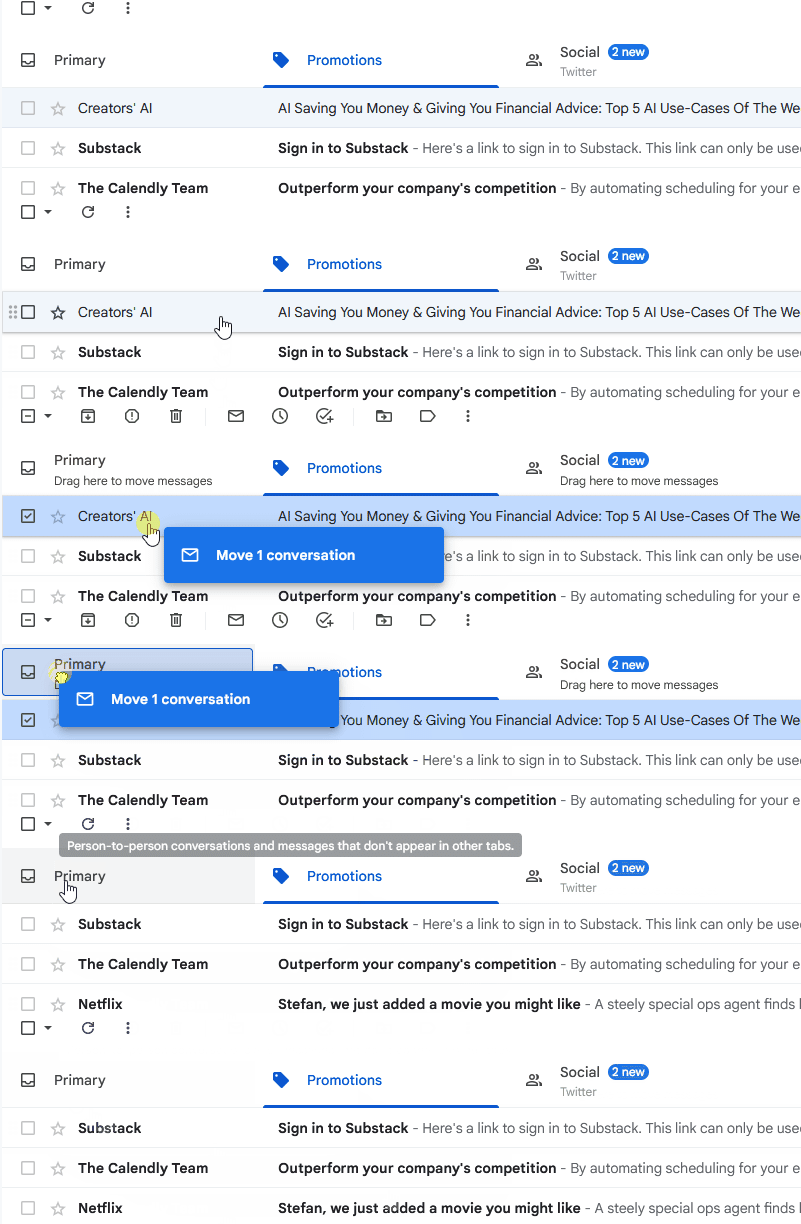
🔗 Are you already subscribed and want to ensure you don’t miss our newsletters? Move our newsletter from “Promotions” to “Primary” in your inbox! (video instructions below)

Real Cases
Ironically, to discuss what the future holds, I suggest we talk a bit about the past: literally, about the past couple of months. Let's start with an overview of cases where AI Tools enabled viral content generation for search engines and supported creators on the road to success.
AI helped build a platform with 45,000 monthly visitors

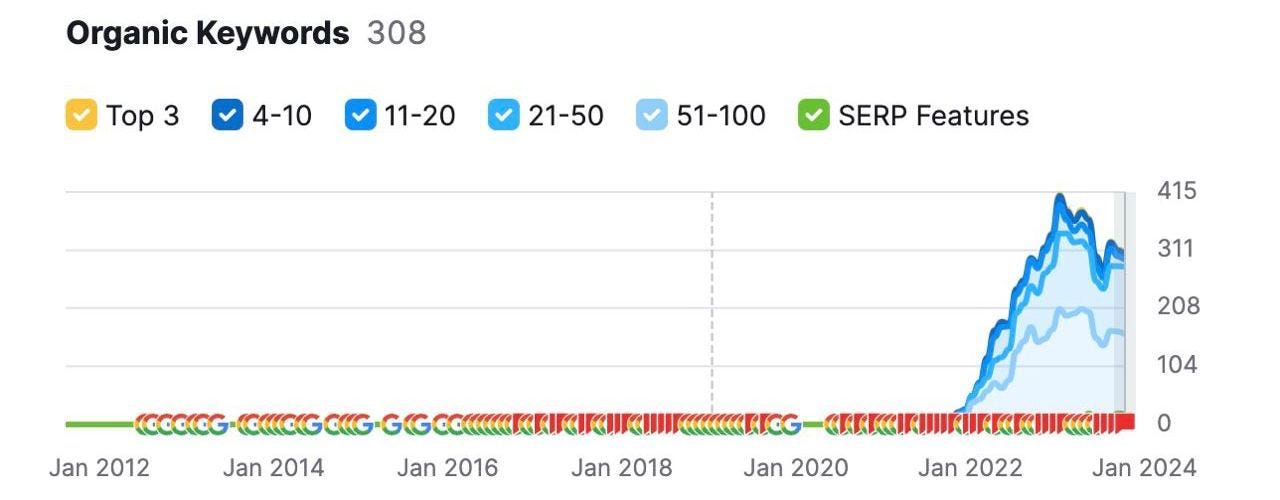
Our first case study is Jacky Chou (who may also be known as Indexsy on Twitter). Jacky is an entrepreneur who runs a marketing and newsletter business. A couple of years ago, he used a proprietary GPT-3 model to build a website from scratch and attract 45K unique visitors.

He found 1,000 keywords on a topic with low competition, applied AI Tools to create SEO-optimized content, and achieved the desired results. As he later shared on his Twitter page, along with these projects, his income grew to $320K in four months of work!
Here are the takeaways from Jacky's case study:
- Find keywords with low competition and high traffic volume
- Constantly track and measure your results
- Don't misuse AI to create posts (Jacky relies on real writers using AI for his work)
If you want to learn more about Jacky, listen to his podcast here:
Keep your mailbox updated with practical knowledge & key news from the AI industry!
Side hustle with AI turned into an agency with 5-figure revenue

Lauren Mabra and Lauren Ferry
The second case concerns the social marketing agency LaurenLabeled. Founders Lauren Mabra and Lauren Ferry are 25-year-olds who help other creators and brands grow their social media projects. In less than three years, they turned their part-time job into a full-fledged business and became popular creators with TikTok Shop.
LaurenLabeled relies on the popular Alli AI platform for its work. This service applies AI to optimize, automate, deploy, and scale SEO. Technically, these tools take care of all the promotion tasks. As practice shows, this approach works well for those projects that don't have the ability to hire a team of marketing and SMM specialists.
Here's what the founders say about using AI for SEO optimization:
There's simply no faster way to optimize a website. We've gone from taking months to get tasks done manually to seeing the changes live instantly. Alli AI automates thousands of hours of manual work in minutes, and you can do it all from one dashboard without having to learn and train staff for different CMS for every client
The websites of Mabra and Ferry show stable organic traffic growth due to high keyword content and optimization. At the same time, the agency practically does not use services to attract paid traffic. The AIs do this work on their own.
What conclusions we can draw from the LaurenLabeled case study:
- AI SEO tools help establish website promotion without additional burden on the team.
- Automated platforms analyze vast amounts of search data, identifying trends, which means it's easy to find what your audience is interested in.
- Attracting traffic allows you to convert visits into personal brand development.
Mabra and Ferry revealed more about their agency and how it's set up in interviews for Forbes and BI.
Want to learn about AI-Powered SEO Growth-Hacks? Follow this newsletter:
Google New Rules

First, it is worth noting that Google has stated before that it is strict about the content in the search engine. Regarding AI, the company claimed that quality should be paramount and urged users not to abuse tools that automate the work. However, the search engine could still "clog" answers with meaningless and misleading links.
The update deals with two aspects:
- Improved quality ranking: Google wants to make algorithmic enhancements to core ranking systems to ensure the most helpful information on the web and reduce unoriginal content in search results.
- New and improved spam policies: The company is heavily updating its anti-spam rules to eliminate low-quality content from Search, like expired sites that new owners have repurposed as spam repositories and obituary spam.
Sharing is caring! Refer someone who started a learning Journey in AI!
Interestingly, Google's blog doesn't mention "artificial intelligence" or "AI." However, the company attributes the impact this new technology is having on the Internet to the fact that methods of creating scalable content often use "automation." Such content will now enjoy less success in search engine rankings.
What else you should know:
- Google is tightening its policy on those who create a lot of content. This rule applies to both generated posts and those created by humans.
Google hints to us that it's time to move from quantity to quality. So in the near future, creators should shift their focus to maximizing relevant and original content for users.
- Sites that produce quality content themselves but place spammy and garbage articles as ads will rank worse.
Now we have to watch out not only for our own content, but also for content from partners and clients. Choose your friends carefully!
- Expired domains that are purchased and repurposed to boost the search rankings of low-quality content are now considered spam.
Since expired domains are often purchased and repurposed into low-quality platforms, the role of your website name is now especially important. Now is the time to pay attention to naming!
Google estimates that this update and previous efforts will reduce low-quality and unoriginal content by 40%. That's an impressive figure that suggests the new rules will affect a large number of creators. And it's all set to go live on May 5 this year.
So what's next?
Will Google really kill projects that rely heavily on AI-driven SEO automation and optimization? Well, yes and no. The changes don't prohibit you from using AI and automation, and Google won't purposely undervalue the power of generated content. However, methods like "generating 10,000 posts for your website in 2 hours" may suffer.
To avoid this, we recommend using the Pragmatism + Human + AI approach (as well as the tools we cover below). This will allow you to avoid problems with... Well, the most popular search engine in the world! Let's figure out what we should use.
How to Keep Using AI for SEO With New Google Rules
Here, I could just list the popular tools for creating SEO-optimized content. But that's boring and not very useful. If we want to get good results with Google's new rules, it matters not what services we use but how we work with them. Let's walk through the entire content creation process, from keyword generation to publishing a post on a website. At the same time, I will note points to which we now need to be more careful.
Target the Right Keywords
We’ll start with keyword selection. I'll use an impromptu theme: vegan cooking (but you can apply whatever fits your niche). AnswerThePublic will come in handy in this endeavor.
- Just type in a keyword related to your topic. Explore the visualization of frequently asked questions and related searches. This gives you an idea of what your target audience is searching for.
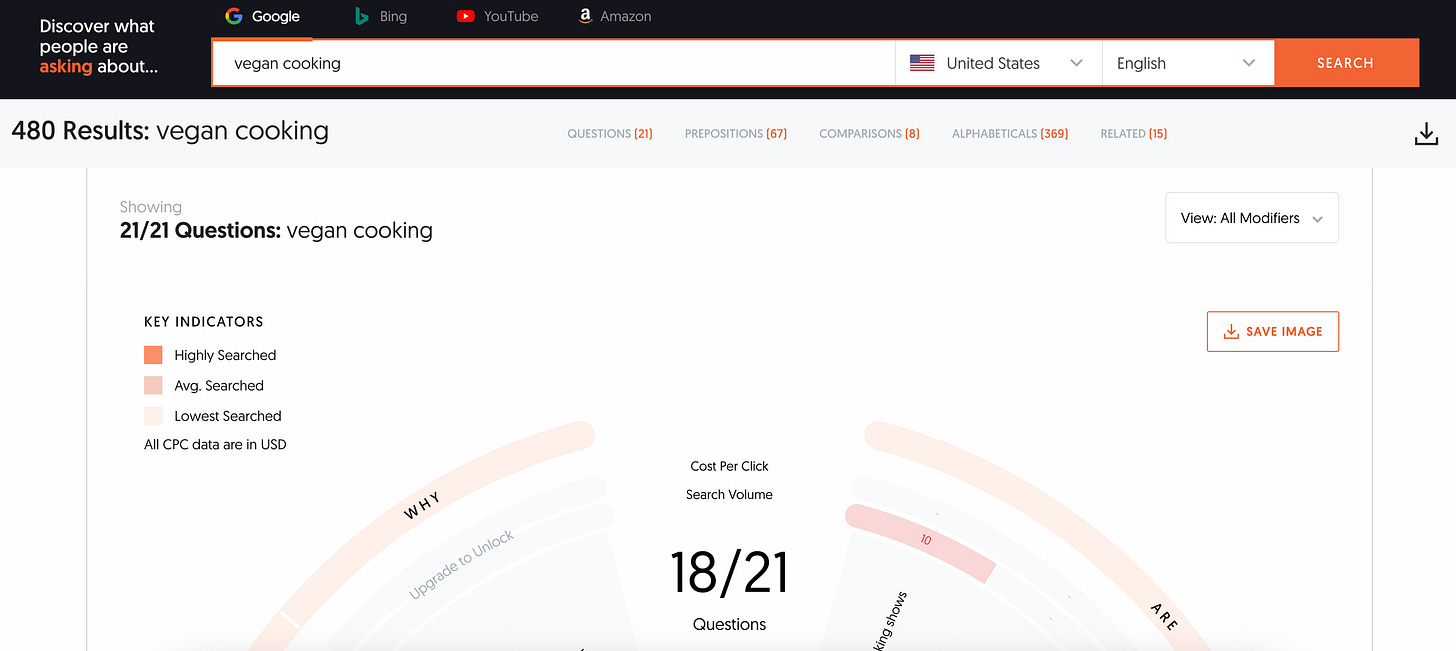
You can also refine your keywords with Frase.io. This platform analyzes competitor content to help you identify topics that others may be missing.
- Analyze the results, paying attention to search volume and keyword difficulty. Aim for a mix of high-volume keywords and more specific long-tail phrases that are easier to rank for.
- Dive into MarketMuse. Plug in your chosen keyword and get a content brief showing you the essential topics. Here, you can also look at popular user queries.
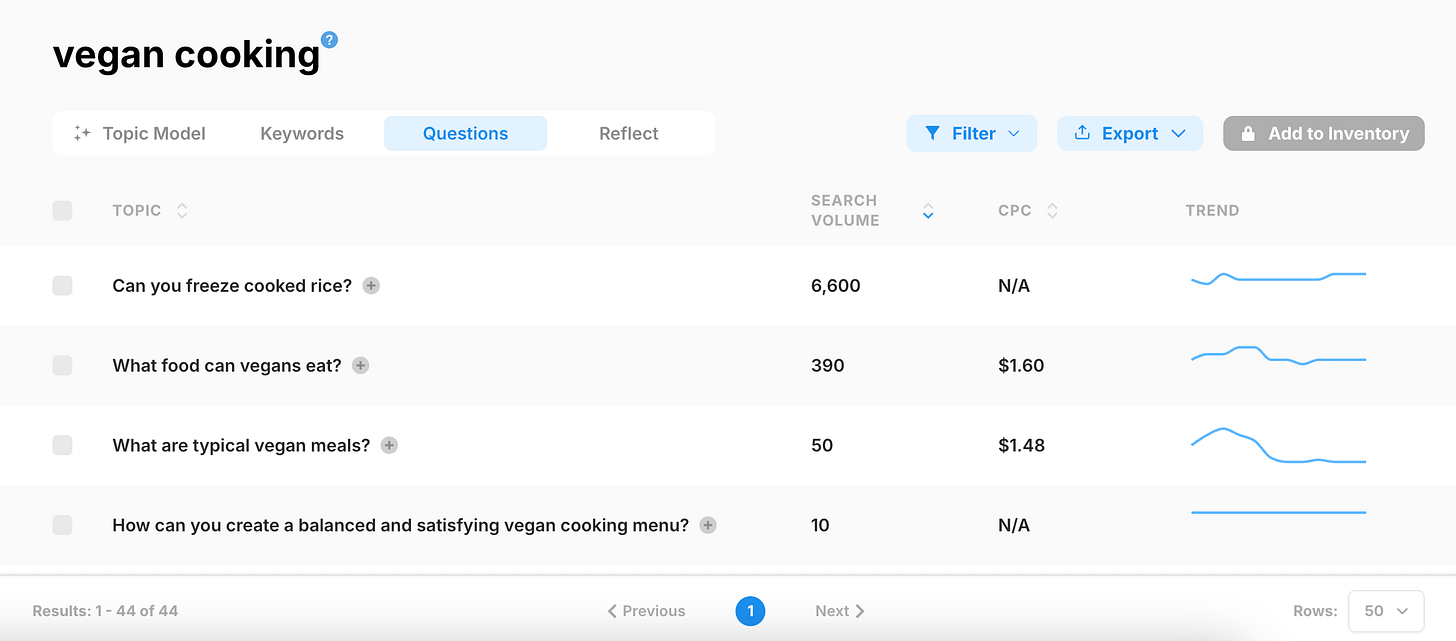
We're going to slow down a bit here. With the new rules Google will be more selective, so we advise you not to grab the first keywords and topics you come across. Go deep into the niche (or ask ChatGPT), consult with your colleagues, and specificize your query. This is how you ensure that your product is really in demand.
Craft Content that Search Engines (and Humans) Love
- You can use Rytr Content Editor to guide your writing here. It analyzes top-ranking content and provides structure suggestions.
A better choice might be SurferSEO, because it was created specifically for SEO content. But its free only for the first 7 days. If the free period is not enough for you, you can use other tools. For example: ChatGPT or Gemini.
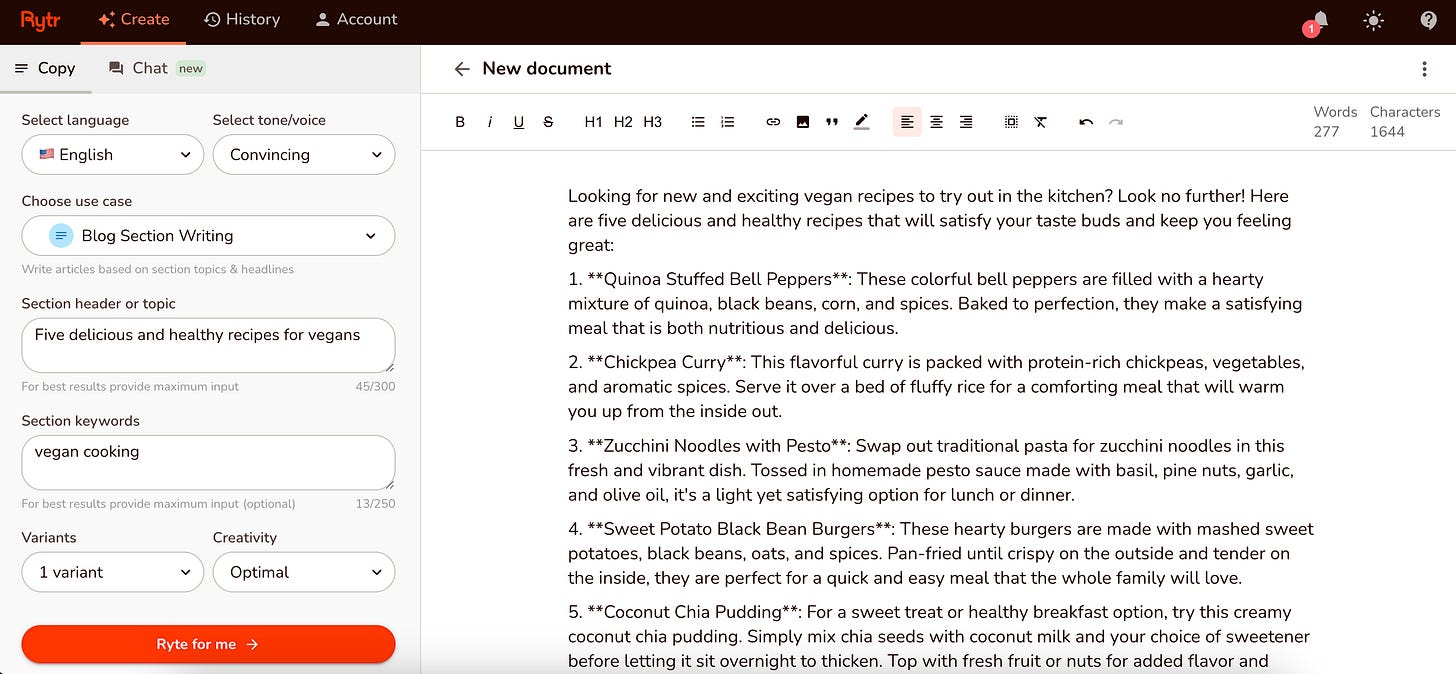
Using Rytr, you can write an article for your blog in minutes and integrate keywords for search engines.
- Now, we should "comb" our content for readers (after all, now we should care about the reactions of not only algorithms but also users). Grammarly (partially paid) and Hemingway Editor (free) suit this task. Paste your post into the editor and correct any remaining flaws.
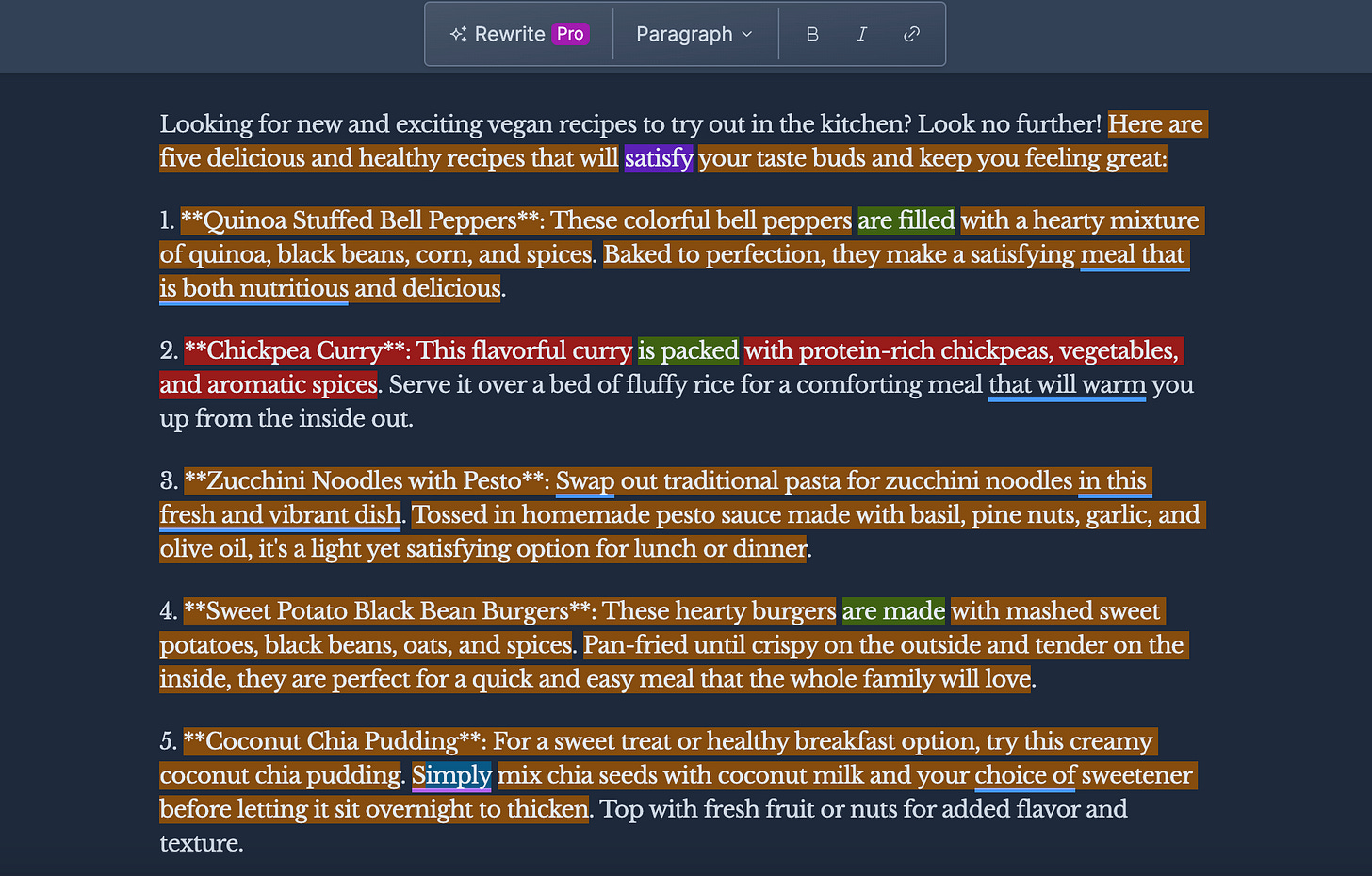
Our post is almost done (done in a couple of minutes, by the way).
Share this with your friends, especially those interested in AI Tools!
The only thing left to do is to polish the details. And while this step may have been ignored in the past, it is now perhaps the most significant moment.
Master the Technical Details
It’s time for fine-tuning:
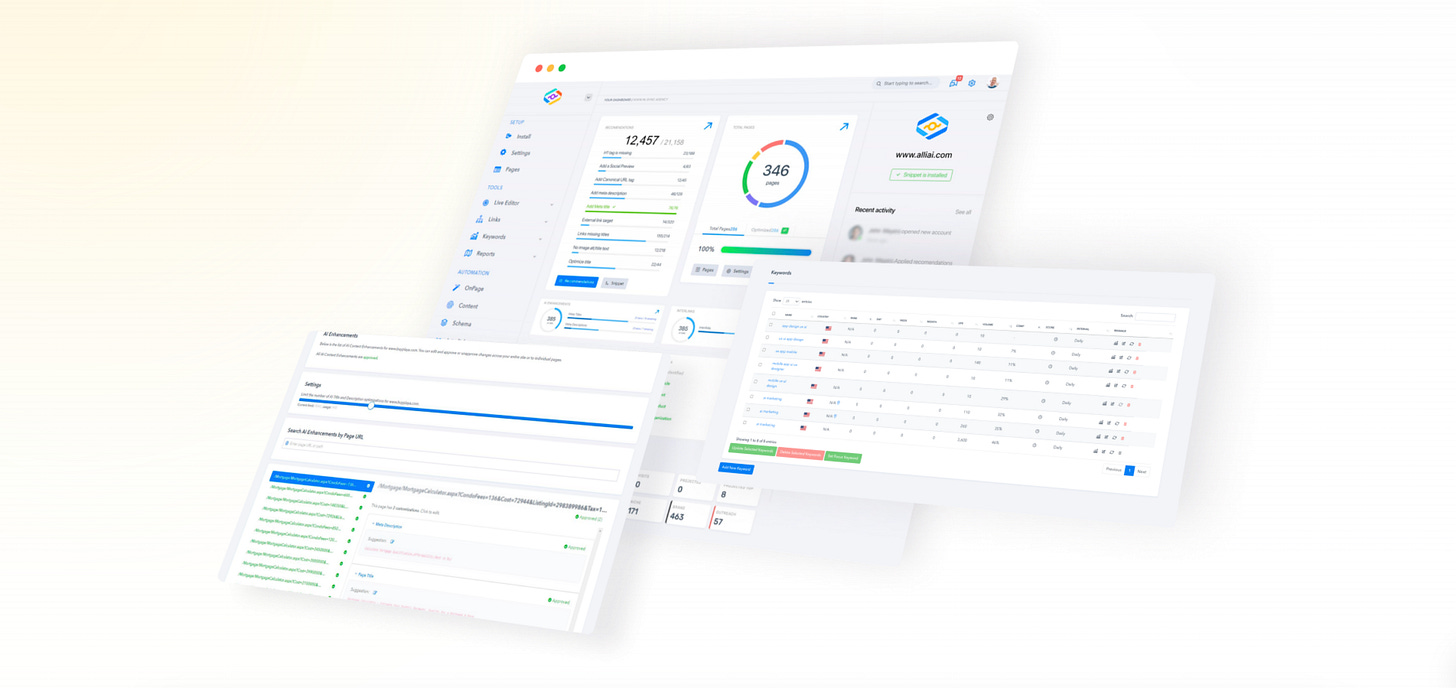
- First, use Alli AI. This advanced tool analyzes your content and identifies potential improvements, from your title tags to the internal link structure. Bonus: Its link-building suggestions can help you get other sites to reference your posts, boosting its authority.
- Second, try to uncover more with AlsoAsked. This is where you can find out in detail what your target audience is interested in. This will allow you to answer important questions and make your content more personal proactively. The latter is especially important: Google actively promotes such posts.
- And third, check out Google Search Console. It’s a treasure trove of free information. You can plug this into your website to analyze how people find your posts and identify new opportunities. If anyone can attract visitors through search engines, it's Google itself.
Additional tools
In addition to those listed above, there are many useful platforms. As a bonus, here are some of them you can use to increase your SEO:
- HubSpot AI Tools has various AI tools that help you create optimized content that will rank high in SERPs.
- SEO.ai: An AI-powered platform designed to streamline and optimize your website's search engine rankings.
- Paraphrasingtool.ai: An online tool that helps you rewrite text to avoid plagiarism and improve readability.
- OutRanking: An SEO content platform that uses AI to provide data-driven insights and strategies for higher search rankings.
- Diib: A website analytics and monitoring platform that provides actionable recommendations for improving website health and SEO performance.
- PageSpeed Insights: A Google tool that analyzes your website's speed and offers specific optimization suggestions for faster loading times.
- Scalenut: An AI-powered content creation platform specializing in short-form and long-form copywriting and SEO assistance.
- INK: An AI optimization tool that improves your content for search engines and user experience.
Would you like to get a few more? You'll find them here:
Conclusion
Google's new rules are causing mixed feelings. Don't get me wrong, I don't want to defend trash and spammy content creators, but such tectonic shifts often affect honest newcomers and enthusiasts. The company's position is clear: originality must run in the long run. A new reality is approaching, one that we will soon have to work with.
So, my advice to you is simple: use good AI tools but retain human control over originality of thought, critical evaluation, and voice authenticity. And, of course, remember that the ultimate goal should be your audience, not content created to appease the search engine algorithms.
What do you think about AI for SEO optimization? Tell us in the comments!
This article was first published in the Creators AI newsletter. View the original edition.