How AI Boosted Nvidia's Market Cap to $2T
From GPU developer to the most important AI company in one year
👋 Hey, I’m Stepan and welcome to a ✨ subscriber-only edition ✨ of Creators’ AI. By subscribing, you directly support Creators' AI's mission to deliver top AI insights & practical knowledge without ads or clutter. Your subscription allows us to grow our dedicated team and curate the most important AI Tools, Stories, and Tutorials in one place. - Stepan
Nvidia Now Synonymous for AI
You don't have to go far to realize how in-demand Nvidia is for the AI industry. In one year, Jensen Huang’s company broke into the world's top three most valuable companies, surpassed Google and Amazon, and was named "the most important stock on planet Earth" by Goldman Sachs. Today, I propose to explain how this happened.
Let’s discuss Nvidia's recent history and how the company became a key AI supplier. Along the way, we'll decide whether Mr. Huang is worthy of the "the new Steve Jobs" title and whether the company's more than $2T market cap is an element of chance. (spoiler: both yes and no)
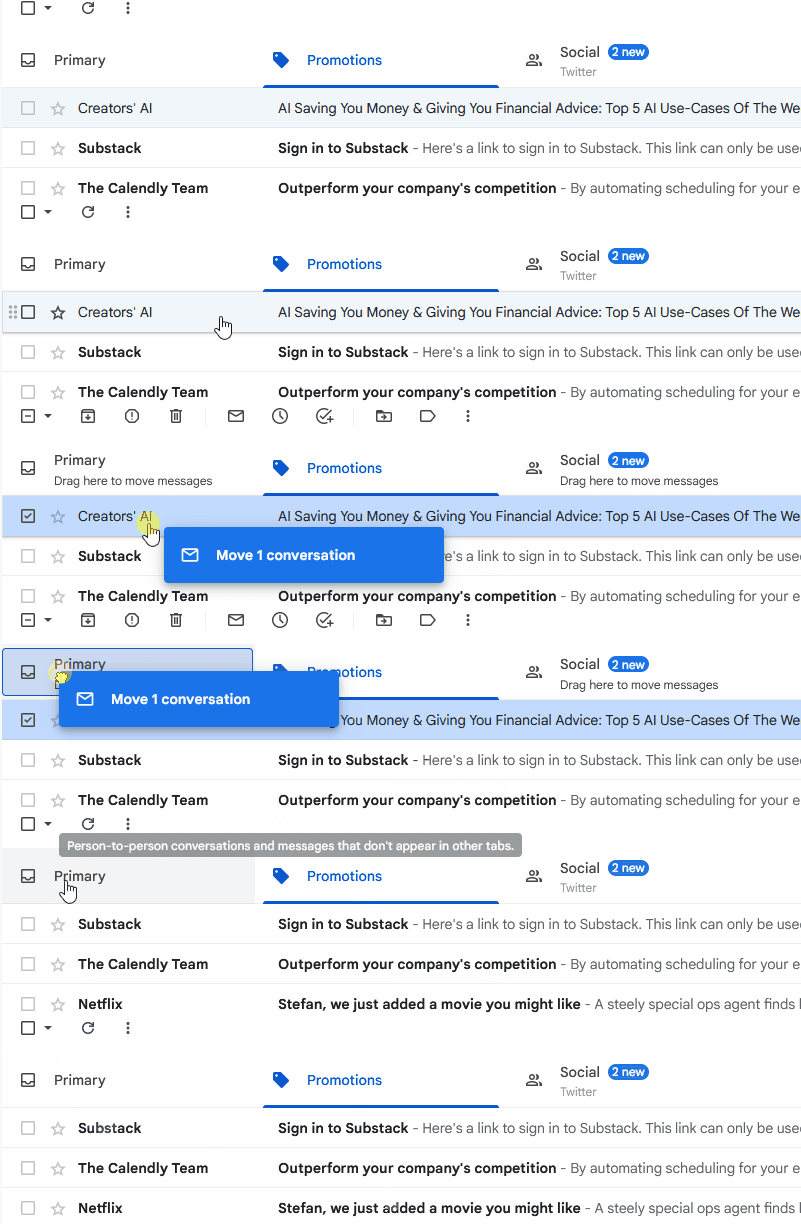
🔗 Are you already subscribed and want to ensure you don’t miss our newsletters? Move our newsletter from “Promotions” to “Primary” in your inbox! (video instructions below)

From $1T to $2T Market Cap In Less Than a Year
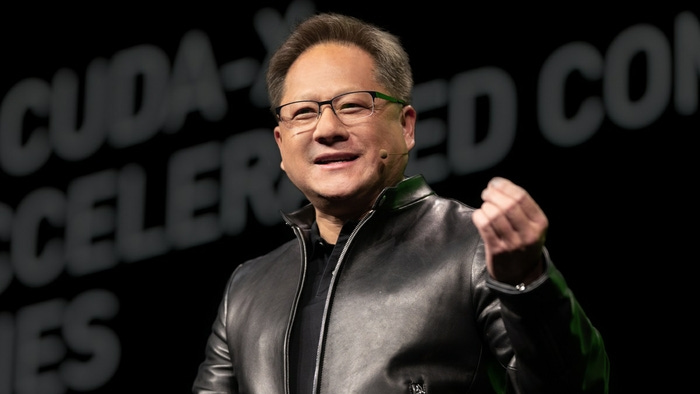
How we got to this point
Traditionally, we should have started at the founding. But we won't go back that far because the most exciting part of Nvidia's history has been in the last couple of years. It was also the period when Jensen Huang turned the company into a primary beneficiary of the AI industry.
And for those who haven't followed Nvidia before, I'll just remind you that it was launched as a startup specializing in graphics processor development in 1993, after which it grew steadily until it became a key player in this market. Its customers include Apple, Microsoft, Google, and many others.
While Nvidia has long been an extremely important company—for investors and tech companies alike—until a year ago, few would have suspected its stock would quadruple in value. But that all changed thanks to video games and tech stalemate.
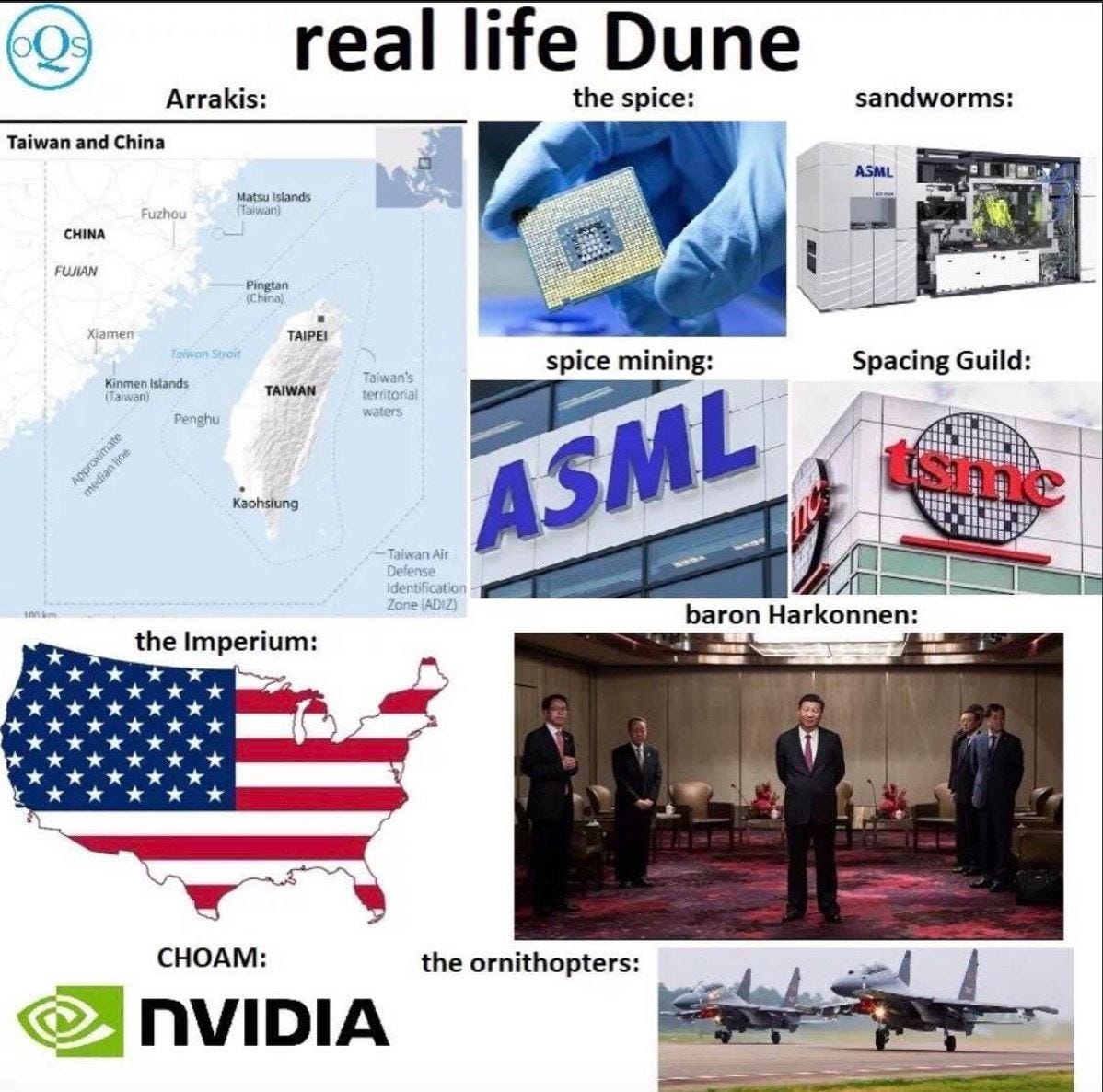
The self-explanatory map of the semiconductor industry for Frank Herbert fans.
Speaking during a keynote at SIGGRAPH in Los Angeles, Jensen Huang revealed that he made an existential business decision in 2018 (long before the boom of ChatGPT, Gemini, Perplexity, and many others). While improving its platform for video game developers, the company realized rasterization was reaching its limits.
Rasterization was one of the most popular 3D scene rendering methods at the time.
It has become almost impossible to make computer graphics more advanced. To solve the problem, Nvidia embraced AI-powered image processing through ray tracing and intelligent upscaling: RTX and DLSS. Huang said this idea required reinventing the hardware, software, and algorithms. It was a moment when the visionary thing worked even better than Huang thought it would.
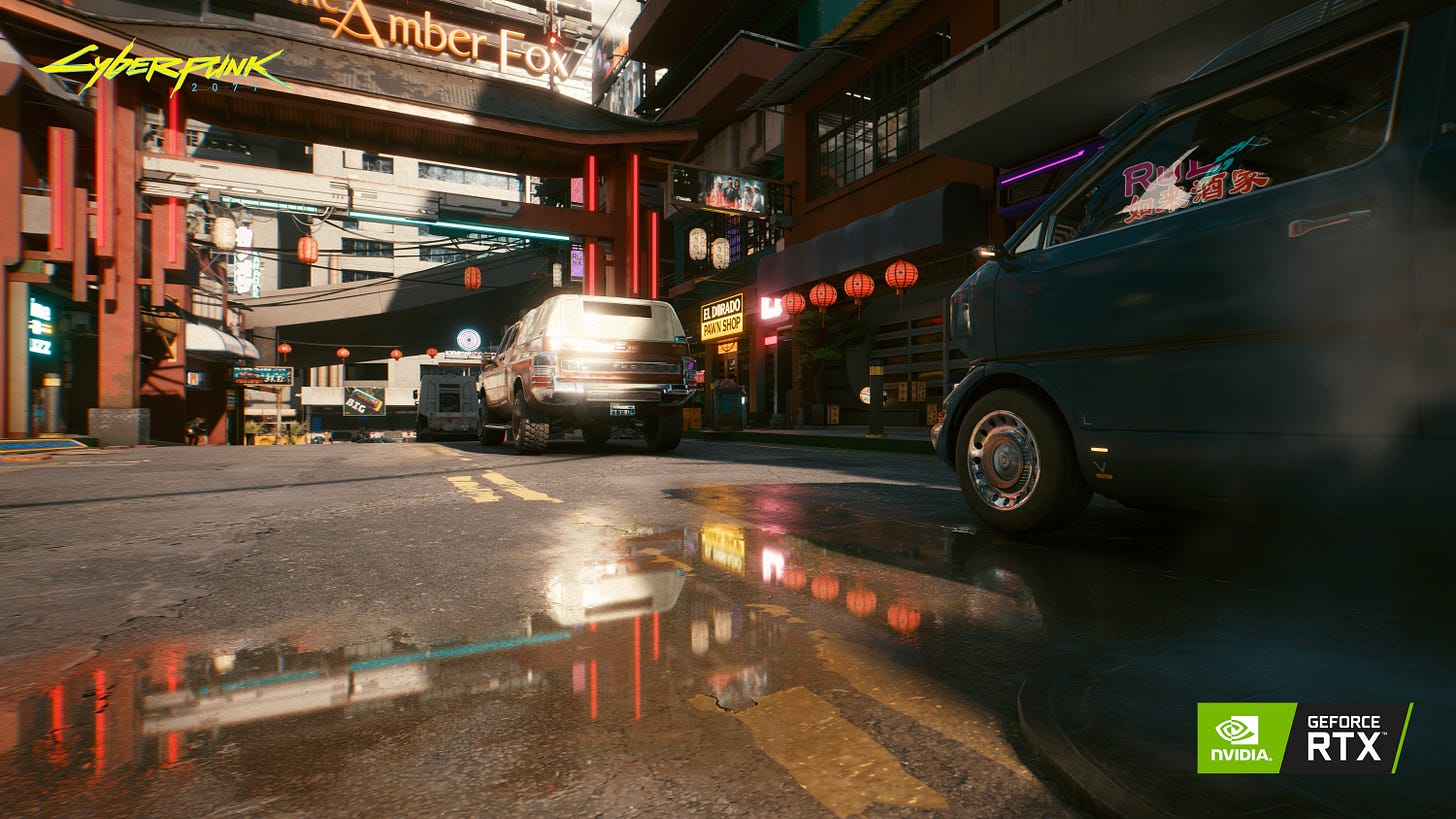
So, the company created a next-generation GPU for improved graphics processing. And it worked. If you follow the gaming industry, you're well aware that one of the reasons for the stunning visuals in Cyberpunk 2077, Control, and Alan Wake 2 is precisely because of the support for these technologies.
Keep your mailbox updated with practical knowledge & key news from the AI industry!
That said, between 2018 and 2021, even Nvidia didn't realize what a treasure trove had been unearthed. And then it was luck's turn. Everything changed with the boom of machine learning. Users have only begun to familiarize themselves with the first models, while IT companies have turned to Nvidia to get GPUs to train new platforms.
If you are looking for a daily driver chatbot, our AI Benchmark will be very useful:
Specifically, Amazon, Google, Meta, Microsoft, OpenAI, and many others are in the front row of customers. Everyone wanted a GPU for AI from Nvidia. From that point on, things took off for the company (Well, it was growing anyway, but from that point on, Nvidia's growth became unstoppable). The market quickly noticed who was leading the charge, increasing the company's stock.
And what now?

Here's what Nvidia's growth looks like over the last 6 months
Nvidia's influence on the IT industry is more visible than ever. According to industry analysts, the company controls 95% of the AI chip market. Nvidia supplies its GPUs to big tech and most unusual partners: factories, automakers, and even big pharma. And that's reflected very well in its financial performance.
When the company released its quarter report late last year, we discovered that its profits were up 588% and revenue was up 206%. The annual report did not disappoint either. After its publication, the market cap increased by $277B, the largest daily growth in Wall Street's history. Nvidia almost quadrupled in the last 12 months.
Just to give you an idea of the numbers we're talking about, actual Nvidia’s market cap is comparable to the annual GDP of countries like Italy, Brazil, and Canada.
That's how Nvidia took advantage of the situation. Given the huge demand (some Nvidia customers were willing to wait 11 months for their chips) and the lack of competitors, the company has priced its GPUs accordingly. The exact cost is not disclosed (apparently, it depends on the customer), but we know that Nvidia H100s were sold on Amazon for $40,000 per unit last year.
Creators’ AI could be a valuable gift for your friend, colleague, or family member. Gifting books is bright, but giving an AI newsletter is a superb move 😎
Nvidia AI Products
Regarding technology, Nvidia has had an entire ecosystem dedicated to AI over the past few years. However, the most popular solution is the H100 platform. It was built on the Hopper architecture, explicitly designed for accelerated computing workloads.
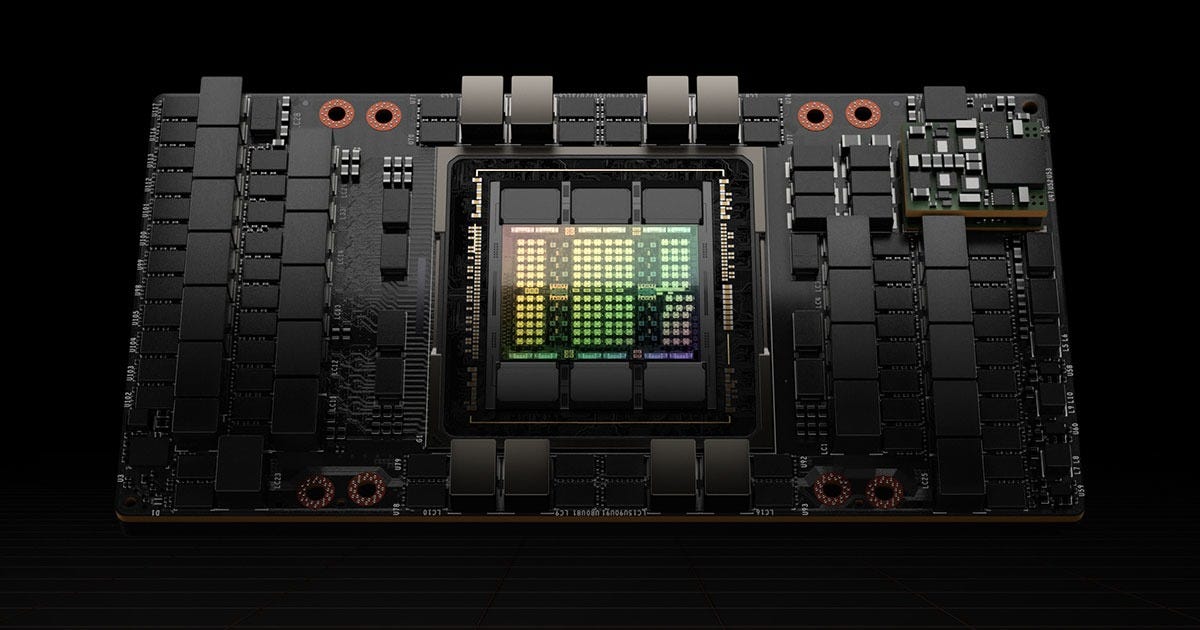
H100 has 80B transistors and a specialized engine within the GPU optimized for handling LLMs.
Given it sales, it's safe to say that this platform is ideal for cutting-edge AI research involving massive datasets and computationally demanding models.
But the H100 is past its prime. If you read our weekly newsletter, you know that last week, the company held its annual conference in San Jose, CA, GTC 2024. At this event, Jensen Huang took the stage in the best tradition of Steve Jobs and Tim Cook, made some high-profile statements, and introduced key products for the coming year.
Here are three significant announcements from GTC 2024:
Blackwell B200 AI Chip
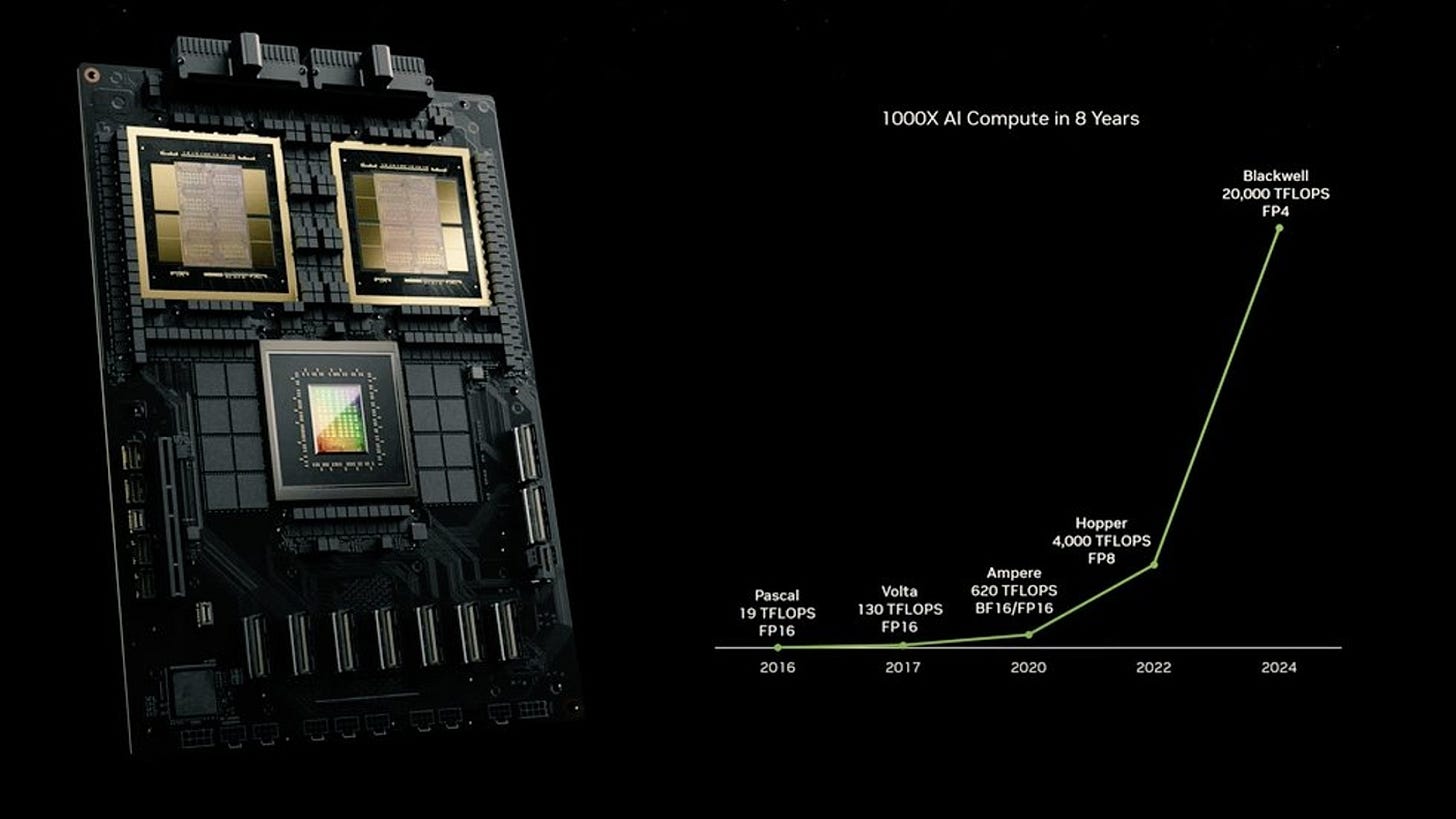
The company unveiled Blackwell B200, the world's most powerful chip and a replacement for the H100. According to the developers, Blackwell's inference capability is off the charts, some 30 times that of its predecessor, Hopper. It can run a LLM, consuming around 25 times less cost and energy.
Amazon, Google, and Microsoft are among the partners that will use Blackwell B200 to build their future AI products.
Project GR00T
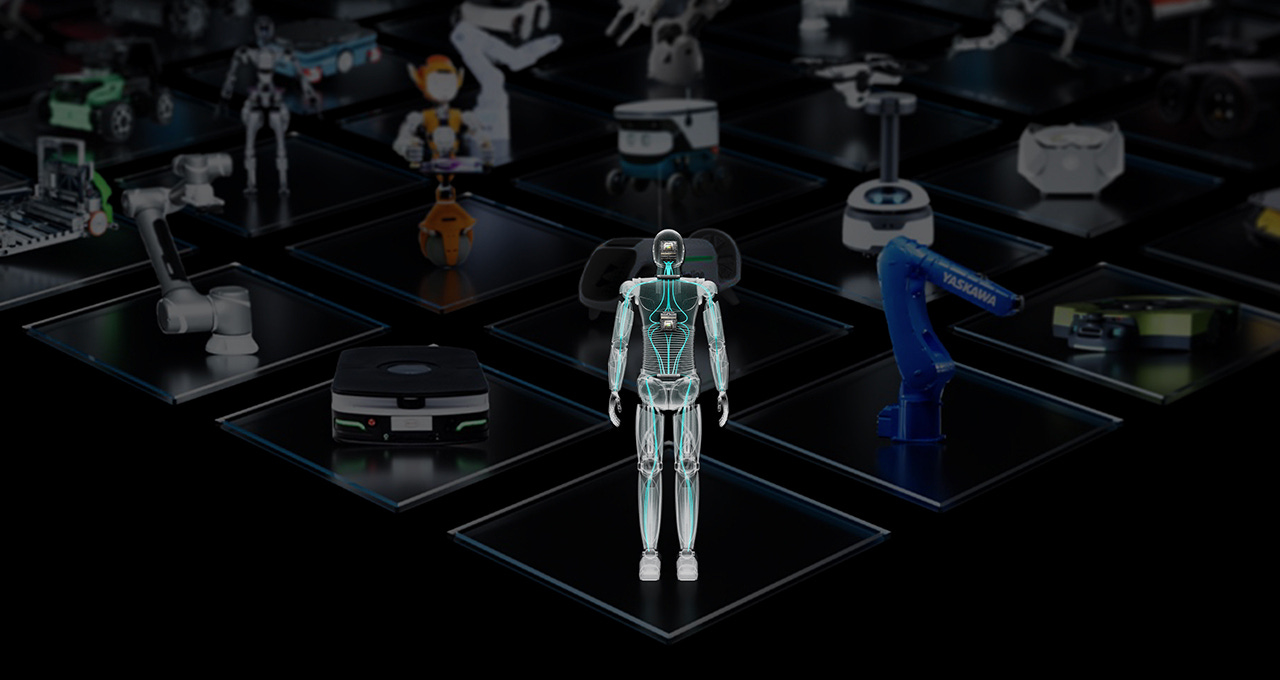
The second major announcement is Project GR00T, a foundation model for humanoid robots, which Huang said is the "next wave" of AI and robotics. The company said robots based on GR00T will be designed to understand natural language and movements by observing human actions.
Apparently, the already robots by Tesla and Xiaomi will soon have competitors!
6G Cloud AI Platform

The third announcement is a new 6G cloud platform based on AI. This product will offer researchers a suite to advance AI for radio access network technology. The company said it will allow organizations to accelerate the development of 6G technologies that connect trillions of devices with the cloud infrastructures, laying the foundation for a hyper-intelligent world.
This technology will accelerate the introduction of smart cars, robots, etc.
You can also watch the full recording of Jensen Huang's performance here:
Frankly, as cool as Nvidia's products are, the company still need to improve to the level of Apple's annual events. Huang is clearly involved in his company's products, but his on-stage performances are still limping along. Although, the analysts at Barrons disagree with me: they have already called the Nvidia founder a rockstar and "the Steve Jobs of AI".
Solutions by Nvidia You Can Try Right Now
While most of Nvidia's products, including those we've been talking about, are aimed at enterprises, the company also has something for us — ordinary users, creators, and entrepreneurs. I'm talking about AI tools, startup programs and useful online courses.
Chat with RTX
Last month, Nvidia introduced a generative chatbot named "Chat with RTX." This platform allows you to train a custom model locally on a Windows PC. This means all generated data stays on your computer and is less likely to be stolen.
Using Chat with RTX, you can choose from two LLMs—Mistral or Llama 2. The model can scan local files and find answers In addition, the Chat with RTX neural network can gather information from YouTube videos and playlists. The supported formats are \*.txt, \*.pdf, \*.doc, \*.docx, and \*.xml.
Instead of searching through notes or saved content, you can simply type in queries. The model will scan pointed files and provide a contextualized response. Chat with RTX uses retrieval-augmented generation (RAG), Nvidia TensorRT-LLM software, and Nvidia RTX acceleration.
It's also important to note that since the platform runs locally, it has specific system requirements. In addition to Windows, you'll need a GeForce RTX 30 series GPU, more than 8GB of video memory, and the latest Nvidia drivers.
Potential Use Cases
- Knowledge Assistant: Ask questions about your documents, project files, or areas of expertise. You will get tailored summaries and insights without manually searching or reading.
- Creative Brainstorming: Use Chat with RTX as a thought partner to generate writing, coding, or problem-solving ideas. It can be customized to fit your specific usage scenarios.
- Tutorial Bot: You can have it break down complex subjects or reference your own training materials to create a personalized learning experience. If you try hard, you can even create your own Jarvis analog!
Sharing is caring! Refer someone who started a learning Journey in AI!
Nvidia Canvas
Another tool available to the general user is Canvas. This tool allows you to use AI to turn brush strokes into realistic images of landscapes. If you are creative or working with design, the solution can speed up creating backgrounds or exploring concepts.
NVIDIA Canvas uses a type of AI called GAN. This network has been trained on a massive dataset of landscape images. Using this knowledge, the platform can interpret your basic brushstrokes and fill in highly detailed textures and objects like mountains, skies, trees, and water.
System Requirements: NVIDIA GeForce RTX, NVIDIA RTX, or TITAN RTX GPU, 4GB or 6GB of RAM, 2 GB available disk space, and Windows 10.
Potential Use Cases
- Mood Boards: Combine simple sketches and Canvas-generated backgrounds to create mood boards that set the tone for a project.
- Matte Paintings: Use Canvas as a starting point for detailed matte paintings, saving time on the initial block-in while focusing on refining the finished product.
- Prototyping Game Worlds: Quickly sketch out level designs and use Canvas to fill in the environments, helping visualize the overall gameplay space.
- Texture Generation: Canvas-generated landscapes can serve as unique textures for terrain, buildings, or natural elements within a game.
Inception Program for Startups
Nvidia's Inception Program is a virtual accelerator designed to empower startups working with technologies like AI, data science, and accelerated computing. Unlike traditional accelerators, Inception caters to startups across various stages of development, offering tailored support for their needs.
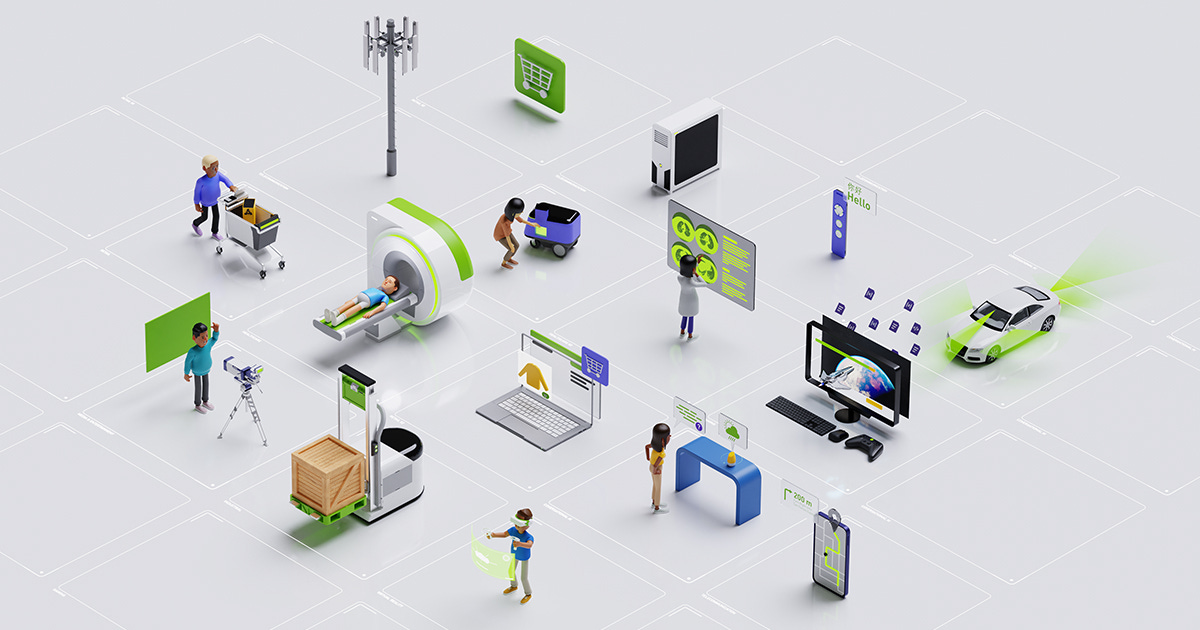
Members gain access to Nvidia's hardware and software solutions, technical expertise, and training. According to the company, Inception facilitates valuable connections within the VC community and allows securing strategic partnerships. Additionally, members benefit from co-marketing opportunities with Nvidia, amplifying their visibility within the industry.
Your startup can become part of this program here.
Nvidia’s Online Courses
Another area of Nvidia that few, if any, people know about but benefit from is online courses. The company offers a vast library of online courses for accelerated computing, deep learning, and AI. These programs cater to a wide range of skill levels for both developers and non-technical people.

Here's a short list of the most useful courses you can take for free:
- Generative AI Explained
- Build Beautiful, Custom UI for 3D Tools on NVIDIA Omniverse
- Building Video AI Applications at the Edge on Jetson Nano
You will find more courses at this link.
Final Thoughts
In this newsletter, I've been enthusiastic about Nvidia. There's a reason for that: with its results, the company is showing tech enthusiasts and financiers alike that it deserves to be one of the top companies in the AI industry. However, we must not forget how fickle our world is.
It's one thing to reach the top and quite another to stay there. Amazon and Alphabet are also blazing their own trails by building chips for data centers, and AMD has already unveiled its solution in the form of the MI300 platform. In 10 years, AMD grew from zero to 30% of the market, breaking Intel's monopoly. And now, judging by the volume of investments, AMD is betting on the market of GPUs for AI.
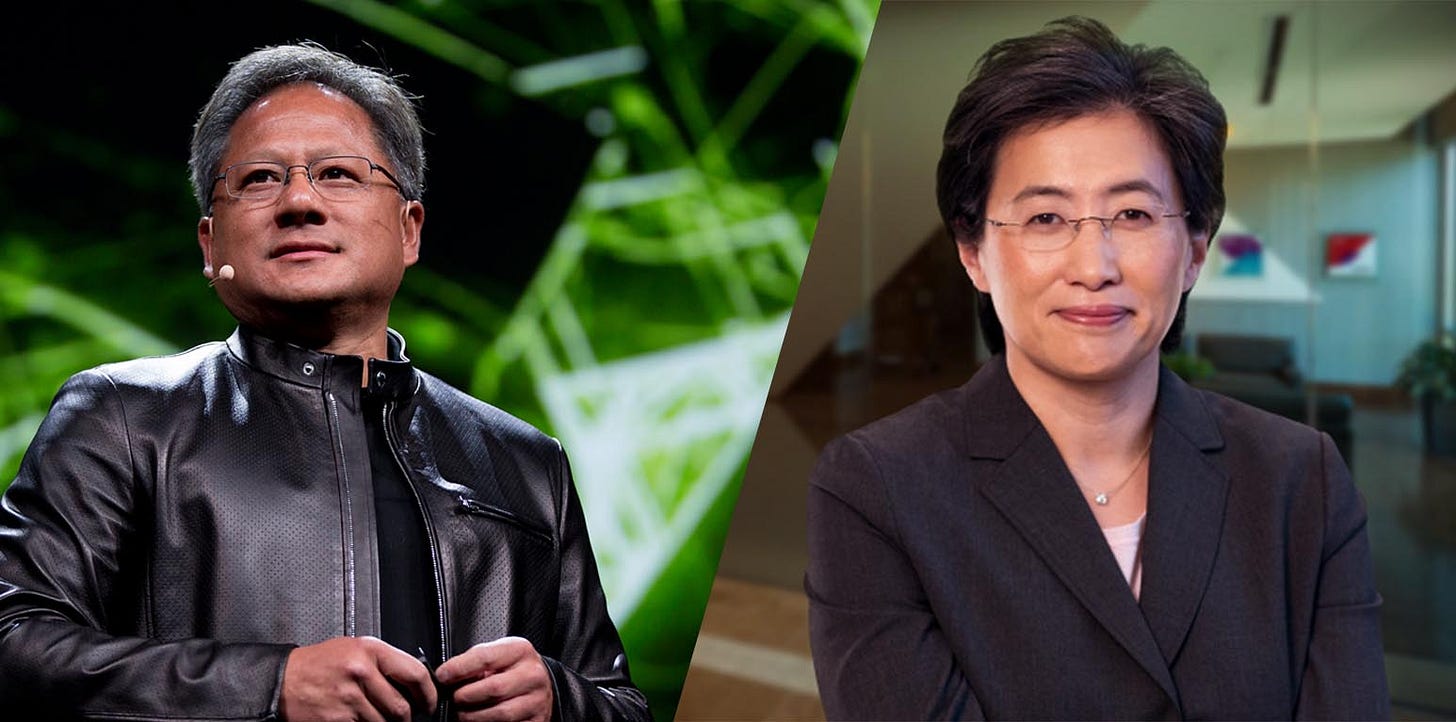
Who knows, maybe this company will make the next breakthrough. And funny enough, if that happens, Jesen Huang will lose to his relative because Lisa Su, AMD’s CEO, is his cousin. What a family!
What do you think about Nvidia in AI? Tell us in the comments!
This article was first published in the Creators AI newsletter. View the original edition.