How AI Tools Are Reinventing Designer's Work for Business
From launch to 350,000 users and $12 million round in 8 months
👋 Hey, I’m Daniil and welcome to a ✨ subscriber-only edition ✨ of Creators’ AI. By subscribing, you directly support Creators' AI's mission to deliver top AI insights & practical knowledge without ads or clutter. Your subscription allows us to grow our dedicated team and curate the most important AI Tools, Stories, and Tutorials in one place. - Daniil
# Intro
Well, we're already used to AI being helpful. And we also know that AI generates actual revenue. To be clear, AI startups, not anyone else, have raised the most significant capital from VCs in 2023! But, let’s agree, a couple of successful years is not enough to draw full-fledged conclusions.
Right now, it's more important than ever for us, AI enthusiasts, to prove that artificial intelligence is not a temporary phenomenon. It is an integral part of our future. How do we accomplish this? The answer is simple: make AI an essential part of life for highly specialized professionals. Today, we will talk about a startup creating just such a product.
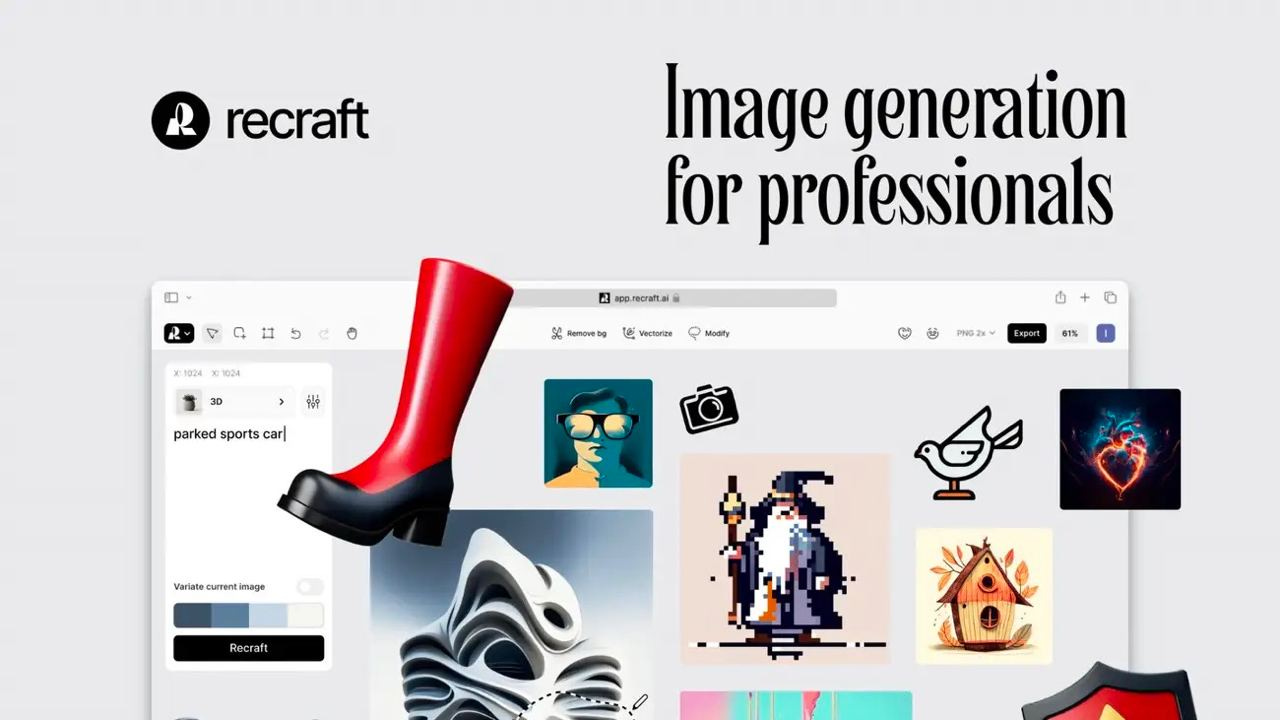
Meet Recraft by Anna Veronika Dorogush! Recraft is an AI platform (based on the model, designed from scratch!) for experienced designers who work with raster and vector images. Less than eight months after its public release, Recraft has reached an audience of 350,000 people, generated over 50 million projects, and raised $12 million in the first funding round.
Let's break down the path of Anna Veronika and her product, determine why it's essential, and what knowledge we can use.
# From launch to 350,000 users and $12 million round in 8 months

Like the story of many ambitious founders, Anna Veronika’s journey began long before Recraft. She is not the most public entrepreneur, but some facts from her biography speak eloquently about her talents. She was born into a family of mathematicians, graduated from Moscow State University with a computational mathematics and cybernetics degree, and later worked as an engineer in several global companies.
In particular, she worked as an engineer at Google and Microsoft and also held the position of head of machine learning systems with the search engine Yandex. After gaining experience from the IT companies, the future founder started developing her own projects.
In 2017, she created CatBoost, a high-performance open-source library for gradient boosting on decision trees. And even before “the AI boom,” this platform became popular among developers. A few months after its launch, CatBoost began to be downloaded more than 100,000 times a week, and even Netflix and Cloudflare were among the users.
When CarBoost gained a foothold in the market and moved into autonomous products, Anna Veronika launched our new guest, Recraft. Long story short, this brings us to a breakdown of the product, its business model, and financial results. Let's look at why this startup is more important than it seems at first glance.
Subscribe to stay updated on the most interesting AI cases!
# How it works
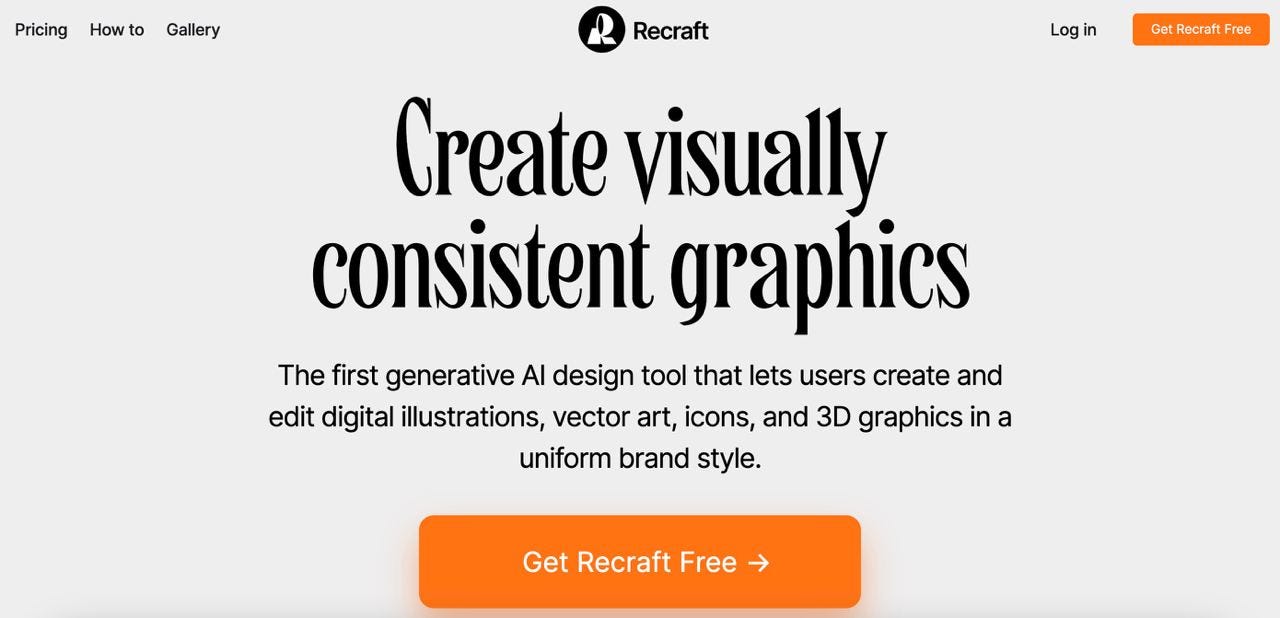
As we mentioned earlier, Recraft is a tool for designers. But not a tool like Midjourney, DALL-E, or Stability.ai. Even before launch, the platform decided to cater to the demands of professional designers. This approach kills two birds with one stone: it creates an understanding of the product and a business model with high potential.
So far, most generative artificial intelligence tools only create raster images that cover a small fraction of design projects. The startup develops both raster and scalable vector images that support design applications. Recraft allows you to generate content from the descriptions or images within seconds.
Here's how Recraft's founder explains the secret sauce:
Recraft was created to meet the requirements of professional design, generating consistent style images and high-quality vector illustrations suitable for everything from advertising and digital marketing assets to iconography.
But while the average user's journey ends there (let’s be honest; usually, we just go to X or TikTok and share our pictures), it's not enough for designers.
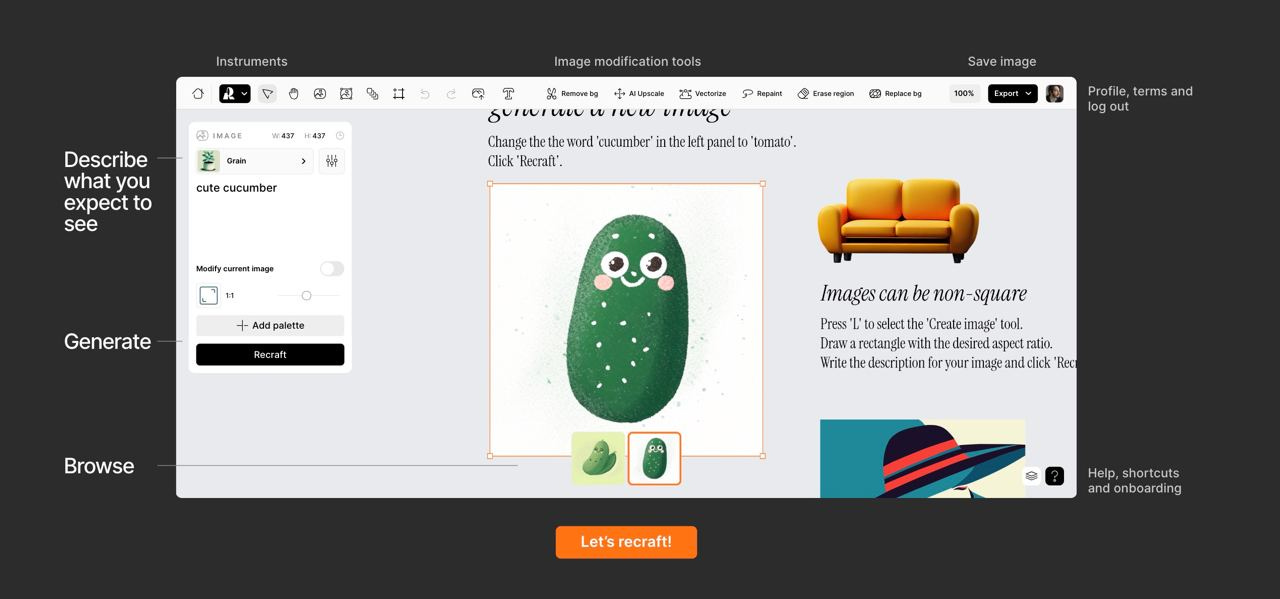
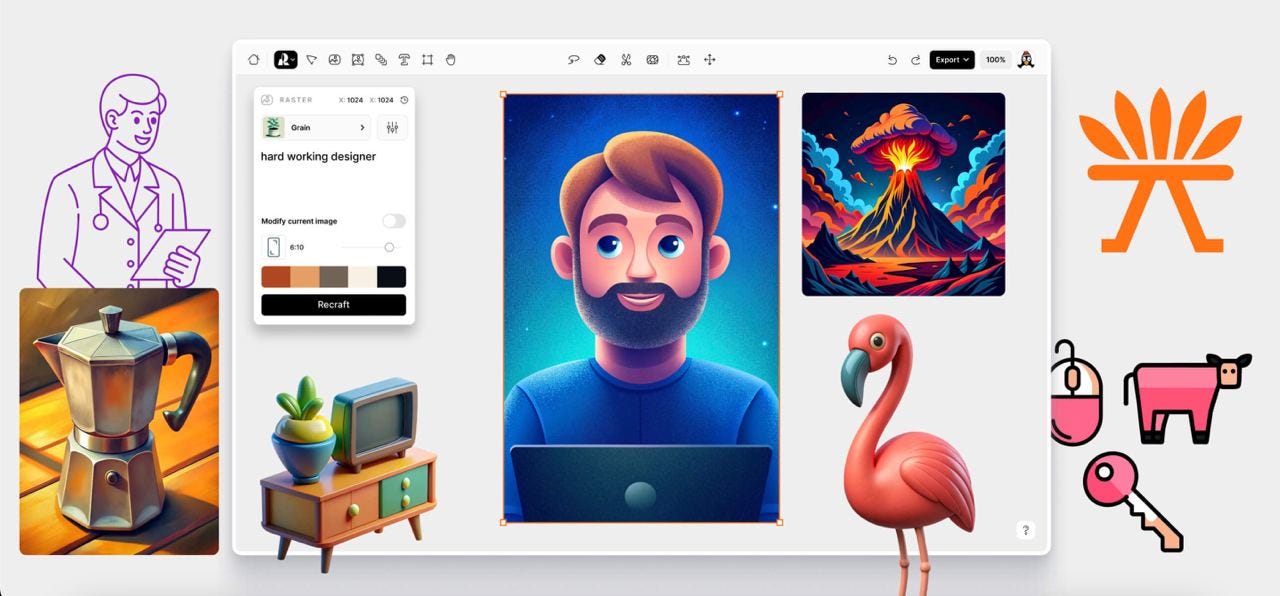
Designers further need a wide assortment of features and customizations for editing. And Recraft has it all. Inside the platform, users can edit vector art, icons, 3D images, and illustrations within a brand’s style controls, such as the color palette, geometry of icons, and the style of lines.
The idea is to become an indispensable solution for designers and not let them off the platform until the job is done. In several interviews, Recraft's founder has explained that this is the startup's princely position: the user should have complete control over the results.
So why does Recraft offer such fine-tuning? It's straightforward: Recraft doesn't need a huge Midjourney-level audience that will rarely come in for a couple of images. Instead, the startup gathers around its loyal subscribers willing to pay. After all, having a subscription to the platform directly reflects on designers' compensation.
This is confirmed by the ratio of regular users to the number of created projects: 350,000 people per 50 million generated images.
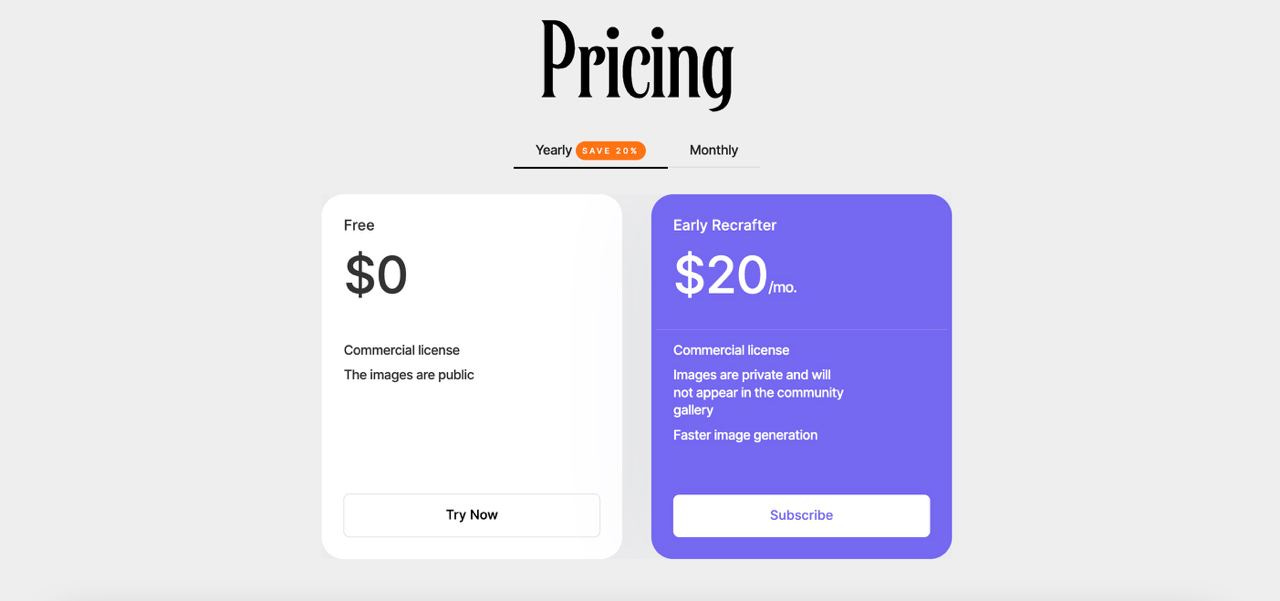
As for monetization, Recraft follows the classic model: free version + subscription for $25 per month. If the user pays for a subscription for a year in advance, the total cost is reduced by 20% - to $20 per month.
The free version offers a commercial license, but all images created are considered public. On the other hand, the subscription assumes that all images are private and will not appear in the community gallery. In addition, paid subscribers get a higher content generation and editing speed.
Share this post with friends, especially those interested in AI success stories!
# Legal perspective
But what about the legal issues? If we work with Midjourney and other services, we don't think much about the content similarity to registered trademarks. But designers have to be more careful. That's why Recraft only works with its models and pays considerable attention to it.
When an artist uploads something to the platform as a sterile reference, like an image for which they will be able to generate new images, Recraft does not use it to train an AI. This factor is vital for large companies (which the startup is aiming for as a target audience) that are reverent about their logos, branding, and content.
Glimpse into the future
So, what does the future hold for Recraft? Well, first, about the good stuff: the startup's current performance and metrics. In just one year, the 13-person team has built a robust business that has attracted 350,00 designers and become an everyday tool in their work. And the company is still expanding aggressively.
This month, Recraft raised an $11.9 million round and secured the backing of multiple investors. The startup plans to use the money to buy graphics processors, expand its developer team, and refine its model. Interestingly, Recraft does not intend to invest heavily in marketing: the company believes that the product can handle the promotion of the service.
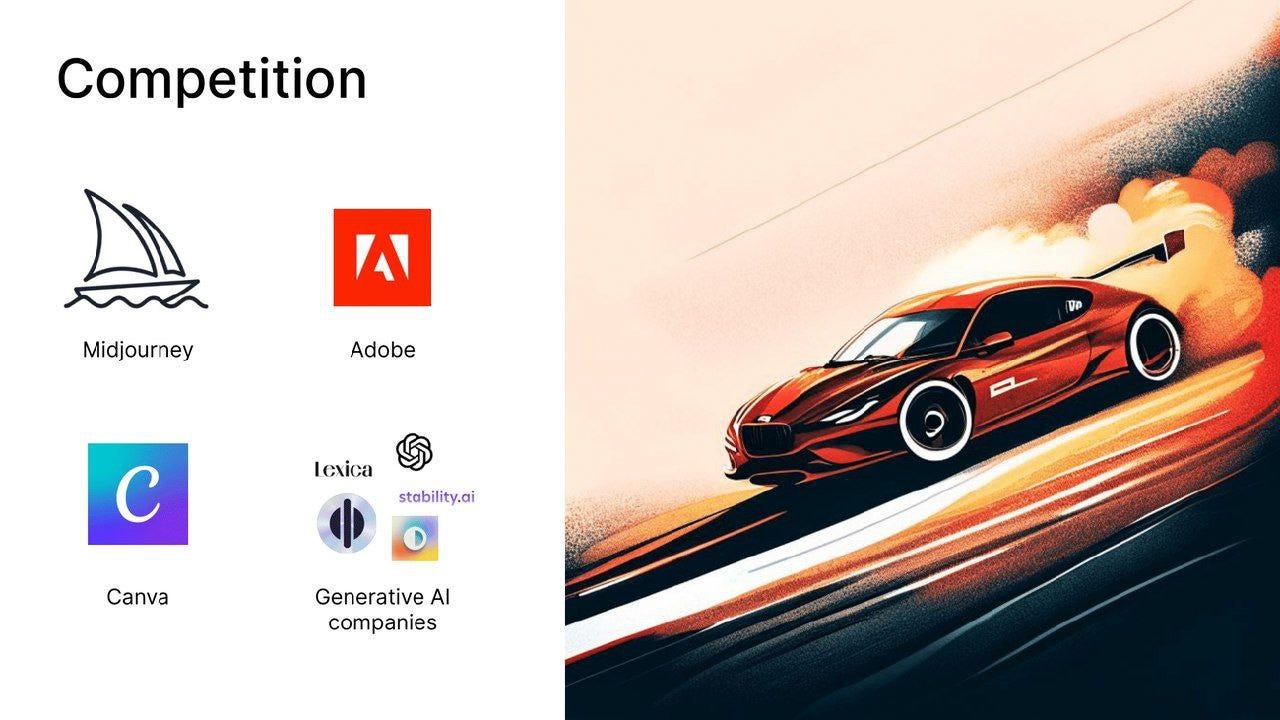
But from a more pragmatic standpoint, Recraft has a tough road ahead. Currently, the startup is creating a unique offering that customers and investors appreciate. However, huge competitors like Midjourney, DALL-E, Canva, and Adobe target the same niche. Will Recraft be able to stand up to this competition? Who knows, but we'll continue to watch.
Recraft's founder, by the way, is optimistic. Commenting on the news, Anna Veronika openly recognizes that alternative products on the market deserve attention and are rightly liked by users. However, she believes her platform has the ability to reshape the design and influence the way that we look at the world.
Well, Anna Veronika, if you believe, then we believe. We will continue to follow Recraft's development and expansion in the international design market. And what do you, our readers, think about the future of AI tools for professionals? Tell us about it in the comments!
And if you want to learn more about how enthusiasts are building AI-powered businesses, follow these stories:
This article was first published in the Creators AI newsletter. View the original edition.