How Solopreneuer Is Making $1.2M ARR With AI
Philosophy and Knowledge behind the creator of multiple startups + trends in API Wrappers
👋 Hey, I’m Daniil and welcome to a ✨ subscriber-only edition ✨ of Creators’ AI. By subscribing, you directly support Creators' AI's mission to deliver top AI insights & practical knowledge without ads or clutter. Your subscription allows us to grow our dedicated team and curate the most important AI Tools, Stories, and Tutorials in one place. - Daniil
# Intro
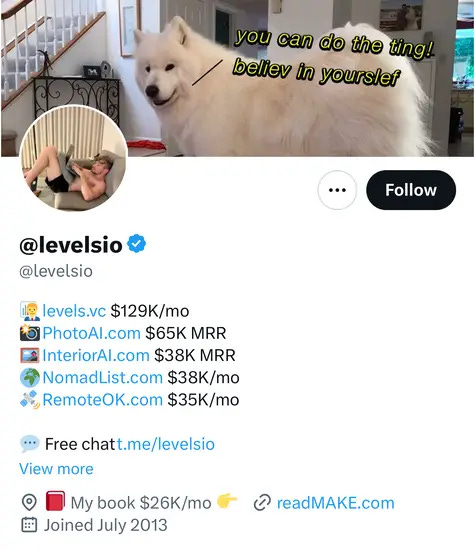
Pieter Levels (levelsio) is the digital nomad who took a leap of faith and became a multi-millionaire by building a portfolio of successful startups. From his humble beginnings as a teenager dabbling in programming to launching 7 mediocre startups, Pieter finally hit the jackpot with Nomad List and RemoteOK.
With his philosophy of "learn by doing" and a focus on speed and simplicity, Pieter Levels has built a thriving empire that generates $3 million a year with high margins. Watch this inspiring story of how Pieter took control of his fate and achieved his entrepreneurial dreams.
# Projects
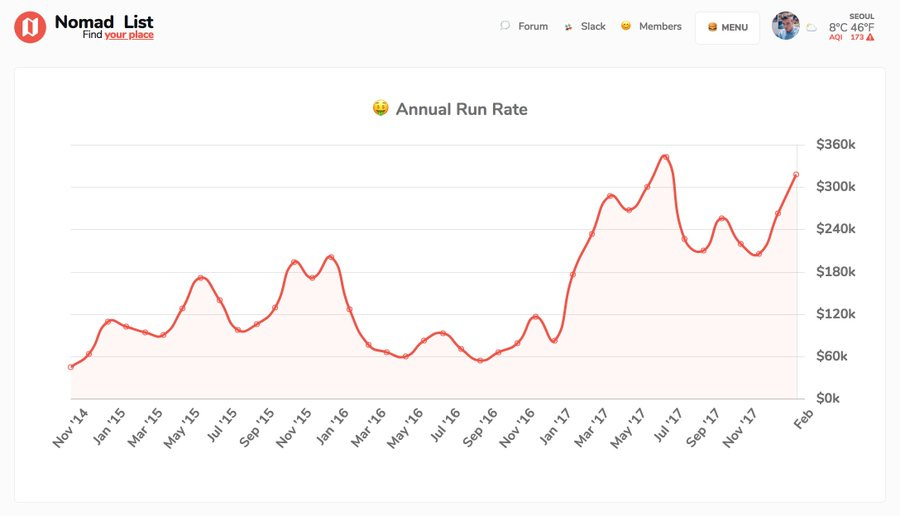
Nomadlist is a site dedicated to the rising trend of traveling remote workers, also called digital nomads: it lets people find the best places to go based on their preferences like internet speed, cost of living, weather, and safety (and thousands more data points). Pieter started Nomad List in 2014 as part of his goal to launch 12 startups in 12 months, It was the ~7th startup he tried and the most successful one. It's now used by millions of people every month and its revenue ranges from $20k-$40k/month or ~$300k/year with thousands of paying members:
RemoteOK is the second startup launched in 2015. The main idea of Remote ok is to make remote jobs accessible instead of “commuting to work every day and then sitting from 9 am to 7 pm in a dark office with annoying people you secretly hate who play office politics, make stupid jokes, have useless meetings and talk about football games.” On its launch, It reached #1 on Product Hunt and became the #15 highest-voted product of all time with 1,000 upvotes. Now the metrics look like this:

Pieter was always ahead of everybody with his fresh ideas. And AI sparked his interest before the hype unwrapped. Now let's look at how AI helped him make two successful projects.
Subscribe to stay updated on the most interesting AI cases!
# AI Projects
PhotoAI is an AI photographer. Recently video feature was also added to the app. PhotoAI launched on Feb 10 and on Feb 12 Pieter announced that the startup is almost profitable!

With only 2 months spent on building, it’s an impressive result! PhotoAI is an extension of a previously popular app by Pieter.
Initially, he discovered the concept of finetuning and decided to experiment with it on his interior design model. While playing around with it, he uploaded some of his pictures and was amazed to see that the model could generate images in various styles. He shared his experience on Twitter, which quickly went viral.
The following day, he launched a website called http://AvatarAI.me, which generated over $100,000 in the first ten days. This also sparked a trend of creating avatars with big VC apps, with Lensa following suit later. However, AI avatars were considered a bit kitschy and gimmicky because they weren't photorealistic. Instead, they looked more like art, and that was because it was much harder to make a person look realistic with AI. It was much easier to hide the problems by making it "arty".
He felt there was an opportunity to create something useful, so he spent the next two months building http://PhotoAI.com. It was technically the most challenging product he had ever built. Now, after six months, it looks good and has a monthly recurring revenue of approximately $50,000. Pivoting to photo AI was a smart move because AI avatars turned out to be a fad, and their revenue crashed for everyone.
PhotoAI recently launched in the AppStore, which was a big step for Pieter. Now he's working on iteration and improvement of the app.

InteriorAI redesigns the interior using AI. Pieter says that it’s a mutual clone of PhotoAI.
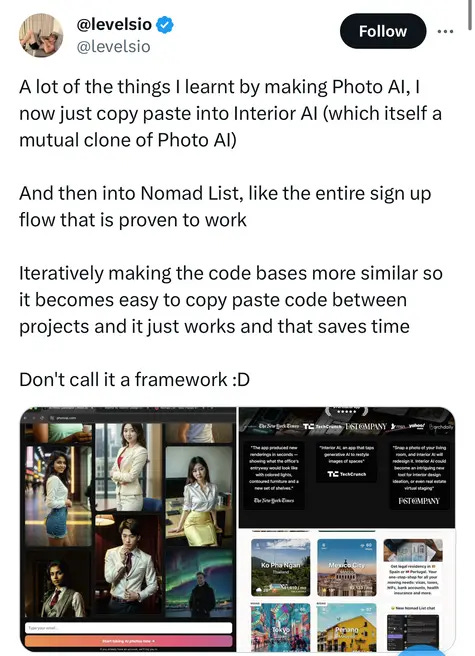
The current MRR of this project is $38K and it’s been noticed by the New York Times and TechCrunch.
A similar project that was the baseline for InteriorAI is ThisHouseDoesNotExist. An idea done before by other AI creators with humans, but with interior design.
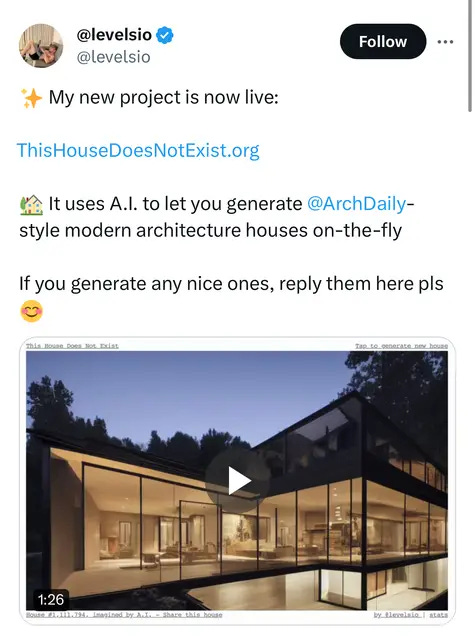
Pieter says that both projects were inspired by Stable Diffusion and /r/houseporn:
I started playing with Stable Diffusion in September 2022:
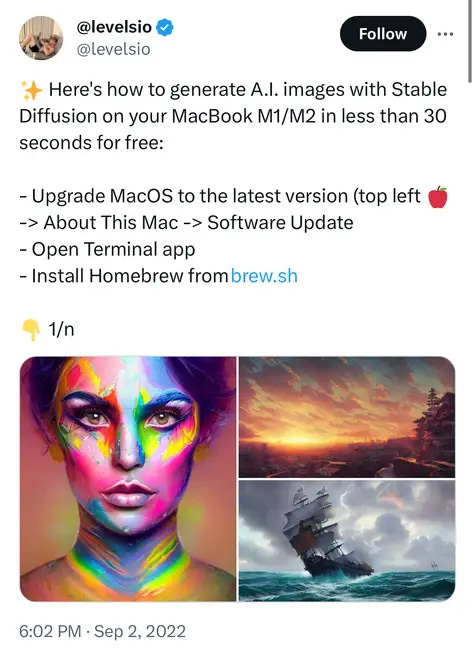
So almost 11 months ago
I tried generating anything for days and what turned out to be quite good was /r/houseporn type stuff: beautiful architecture homes
I made
http://thishousedoesnotexist.org
which generates random homes automatically (still does)
A lot of the pics it’d generate were interior photos, so I tried to upload my own interior (with img2img) and mix it with the prompt, and that worked incredibly well
So I made
http://interiorai.com
where ppl can upload their own interior and it gives them new design ideas, this went instantly viral and is now ~$50,000 MRR
A recent interior feature is creating design sketches, and visa versa turning sketches into designs.

The next steps for interiorAI are marketing, mostly on TikTok, and maybe new cool features!
It's amazing how Pieter keeps track of every possible trend and finds new features to put into apps. He's truly a master of multitasking. With only 3 people working part time on his team, that's an impressive result!
Share this post with friends, especially those interested in AI success stories!
# How to make an AI startup?
The secret ingredient to Pieter’s success is simple: make what you know.
Most of his startups are aimed towards digital nomads because he’s one of them. He saw what problems he could solve in the community and worked towards making a profitable solution. For example here are his words on how he came up with ideas:
I did this presentation in 2015 where I predicted there would be one billion remote workers in 2030 and everybody laughed at me and even in the YouTube comments were like, "This is ridiculous. Where are your sources? This is bullshit." And then COVID happened and it suddenly seemed very reasonable, but nobody could have seen this coming and I had no idea.
He’s also unafraid of failure, something that sets him apart. He learned early on that most of his startups will fail — and that’s okay. As long as something sticks, he’s still going to be profitable in the long run.
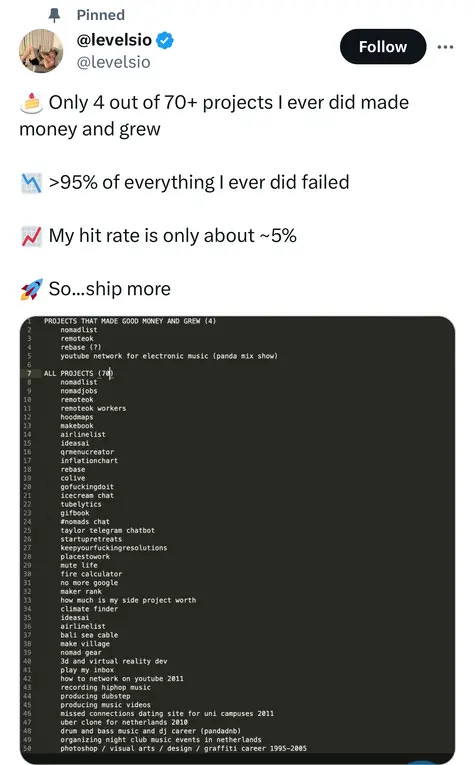
Now let's explore how he actually makes his start-ups!
Ideas
His ideas stem from an inner need to solve a problem. For instance, he created GoFuckingDoIt to overcome procrastination and imposed a fine on himself if he failed to complete his commitment. Similarly, he developed Tubelytics to gain an overall understanding of the performance of his various YouTube channels. Additionally, he built NomadList to find the cities with the best cost of living for a traveling nomad like himself. As David Heinemeier Hansson puts it, most of his ideas are based on 'scratching your own itch,' where he solves his own problems through his creations
Development
Pieter has stated that he is not a programmer and has no desire to become one. He identifies with Colin from Customer.io, whose website is named "I Am Not A Programmer". Pieter's main goal is for things to function properly and not break down. Programming is not his passion, but rather creating things is what he is passionate about. Just like he doesn't enjoy mathematics, but appreciates its application in constructing skyscrapers.
He mentioned that he uses Sublime Text 4 and doesn't really need an IDE. Sublime's linting feature helps him quickly identify errors in his PHP, JS, or SCSS code. In addition, he uses CodeKit to compile and minify his JS and SCSS files. CodeKit also supports linting, so if he misses an error in Sublime, CodeKit will display a popup window and inform him about the issue.
Design
In terms of design, he prefers to keep it simple. Moreover, you can see a common design for every project he makes. He starts with a doodle and then proceeds to build a mockup in Photoshop. When HTLM and CSS are in place, he proceeds to build the back end and make a website actually interactive.
Tech Stack
He says that he has a pretty basic Tech Stack. It’s Nginx on Ubuntu on Linode with basic PHP, Node.JS, JS, CSS, and HTML. Let's follow up with more details:
Linode
For pay $40/m you can get a Linode with 4 GB RAM, 4 CPU cores, 96 GB SSD storage, and 4TB transfer i/o.
Ubuntu
His server runs Ubuntu 14.04 LTS as its OS.
Nginx
On top of that, he runs a basic Nginx server with the PHP-FPM gateway installed to enable PHP to run.
PHP/Node.JS
The back-end of the sites is mostly written in PHP. He's always embarrassed when he has to tell people this, but to be fair, PHP has improved significantly in recent years.
HTML/JS/SCSS
The website's front-end is built using hand-coded HTML and raw JS, which is still a popular choice among developers. jQuery is used to simplify certain tasks. To speed up the development process, some parts of SCSS are used, but for the most part, raw CSS code is written manually*.*
Best gift for AI enthusiasts!
Coding style
Pieter prefers to keep things simple, and this applies to his coding philosophy as well. He uses jQuery only, avoiding other frameworks as they often add unnecessary complexity. He writes code that is clean and fast, following the DRY KISS principle: Don't Repeat Yourself and Keep It Simple Stupid. Whenever he needs a function or piece of code that he has used before, he retrieves it from a previous project, saving time and effort.
His tech stack is custom PHP and jQuery. The database is probably MySQL.
For some no-code alternatives, you can create a nocode job board with - https://jboard.io/
Or any number of WordPress plugins - https://blog.hubspot.com/website/wordPieter has created a website exclusively for generating API startup ideas using AI. Check it out at https://ideasai.com. Now, let's take a look at our favorites:
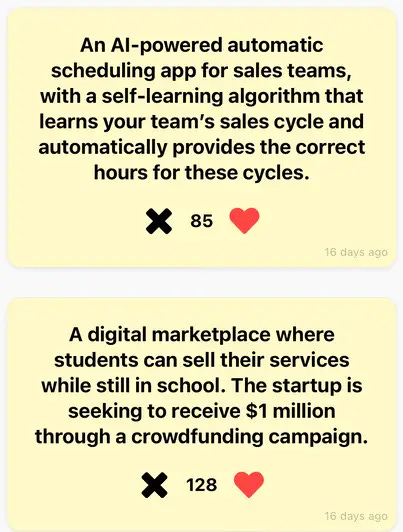
If you have a bright idea and are not afraid to try it out you can learn from our case study of PhotoAI:
Help your friends explore AI opportunities by sharing Creators’ AI!
# What will be popular next?
Here are a few examples of tools making much more recurring revenue than a lot of established start-ups:
PhotoAI: $77K MRR Chatbase: ~$70K MRR InteriorAI: ~$53K MRR PDFai: ~$30K MRR SiteGPT: ~$17K MRR
We previously covered Chatbase and its creator, Yasser, in one of our posts. Make sure to read about this helpful tool and its development story:
What makes them good is that they had an early mover’s advantage, a good product and that they cracked distribution
Here’s a good framework to pick ideas:
- Product can be built out in 3–4 weeks
The generative AI landscape is volatile. With innovations happening very fast — It is very important to react quickly there’s no point in building out complex workflows after spending months only to realize that a large model solves your use case out of the box.
- Clear Path to first 100 paying customers
No point in building if you don’t know who your users are and if they can’t pay. Always build for users who have to pay propensity and to whom you have clear access.
- The Idea shouldn’t be operationally intensive
Just so that you focus more on the product and growth
Trends in API wrappers in 2024:
-Wrappers that can quickly adopt cutting-edge updates will be able to stay ahead of the pack and ChatGPT itself.
-Businesses need to have experts in their respective industries who have a deep understanding of their customer’s pain points, workflows, and needs. Businesses & startups that offer wrappers around ChatGPT APIs or similar can be sustainable, but only if they have a true USP (like any other startup), and the AI wrapper ‘thing’ comes just as an additional benefit or optimisation. The main USP can be in tech, business, or marketing, and not just a nice Material Design or AntD mobile app.
-Investors also place a premium on the ability to deliver tangible value, which can be proven through strong partnerships, revenue growth, and solid user adoption levels. Make sure you have a solid answer of what your endgame looks like, and not just “we will keep using ChatGPT and add some new forms and screens”.
To produce successful apps & platforms, businesses must tailor their services to specific verticals, work closely with domain experts, and deliver tangible value to their customers. If these startups can deliver these qualities, investors will undoubtedly be interested. But if their only benefit is that they have a beautiful UX with nice, thin fonts, wrapping a ChatGPT API and limiting its scope to just a single industry or usecase — that won’t be enough
Let's see if our predictions turn out to be true! Share this post to come back later.
# Conclusion
Pieter’s story is one of our favorite ones! He's a very persistent developer who pushes his ideas without the fear of losing. And it pays off! How he owns 4 big start-ups, two of them in AI. His sense of humor, deep understanding of business, and bright ideas go a long way. To keep up with his journey make sure to follow him on X, where he also shows useful tutorials and shares insights.
What are your thoughts on Pieter Levels?
This article was first published in the Creators AI newsletter. View the original edition.