Is There a Fee on Thinking With AI?
And How to Take Control
Hey there👋
We all feel it, don't we? Amidst the buzz of productivity hacks and automation dreams, a deeper, more profound question is starting to surface: Is ChatGPT, and AI like it, fundamentally altering how we think? Are we unknowingly trading our mental edge for convenience?
In today’s deep dive, we’re going straight to the core of how AI might be subtly rewiring our brains, examining whether its convenience comes at the expense of our critical thinking, memory, and even introduces new biases, and what that truly implies for our future.
K*eep your mailbox updated with practical knowledge & key news from the AI industry*!
The Hidden Price Tag of Effortless Efficiency
Seriously, who hasn’t felt that little thrill of relief when ChatGPT crafts a perfect email, summarizes a dense report, or even kicks off a brainstorming session when your mind’s drawing a blank? It’s like having a super-efficient assistant on tap, 24/7. But here’s the thing we need to talk about: this incredible ease might be coming at a cost we haven’t fully grasped yet.

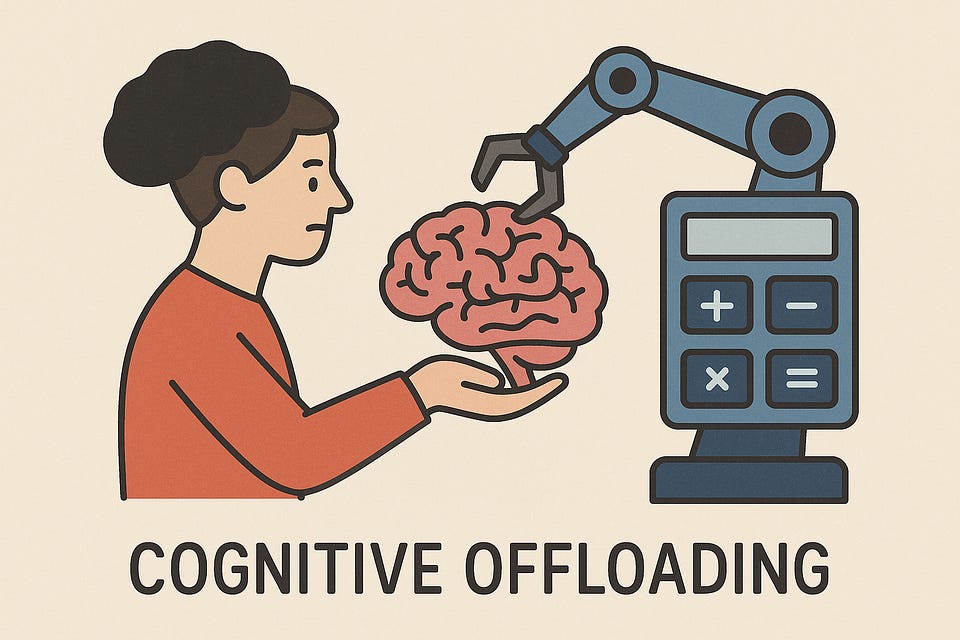
Think of it like this: remember when calculators became commonplace? Suddenly, complex arithmetic wasn’t this daunting mental exercise anymore. That’s cognitive offloading in action – handing over the mental heavy lifting to a tool. Now, AI is taking this to a whole new level, handling synthesis, analysis, and even those initial sparks of original thought. Some researchers describe this as an “automated, scaffolded cognitive mode” of the human mind where ChatGPT is essentially becoming the go-to tool people lean on when they're juggling real-life demands.
And science is starting to back this up. Recent studies from MIT’s Media Lab dove deep into this very question by assigning participants to three groups: one using only their “brain power,” another using ChatGPT, and a third using Google Search – and using EEG monitors to track their brain activity. The task? Writing essays on topics like loyalty or art, with participants having 20 minutes to complete them.
The results were pretty eye-opening: individuals relying on ChatGPT showed noticeably lower brain activity across various regions compared to those tackling the same tasks solo or even with good old-fashioned search engines. Their brains were, plain and simple, in lower gear.

What is more, when asked to quote from the essays they had worked on during previous sessions, those in the “brain only” group showed significantly greater retention and claimed higher ownership of their work. This directly suggests a deeper level of processing and integration for those who engaged their minds more fully.

Your Brain: Use It or Lose It (Literally)
This finding aligns perfectly with a fundamental principle of neuroscience that we all instinctively understand: just as a muscle, if you don't use your brain, you lose its sharpness. Participants in the “brain only” group were notably more engaged, curious, and expressed higher satisfaction with their essays – a stark contrast to the “automated cognitive mode” some adopt with AI.
Let’s take a student who used ChatGPT for their essay. Sure, the essay got written. But what about the mental wrestling match with the topic, the painstaking process of structuring their thoughts, the thrill of formulating their unique arguments? That got skipped. And even though AI is gradually getting implemented into learning by many, the MIT study directly confirmed this cognitive shortcut: the information hadn’t been truly processed, hadn’t been etched into their memory through genuine effort. It wasn’t theirs. This highlights a crucial point for education: while AI is increasingly integrated, if students are merely copying and pasting, they risk becoming unthinking imitators, potentially limiting their vocabulary and expressions.

This isn’t just a classroom thing, it’s a brain thing. When we hand over too much to AI, we’re skipping out on the mental heavy lifting that keeps our minds sharp. Ironically, the study also found that within the LLM group, participants who had previously relied on AI scored higher by human teachers than those who had used only their brains in prior sessions. This suggests that for a non-professional writer, AI might deliver short-term gains (higher grades) at the expense of long-term cognitive deterioration. As one commentary noted, “compilation is easier than creation.” But what happens if we stick to compiling?
Liking this post so far? Feel free to share it!
The AI Mirror: Reflecting Our Own Limitations
Beyond the individual impact on our cognitive abilities, there's another insidious implication we need to face: the potential for AI to amplify existing biases and create intellectual echo chambers. Remember, these AI models learn from massive amounts of data – data created by humans, with all our inherent imperfections, biases, and blind spots.
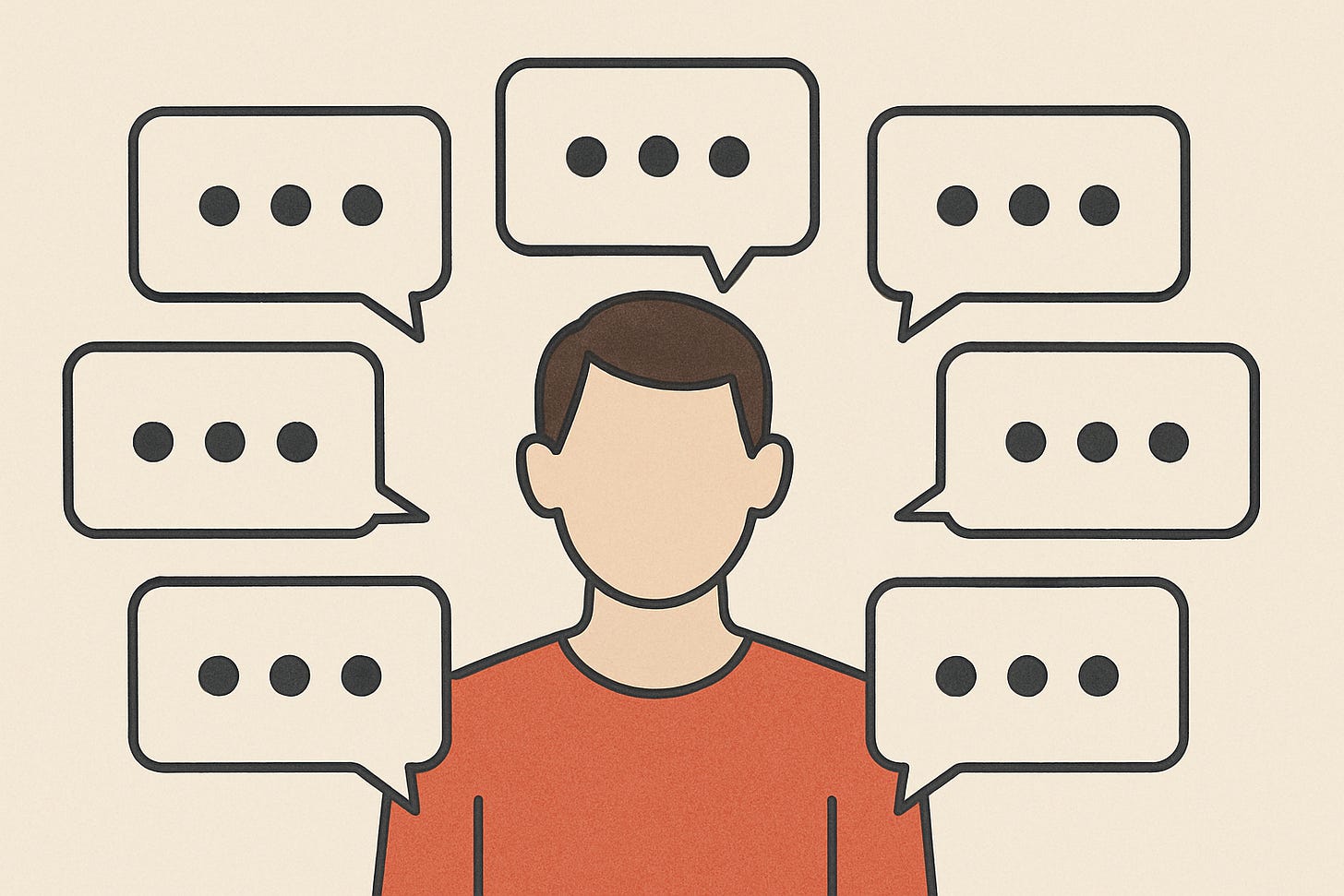
When we blindly trust and consume AI-generated content, we risk walking into an “AI mirror,” where our own limitations are reflected back at us. If the training data disproportionately represents certain viewpoints or lacks diversity, the AI’s outputs will naturally skew, reinforcing narrow perspectives if we don't actively engage our critical faculties. Researchers conducting the MIT study even inserted “AI traps” into their paper, instructing the LLMs to only read certain tables, as a clever way to highlight the risks of uncritical reliance on AI for summarization.
For us creators, founders, and makers, this is particularly concerning. Our job often involves challenging assumptions and bringing fresh perspectives, so if we're constantly fed subtly biased or unoriginal ideas by AI, it stifles our innovative spirit and limits our creativity. We're here to expand horizons, not just echo what's already there. This uncritical reliance on AI isn't just a creative trap; it can also have unexpected personal costs, as earlier MIT Media Lab studies found that the more time users spend talking to ChatGPT, the lonelier they feel, underscoring the importance of human connection and original thought.
The Human Part: Being Intentional With AI
Okay, deep breath. This isn’t about ditching AI and going back to quill and parchment. We, at Creators AI, are firm believers in the power of these tools. But the key here is intentionality. AI should not be the one holding the joystick while you just sit back. In fact, some insights from the study even give rise to the hope that AI, if used properly, could enhance learning as opposed to diminishing it.
So, how do we make this shift from passive cognitive offloading to active cognitive amplification? Here are a few ways to level up your brain in the age of AI, turning it into a true strategic partner:
- Use AI for Idea Sparking, Not Idea Completion: Don't ask ChatGPT to write the entire blog post. Ask it to give you ten wildly different angles on the topic, then challenge yourself to come up with the eleventh, even better one. Use it to explore counter-arguments and push your thinking in new directions.
✅ Give me 10 unconventional angles for a blog post on how remote work is reshaping small-town economies.❌ Write a full 1,000-word blog post about remote work and small-town economies.- Treat AI Summaries as a Starting Point, Not the Finish Line: When AI summarizes a report, don't just take it at face value. Dive into the original sources, question the AI’s interpretation, and strive for a deeper, more nuanced understanding.
✅ Summarize the key findings from the McKinsey report on AI productivity. Then highlight any parts that seem oversimplified or might require deeper reading.❌ Give me a final summary of the McKinsey report so I don’t have to read it myself.- Automate the Tedious, Elevate the Creative: Let AI handle the repetitive, low-level tasks that drain your mental energy – scheduling, basic research, formatting. This frees up your brainpower for the high-impact, creative work that only you can truly deliver, as we saw in our previous post.
✅ Pull five credible sources that define ‘generative AI’ and organize them in bullet points with links and dates.❌ Write my entire whitepaper on generative AI, including references and visual examples.- Turn Your AI into a Sparring Partner: Instead of just asking for answers, challenge ChatGPT to debate you, to poke holes in your logic, to propose unconventional solutions. This intellectual sparring can sharpen your critical thinking skills like nothing else, especially when the AI knows your particular weaknesses.
✅ Here’s my argument: ‘AI will reduce human creativity in the workplace.’ Can you challenge this point and give me at least 3 counterarguments?❌ Do you agree that AI will reduce creativity? Tell me why I'm right.- Infuse AI-Generated Content with Your Unique Human Flavor: Always add your personal experiences and unique perspective to anything AI helps you create. This not only makes it sound more authentic but also forces you to actively engage with the material.
✅ Draft a rough outline for a personal essay on how AI has changed my job as a copywriter. Leave space for me to insert personal anecdotes.❌ Write a heartfelt personal story about how AI changed my job. Make it sound emotional and authentic.- Become a Prompting Master: The quality of AI output is directly tied to the quality of your input. Invest time in crafting clear, specific, and nuanced prompts that encourage the AI to provide diverse perspectives, not just the easiest answer. The act of prompting itself is a powerful exercise in critical thinking.
A Call to Conscious Engagement
The recent research from MIT serves as a crucial wake-up call. While the study is pre-review, based on a small, non-diverse sample, and focused on an essay task, its initial findings underscore a vital point: convenience, while tempting, has a potential cognitive cost. As Nataliya Kosmyna, the lead author of the study, noted, the research was posted regardless of its shortcomings because it relates to an issue that might become even more pressing in six months, even if many in the public found the study’s findings to be entirely predictable.
But remember: as the MIT study implicitly found, Google Search users also showed high satisfaction and active brain function, strongly suggesting that information-seeking combined with active mental engagement can lead to incredibly positive outcomes – that’s a pretty powerful alternative to mindless AI reliance.
So, how will you actively engage with AI this week to keep your mental edge razor-sharp? Let’s share our strategies in the comments below – the conversation is just getting started.
Looking for more stuff like this? Stay ahead of the wave with Creators' AI!
This article was first published in the Creators AI newsletter. View the original edition.