Mistral Expands, OpenAI Buys 1.1B | Weekly Edition
PLUS HOT AI Tools & Tutorials
Hey there! Welcome to your latest Creators’ AI Edition
This week, Mistral supercharges Le Chat with integrations and memory, UCLA unveils a non-invasive brain-computer breakthrough, and Google Labs launches Flow Sessions for AI filmmaking. OpenAI snaps up Statsig in a $1.1B deal, Apple tests Gemini inside Siri, and Anthropic hits a stunning $183B valuation. Plus, OpenAI adds parental controls after legal pressure, and we’ve got fresh tools, guides, and bonus reads to keep you ahead.
Let’s get into it!
- Featured Materials 🎟️
- News of the week 🌍
- Useful tools ⚒️
- Weekly Guides 📕
- AI Meme of the Week 🤡
- AI Tweet of the Week 🐦
- (Bonus) Materials 🎁
Keep your mailbox updated with key knowledge & news from the AI industry
# Featured Materials 🎟️
Mistral Expands Le Chat
Mistral upgraded Le Chat with a beta connector directory of 20+ secure integrations (Databricks, Snowflake, GitHub, Asana, Outlook, Stripe, Zapier, and more), plus custom MCP extensibility for enterprise workflows. The update also introduces Memories (beta) — personalized responses that retain key context while letting users edit, delete, or import data (including from ChatGPT). Both features are available across free and enterprise deployments, from mobile to on-prem cloud
Non-Invasive AI-Powered Brain-Computer
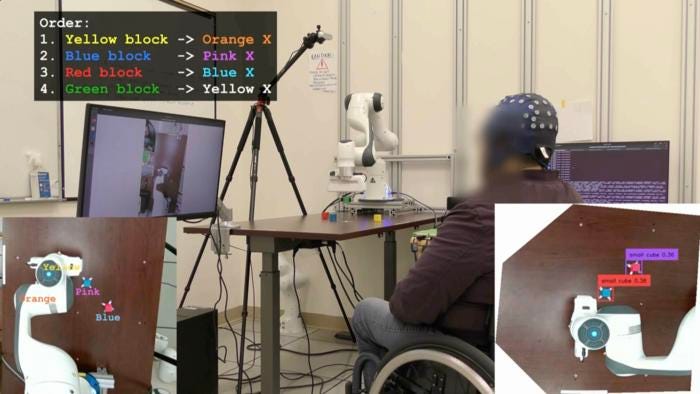
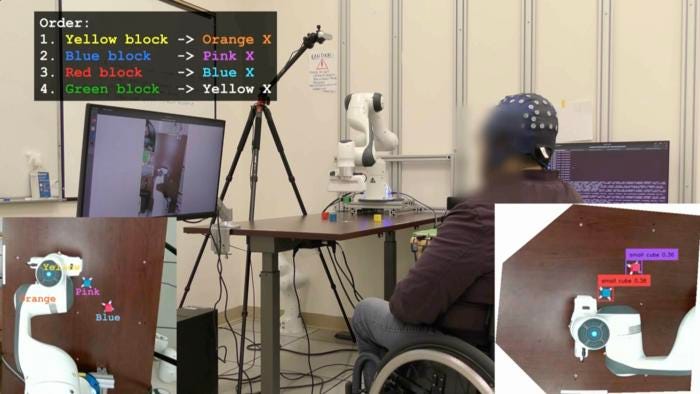
UCLA engineers developed a wearable brain-computer interface (BCI) that lets paralyzed users control robotic arms using AI-interpreted EEG signals, no surgery required. The system pairs a custom EEG decoder with a camera-based AI, enabling real-time intent detection. In tests with four participants, including one paralyzed user, tasks were completed 4x faster with AI assistance. The paralyzed participant, who previously couldn’t perform the tasks, managed them in 6.5 minutes. Using standard EEG caps, the device avoids surgical risks while matching the performance of invasive alternatives, marking a breakthrough toward practical BCIs for robotics, wheelchairs, and communication devices.
# News of the week 🌍
Google Labs Launches Flow Sessions
Google Labs introduced Flow Sessions, a pilot program giving filmmakers unlimited access to Flow, its AI filmmaking tool, alongside mentorship and AI education. To lead the initiative, the team named Henry Daubrez, filmmaker, creative director, and early Flow partner behind Electric Pink , as its first filmmaker-in-residence. Daubrez will mentor artists, co-develop Flow features, and produce new projects like The Enchanted Door, an interactive short where viewers choose the story’s path.
OpenAI Acquires Statsig in $1.1B
OpenAI is buying experimentation platform Statsig for $1.1B in stock, bringing founder Vijaye Raji in as CTO of Applications to lead engineering for ChatGPT and Codex under CEO Fidji Simo. Statsig, known for A/B testing and feature flagging, will remain independent. The move follows OpenAI’s failed $3B Windsurf bid and comes alongside leadership shifts: Srinivas Narayanan becomes CTO of B2B Apps, while Kevin Weil will head a new AI for Science unit.
Siri X Gemini
Apple has reportedly reached a deal with Google to test a Gemini model for its AI-overhauled Siri, part of the “World Knowledge Answers” project to turn Siri into a true answer engine with text, video, and local info. The Gemini model would run on Apple’s private servers under more favorable terms than Anthropic’s $1.5B bid, as Apple shelves talks to acquire Perplexity and pushes to build internal search. But with high-profile talent losses to Meta, OpenAI, and Anthropic, and a track record of delays, the success of Siri’s spring 2026 upgrade remains uncertain.
Parental Control in OpenAI

OpenAI will roll out parental controls within 30 days, giving guardians account-linking, content filters, and alerts when ChatGPT detects signs of emotional distress. The system, built with medical input, will route sensitive conversations to reasoning models for better handling. The move comes after OpenAI faced its first wrongful death lawsuit tied to prolonged chats with a teen, underscoring growing concerns about “AI psychosis” and the risks of minors relying on chatbots during crises.
Anthropic Soars to $183B Valuation

Anthropic closed a $13B funding round at a staggering $183B valuation, nearly 3x its worth from March. The company now serves 300,000+ enterprise customers, with $100k+ accounts up 7x in 2025. Its Claude Code assistant generates $500M annually, with usage up 10x in three months. The round brings in QIA as the first Middle East investor, a shift from Anthropic’s earlier stance, as the race for compute and talent intensifies.
# Useful tools ⚒️
Ada - Your own AI data analyst
fileAI MCP - Classify, extract, enrich, and validate any file
JoggAI AvatarX - AI avatars that truly act like humans
xpander.ai - The full-stack development platform for AI Engineers
Web to MCP - Send any website components to Cursor or Claude via MCP
Bridge the gap between design and code. Send pixel-perfect website components directly to Cursor or Claude Code using Model Context Protocol (MCP). No more screenshots or descriptions needed.
Thanks for reading Creators' AI! This post is public, so feel free to share it.
# Weekly Guides 📕
Guide to Agentic AI – Build a Python Coding Agent with Gemini
15 Canva AI Tricks You Never Knew! (Full Guide Tutorial 2025)
Nano banana AI for Architecture and 3D- Full beginner’s Guide
Master The Ultimate Nano Banana Prompt Formula (Beginners Guide)
# AI Meme of the Week 🤡
# AI Tweet of the Week 🐦
What do you think about it?

Share this post with friends, especially those interested in AI!
# (Bonus) Materials 🎁
Students get early access to Comet
Google gets to keep Chrome, judge rules in search antitrust case
Microsoft is accelerating AI adoption for the US government
OpenAI Plans India Data Center in Major Stargate Expansion
Can AI help understand how the brain learns to see the world?
If you missed our previous updates, don’t worry, here they are:
This article was first published in the Creators AI newsletter. View the original edition.