Quick Start Guide for AI Wrapper
Simple AI Wrapper reached $1M in revenue in 9 months. So can yours?

Hi!
AI wrappers continue to capture the minds of entrepreneurs. Simple but useful tools are gaining audiences in the millions, reaching five-figure MRRs (we'll talk about some examples below), and allowing creators to build businesses solo.
But is it really that simple and good? Let's discuss what it takes to create a promising AI wrapper. And let's do it with a dose of skepticism.
Today, we are discussing the market and its prospects. If you want to enrich your AI startup toolkit with a whole bunch of useful tools, follow this post:
AI Wrappers & Doubts

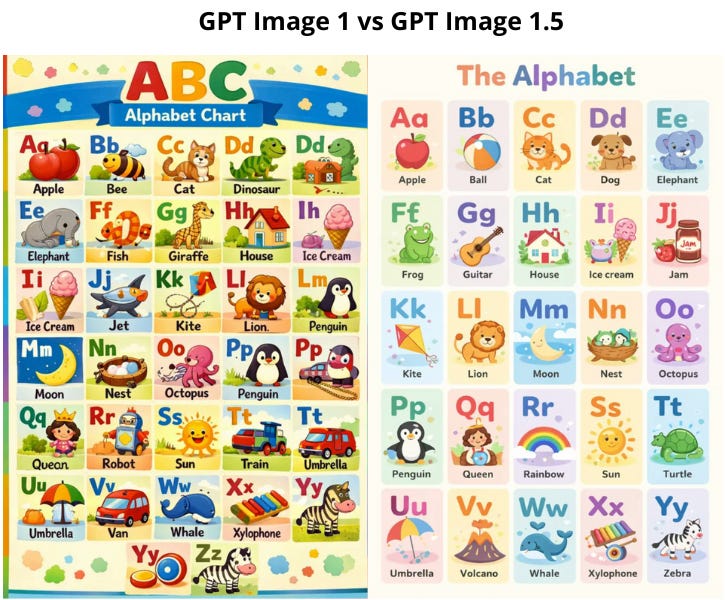
This is how the image generators see AI Wrappers. I thought this interpretation was worth sharing.
Before we get into the discussion, it's worth defining AI wrappers and highlighting a couple of issues. AI wrappers are software tools that build on top of existing AI technologies like ChatGPT to make them easier to use for specific purposes. We have more than enough examples, and many of us use these solutions every day.
One of the most important of these is Jasper AI, built by Dave Rogenmoser. We have a newsletter about him:
From the founder's perspective, I would phrase the definition a little differently. For an entrepreneur, it's a SaaS business model, usually involving a quick launch and predictable MRR, with a large opportunity for exits through popular startup buying and selling platforms like Acquire.
As for the issues, the first and perhaps most important is the reputation of the business model. It’s far from ideal, but it's also important to separate the ethical and pragmatic positions here.
“AI wrappers offer nothing new! They parasitize other people's ideas.”
This statement makes sense if we turn to the definition of AI Wrappers. Such platforms work as intermediaries between users and already-created AI. However, let's think about the most important thing - the consumers. Businesses shouldn't be cutting-edge science; they should solve problems for their target audience.
And that's exactly what AI wrappers are doing. They're making AI more accessible and useful, popularizing it, and finding new uses for familiar tools. That's cool, and it's something worth emphasizing. I think we've dealt with ethics.
Now, about the practical side of the issue.
“You missed the first mover advantage. There's no room for you on the market.”
This thesis also seems fair.
In a few months, in November, it will be two years since the public release of ChatGPT. And if you are a regular reader of our weekly roundup, you know that every day, someone is creating a platform based on OpenAI models. There are solutions for document optimization, customer service, saving time, and, after all, just for fun.
But let's look at it from a different perspective. We also regularly hear great success stories from young entrepreneurs. Just look at what Pieter Levels, known to many under the nickname Levelsio, has managed to do (and continues to do). His main talent lies in finding potential customers' “pains” and creating a suitable solution.
I’d say, one of the top solopreneurs in our area:
And he is not the only one.
Keep your mailbox updated with practical knowledge & key news from the AI industry!
Quick Case Study | Damon Chen & PDF AI

Damon Chen, a former Cisco software engineer who became an entrepreneur during the COVID-19 pandemic, is another excellent example.
He acquired and rebranded a startup, initially known as Looseleaf.ai, into PDF.ai, a platform allowing users to interact with PDFs via AI. Technically, you could say he is not a project founder. However, at the time of acquisition, Looseleaf.ai had less than 100 users and $0 MRR, so I believe this title is justified.
Damon acquired this business through Acquire. We discussed this platform and what it can offer you right here:
The idea was simple: Damon wanted to build a product that would simplify working with PDF files. And he succeeded. By leveraging a strategic domain name and offering a lifetime deal at $99, Damon quickly achieved over $50K MRR. The company's revenue and profitability totaled more than $1 million in just nine months.
Sharing is caring! Refer someone who started a learning Journey in AI!
It is now one of the best-known and most successful examples of an AI wrapper. But more importantly, Damon's platform wasn't the only and first solution on the market. It simply did its job better than others.
To summarize and draw some conclusions, I can say that creating your own AI wrapper seems to be the optimal approach for a quick startup. It is useful and necessary. But to make it work, we have to consider many factors.
Let's discuss them.
Building an AI Wrapper Startup in ~~10~~ 9 Steps
- Choose a Focused Application Area
The first thing you should do is identify a sector with high demand. Here, I see two ways: focus on a very narrow problem or, on the contrary, cover as many users as possible. The second option can be much more profitable, but at the same time, you will most likely face a lot of competition, which can be a problem.
Here's where you'll find five nice ideas for your business:
- Research Existing Tools and APIs
The second fundamental step is learning about popular tools, platforms, and APIs that can be integrated or "wrapped." Study popular AI platforms like OpenAI’s GPT, Google Cloud’s AI, or Amazon SageMaker. Understand their strengths, limitations, and API structures. Specifically, identify gaps and how these tools are used in your chosen application area.
If you're having trouble choosing an LLM for your project, this post will help:
- Engage with Potential Users
This is probably an optional step. If you are confident in your idea, you can skip it. But if you want to take a more comprehensive approach to preparation, conduct interviews or surveys with potential users, such as customer service managers or content creators. Validate that your AI wrapper idea addresses their needs.
Cold outreach works. Yes, in many cases, they will ignore you or refuse to cooperate, but those who do make contact can significantly impact the bottom line. And if you're a big introvert, try AI's Business Idea checker like VenturusAI.
Finding leads without solid skills can be challenging. These tools will help:
- Develop Your AI Strategy
Prompt Engineering: Use OpenAI's Playground to craft effective prompts for your use case. Refine these prompts to achieve optimal results for your specific problem.
Data Gathering and Curation: Collect relevant data for your AI model. This step is often the most time-consuming. Ensure your data is high-quality and properly curated.
Fine-tuning and Embeddings: To improve performance, consider fine-tuning the AI model with your specific dataset. If relevant to your use case, implement embeddings.
Not sure what to ask ChatGPT? It's simple, it just takes a little practice:
- Design a Modular Architecture
Then, outline the architecture of your AI wrapper, ensuring modularity for easy updates and scalability. Plan how your wrapper will manage API calls, handle user input, and deliver output. For instance, design a modular system that allows easy swapping between different AI models like GPT-4 or a custom-trained model.
At this stage, the work will be very different depending on what kind of founder you are. If you have an engineering background, you won't need my recommendations. If you're a solopreneur wanting to develop, take advantage of ChatGPT. We talked about this approach in this newsletter:
- Develop a Basic Prototype and Launch Beta
Start by building an MVP with core features, such as a user-friendly interface and basic integration with one AI tool (e.g., OpenAI GPT). Ensure the prototype can handle common tasks in your chosen sector, like generating customer support responses. Launch a beta version to a small group of users. Gather feedback and iterate on your product based on user insight.
- Prepare for monetization and scalability
This is probably the most enjoyable part. I would break this item down into three steps.
- Set up payment integration. Implement a payment system (e.g., Stripe) to start monetizing your product.
- Develop a pricing strategy. Create tiered pricing plans based on usage or features.
- Optimize for scale. Ensure your infrastructure can handle the increased load as the number of users grows.
- Launch with a Targeted Marketing Campaign
Launch your AI wrapper with a focused campaign targeting your niche market. Use case studies or white papers that highlight the benefits, such as reducing customer service response times by 30%. Leverage content marketing, social media, and potentially paid advertising to grow your user base.
Platforms like LinkedIn can to reach solvent customers.
- Iterate Based on User Feedback
After launch, gather detailed feedback through surveys and direct communication with users. Regularly update your wrapper to address issues, enhance features, and adapt to user needs. For example, support for new AI models can be added, or response speed can be improved based on user requests.
Oh, that's great. You're great!
Final Tips & Tricks
Of course, this is not a complete or universal list for creating an AI wrapper. If I had a formula for reliably building a successful project, I would have used it long ago (and would hardly tell anyone, sorry about that). However, I know a few tools that help other entrepreneurs create cool products. Here are some of them:
- Hugging Face Transformers: Offers a wide range of pre-trained models for various AI tasks, including text, image, and speech processing.
- RapidAPI: A marketplace for finding and connecting to various APIs, including AI services.
- Weights & Biases: A tool for tracking machine learning experiments, visualizing results, and collaborating with team members.
- Figma with AI Plugins: Figma is a collaborative design tool, and AI plugins like "Autoname" can help automate design tasks.
- ShipFast: Platform for fast startup launch using NextJS boilerplate
- VenturusAI: A service that processes business ideas and provides feedback, SWOT analysis, market analysis, and other information.
- LaunchViral: Grow your startup with viral launch videos
- ZenVoice: A solution that helps creators let customers generate, edit, and download Stripe invoices
That's all for today. I hope this guide and these tools will help you create a product that can conquer the market. And when it happens, we will definitely write
Planning to create your own AI Wrapper? Tell us in the comments!
This article was first published in the Creators AI newsletter. View the original edition.