Web AI Search vs Deep Research
Which Feature Should You Use?

Deep Research has become one of our favorite features among AI models.
But with the progress of AI search engines, you can't help but wonder how relevant it still is. To investigate this issue, we decided to contrast these features and decide which is worth using in different cases for every creator and entrepreneur.
Here's everything you need to know about both:
- Best Tools for Web AI Search & Deep Research
- What and When You Should Use (+ Prompts)
- Real-World Examples & Case Studies
Get 20% OFF Full Access subscription!
How AI Search Works | Best Tools
AI search combines web crawling with natural language processing to understand your questions and generate human-like responses. These tools don't just match keywords; they comprehend the intent behind your query and pull relevant information from multiple sources.

The process typically works in three stages:
- First, the AI interprets your question.
- Then, it retrieves relevant information from its knowledge base or the web.
- Finally, it synthesizes this information into a response that addresses your query.
That’s how AI does the heavy lifting for you.
Key AI Search Players
Right now, you can find dozens of AI-based search engines. Some are tailored for specific scenarios, while others aspire to become “the new Google.” Nevertheless, if we take the most popular solutions (with which we have had long experience), here are your options with our takes:
ChatGPT has evolved from conversational AI into a capable search tool. It excels at providing nuanced answers and can follow complex instructions, though its web search capabilities are more recent additions.
If not only the relevance of the information you receive, but also the approach to wording matters to you, ChatGPT is a universal choice. In addition, OpenAI allows you to give your chatbot custom settings, which means you can pre-organize your search with specific topics without prompt engineering.

Perplexity AI was built from the ground up as an AI search engine. It provides clear citations alongside its answers and offers a dedicated research mode. Its strength lies in delivering comprehensive answers with transparent sourcing.
For the past year, Perplexity has been the most prominent AI search solution. But with numerous updates from competitors, it has noticeably lost ground. One of the few advantages is a good UI.
Google's Gemini integrates directly with Google's search infrastructure. This gives it access to recent and authoritative information, making it particularly strong for factual queries and current events.
Let's be honest, at launch Google's AI Overview was garbage. And even the company itself realized this, so it quickly disabled the feature. But now, with the release of Gemini 2.5, the king of search engines is back. Thanks to its ecosystem, Google is performing well.
Grok from xAI stands out for its real-time data access and conversational approach. It's designed to be more personality-driven and can handle queries with a touch of humor, though sometimes at the expense of depth.
By utilizing data collected by X, Grok is great for those who care about public opinion and social media discussion. While OpenAI, Perplexity, and Google sources will likely only see popular media, Grok will also highlight social media users' positions (and that's cool).
Claude (Anthropic) offers thoughtful, nuanced responses with its web search capabilities. It's particularly good at handling complex, multi-part questions and providing balanced perspectives.
Anthropic only recently entered the AI search market after the release of Claude 3.7 Sonnet. This product combines a great model with a search function to produce great results. However, it's only available on a subscription basis right now.
Share this post with friends, especially those interested in AI Insights!
AI Search in Day-to-Day Use
The primary advantage of AI Search is its efficiency. When you need quick answers or a general overview, these tools deliver results in seconds that would otherwise take minutes or hours.
This translates to significant time savings for creators when gathering information. Need to check a fact, understand a concept, or get a summary of recent developments in your industry? AI search tools can provide this info almost instantly.
These tools' conversational interfaces also make them more accessible than traditional search engines. You can ask follow-up questions, request clarification, or pivot to related topics without starting a new search.
However, there are limitations to be aware of. The convenience of AI search comes with trade-offs in terms of depth and nuance. You might need something more robust for decisions requiring understanding or to evaluate multiple perspectives in detail.
This is where Deep Research comes into play.
Deep Research | What You're Missing
While Web AI Search excels at providing quick answers, Deep Research offers something fundamentally different: comprehensive analysis that supports decision-making. This approach goes beyond surface-level information.
Deep Research provides analysis, evaluates multiple perspectives, and uncovers insights that might otherwise remain hidden. The difference is similar to consulting a specialist versus asking a general practitioner. Both have value, but the specialist's depth of knowledge becomes essential when the stakes are high.
Whether evaluating market opportunities, developing product strategies, or creating authoritative content, Deep Research gives you the foundation for high-stakes work.
How Deep Research Works
Unlike AI search, which aims to provide immediate answers, Deep Research is a methodical process that involves several stages:
- It casts a wide net to gather comprehensive information from diverse sources.
- Then, it analyzes this information, identifying patterns, contradictions, and gaps in knowledge.
- Finally, Deep Research synthesizes findings into structured insights that support decision-making.
While AI search might pull information from several sources to answer your question, Deep Research examines dozens or hundreds of sources, evaluating their credibility and comparing their perspectives.
This approach also excels at uncovering "unknown unknowns" – the questions you didn't know to ask. By exploring a topic comprehensively, Deep Research often reveals important considerations that wouldn't emerge from targeted searches.
Key Representatives and Approaches
Although you can use Deep Research from the same developers as the list above if you wish, I'll allow myself to change the list a bit.
OpenAI offers strong deep research capabilities, especially when detailed instructions are given. Its strength lies in identifying patterns that might not be immediately obvious.
In my opinion, OpenAI is the absolute leader in deep research. Unlike others, the function here allows you to refine the query to get the most correct report.
Also, in the case of ChatGPT, you can use it not only for typical reports but also for other forms of content like courses or guides.
Perplexity Pro combines AI search with deeper research capabilities. Its Pro version allows for more comprehensive analyses and can follow complex research protocols when adequately instructed.
Perplexity's basic Deep Research doesn't offer anything out of the ordinary. Its main advantage is the ability to make reports based on academic sources and social media.
No other tool offers such an opportunity (and you have to take advantage of it).
Bing Copilot leverages Microsoft's search infrastructure for research tasks. While less specialized than some alternatives, it can be effective for certain deep dives, particularly when working with publicly available information.
Copilot's target audience is the corporate sector. Therefore, if you work with finance or large markets, Deep Research from Microsoft will be the best option.
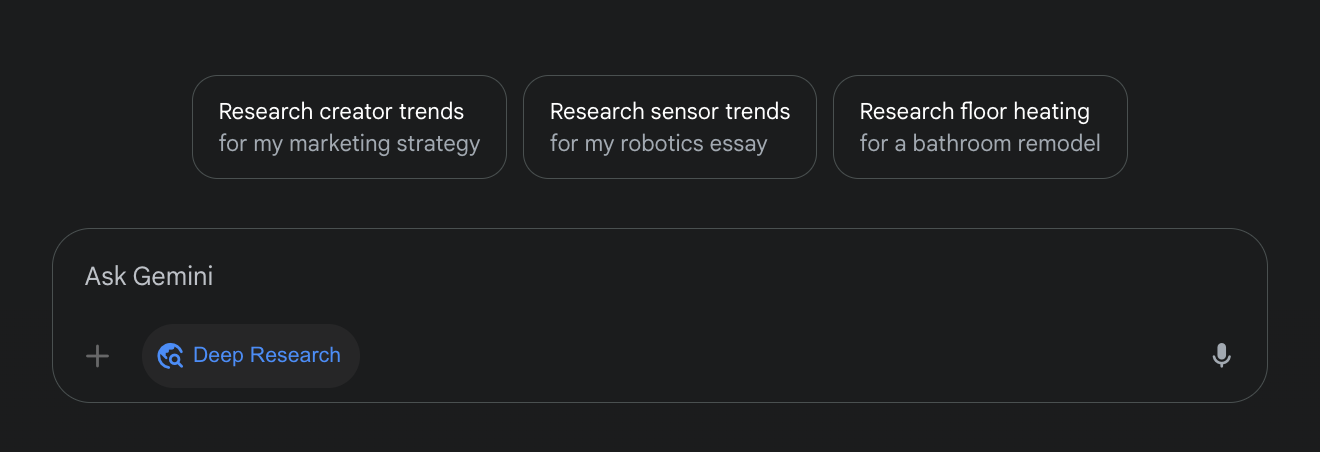
Gemini Advanced offers enhanced research capabilities compared to its standard version. It handles complex, multi-step research tasks better and performs more nuanced analysis.
The updated Gemini delivers a similar performance to ChatGPT. At the same time, it allows for more flexible customization of the future report and is available free of charge for all users. Sounds like a cool deal.
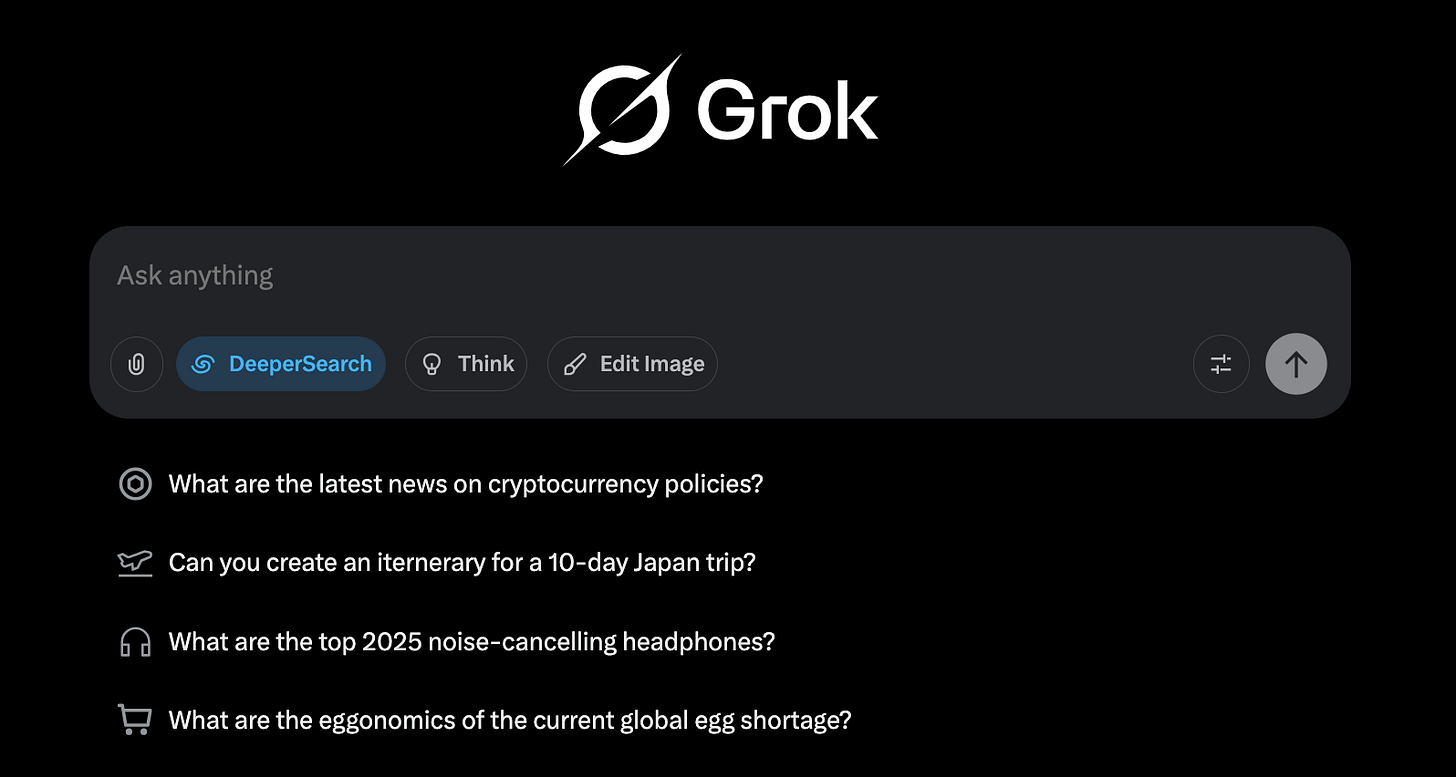
Grok’s DeepSearch and DeeperSearch are designed to quickly synthesize information, reason through conflicting data, and provide concise answers by searching the web and X posts in real time.
As good as Grok is at quick searches, it's just as bad at deep research. Both DeepSearch and DeeperSearch are only capable of producing a straightforward analytical report. No matter what settings you suggest.
This is a subjective opinion, but these features are a waste of time.
When to Use Web AI Search
Web AI Search shines in several specific scenarios:
Quick fact-checking is perhaps the most obvious use case. When you need to verify a statistic, check a date, or confirm basic information, the speed of AI search makes it the clear choice.
Initial exploration of unfamiliar topics also benefits from this approach. AI search provides the broad strokes and key concepts you need to orient yourself before diving deeper.
Time-sensitive decisions that require some information but don't justify extensive research are perfect for AI search. When you need to make a call in minutes rather than hours, these tools deliver sufficient context to proceed with confidence.
Routine information gathering for day-to-day work is another strength. Whether you're looking up industry news, checking competitor updates, or gathering background information for content creation, AI search tools streamline the process.
When to Use Deep Research
Deep Research becomes essential in different circumstances:
High-stakes decisions with significant consequences demand the thoroughness of Deep Research. The comprehensive perspective is invaluable, whether you're evaluating business opportunities, making investment decisions, or planning strategic shifts.
Complex problem-solving benefits from the nuanced understanding that Deep Research provides. When facing multifaceted challenges with no obvious solutions, this approach helps you consider all relevant factors and potential approaches.
Creating authoritative content requires the depth and credibility that comes from thorough research. If you're developing thought leadership pieces, detailed guides, or educational content, Deep Research ensures your work stands up to scrutiny.
Emerging or specialized topics often lack reliable quick summaries. In these cases, Deep Research helps you piece together information from multiple sources to form a coherent understanding where none previously existed.
Creators’ AI could be a valuable gift for your friend, colleague, or family member. Gifting books is bright, but giving an AI newsletter is a superb move 😎
Basic Prompts for Different Scenarios
The effectiveness of Deep Research depends significantly on how you structure your prompts. To simplify your work with these tools, here are approaches for common scenarios:
For market analysis:
"Conduct a comprehensive analysis of [market segment], including current trends, major players, growth projections, and potential disruptions. Evaluate the credibility of different perspectives and highlight areas of consensus and disagreement."For content research:
"Research [topic] in depth, examining historical context, current understanding, competing theories, and recent developments. Identify key authorities in this field and summarize their perspectives, noting areas of agreement and controversy."For decision support:
"Help me evaluate [decision] by researching potential approaches, analyzing pros and cons of each, identifying key risk factors, and summarizing best practices from similar situations. Include perspectives from different industries and highlight any cautionary examples."These prompts work best when you allow the AI to work methodically, breaking complex research tasks into stages rather than expecting comprehensive answers.
You can use them as a starting point.
Personally, I have made it a rule to offer a complete outline (the more detailed the better) for the research. This guarantees a quality result.
Real-World Examples & Case Studies
Of course, how this works in practice is best shown by real-life examples.
Below are a few that I found most noteworthy.
Content Creation | The Tech YouTuber
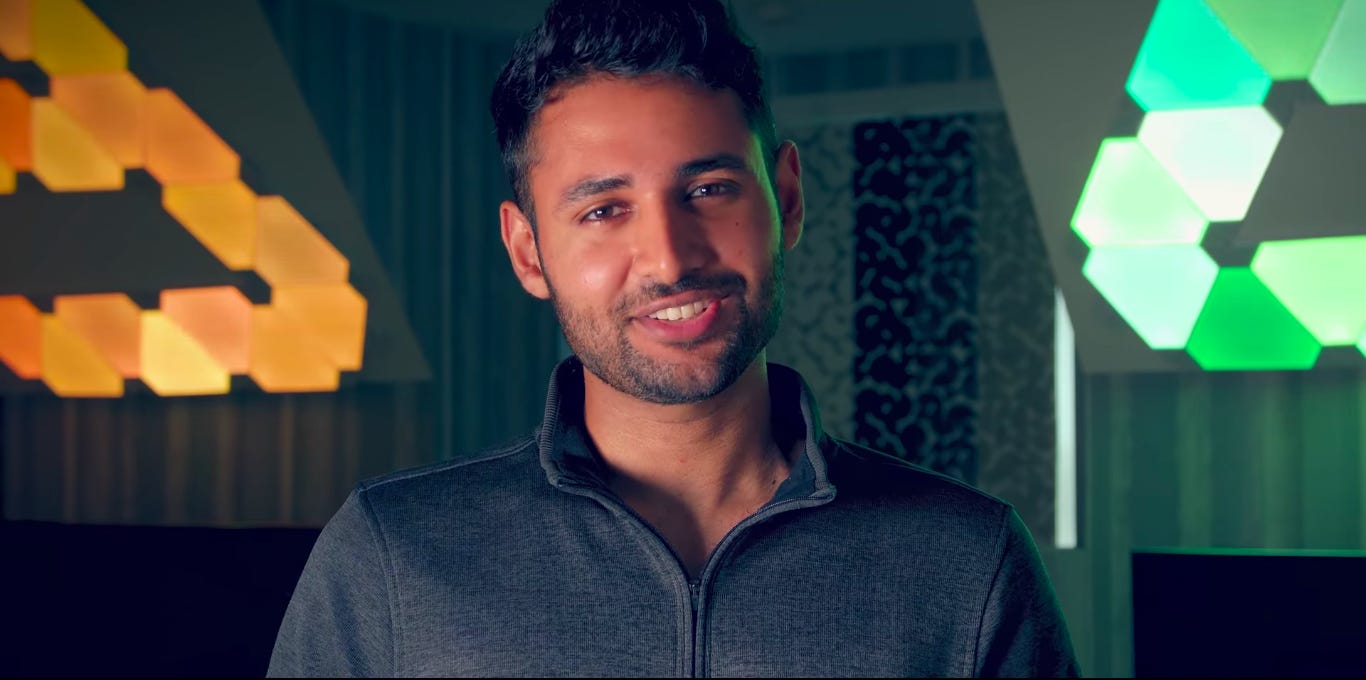
Arun Maini (Mrwhosetheboss), a tech YouTuber with 10M subscribers, uses a hybrid approach for his tech newsletter. He begins with Perplexity for quick market research on emerging technologies, then switches to Claude for deep industry trends analysis.
This approach allowed him to create an analysis of the smartphone market that combined broad market overview with detailed comparisons. The initial AI Search phase helped him identify key trends and competing devices, while the Deep Research phase revealed nuanced manufacturing innovations.
Maini estimates this approach saved approximately 15 hours of research time while producing more thorough content than his previous methods.
Investment Research | The Financial Analyst

Cathie Wood's investment team at ARK Invest evaluates emerging technology investments using AI Search and Deep Research tools. They begin with Perplexity to gather real-time data on market trends and company announcements.
For a deeper analysis of specific technologies like CRISPR gene editing or autonomous vehicles, they use Claude's research capabilities to analyze scientific papers and technical documentation.
This hybrid approach helps them identify investment opportunities in emerging fields before they become mainstream.
Content Strategy | The Digital Marketer

Neil Patel, a digital marketing expert, uses Web AI Search tools daily for competitive analysis and content strategy. He uses Perplexity to quickly analyze competitor content strategies and identify gaps in the market.
For more comprehensive SEO research, he uses ChatGPT's Deep Research to analyze search trends and user intent patterns across thousands of keywords. This deep analysis reveals subtle patterns in how users phrase their queries and what content best satisfies their needs.
This hybrid approach has allowed him to develop more targeted content strategies for his clients, resulting in an average 35% increase in organic traffic.
Final Thoughts
I'll be honest. Before preparing this post, I had an idea in my head that many people (including me) overestimated Deep Research and, in fact, regular AI Search is enough for any task. But with each prompt and new response, I realized more and more that this is not the case.
Each serves a distinct purpose.
Right now, I see the optimal workflow: Start broad with an AI search to orient yourself, then go deep on critical aspects using research techniques. This hybrid strategy gives you efficiency and thoroughness, where each matters most.
As for tools, my recommendation is that ChatGPT and Gemini are worth a closer look for unassuming users who want an all-in-one experience. Both show promising results in terms of search and deep research.
For those who want to dig deeper, I suggest using Grok and Claude as search engines and Perplexity for deep research. This is the optimal combo for creators for whom the most relevant data and public opinion are important.
What do you think? Tell us in the comments!
Share this edition with your friends!
This article was first published in the Creators AI newsletter. View the original edition.