🕵️What Is OpenAI Mafia Doing in 2024?
The founders from OpenAI's Mafia are worth billions. How high will that figure go?
I think it's time to talk about what's happening inside OpenAI. Over the last year, the company has lost more than 20 (!) essential talents. We can speculate for a long time why they left, but it's more important to answer the following: where are they going?
To answer this question, we've investigated dozens of news articles, leaks, social media posts, and private memos. And now, we're ready to share our findings on how OpenAI’s Mafia has evolved over the past year.
Keep your mailbox updated with practical knowledge & key news from the AI industry!
Exodus of OpenAI’s Top Talent

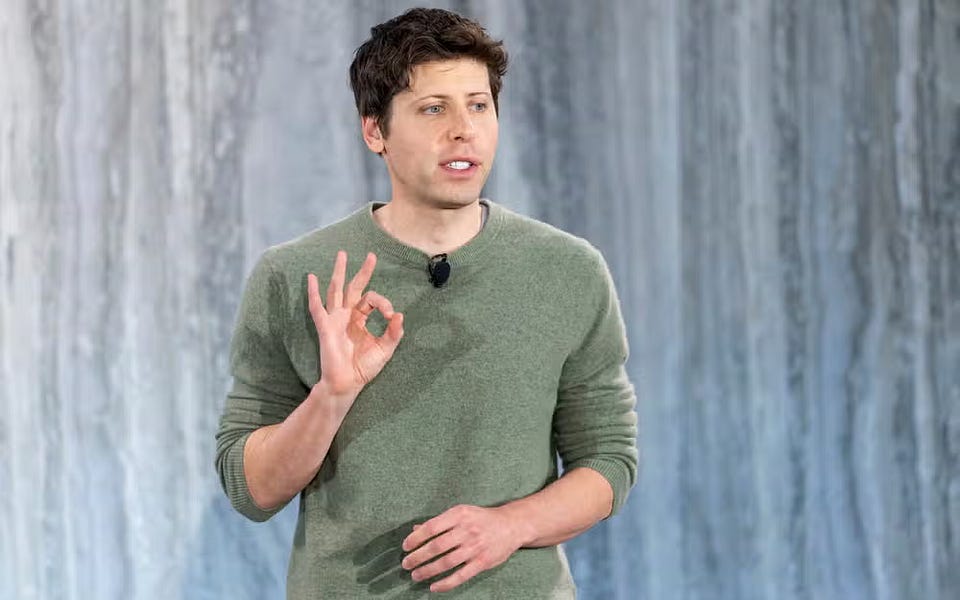
Sam Altman shows how many decision-makers OpenAI needs besides himself. (Just kidding)
“Leadership changes are a natural part of companies, especially companies that grow so quickly and are so demanding”
- Sam Altman, from the latest memo to staff.
Are you familiar with the concept of OpenAI's Mafia? It's a group of former OpenAI employees who left the company to start their own ventures, primarily in AI. Since OpenAI was founded in 2015, this group has grown to more than 30 entrepreneurs who have raised billions for their projects. The list of members is long:
- Anthropic founders, Daniela Amodei and Dario Amodei, whose startup is a major player in the chatbot market. Right now, it is in early talks to raise new funding on up to a $40B valuation
- Founder of xAI (and you know what else companies) Elon Musk, whose startup created the AI model Grok and was valued at $24B.
- Aravind Srinivas, co-founder of Perplexity, one of the most popular AI-powered search engines. It's planning to reach an $8B valuation soon.
I could go on, but it would take too long. Here the slightly outdated picture below indicates who is part of this mafia:
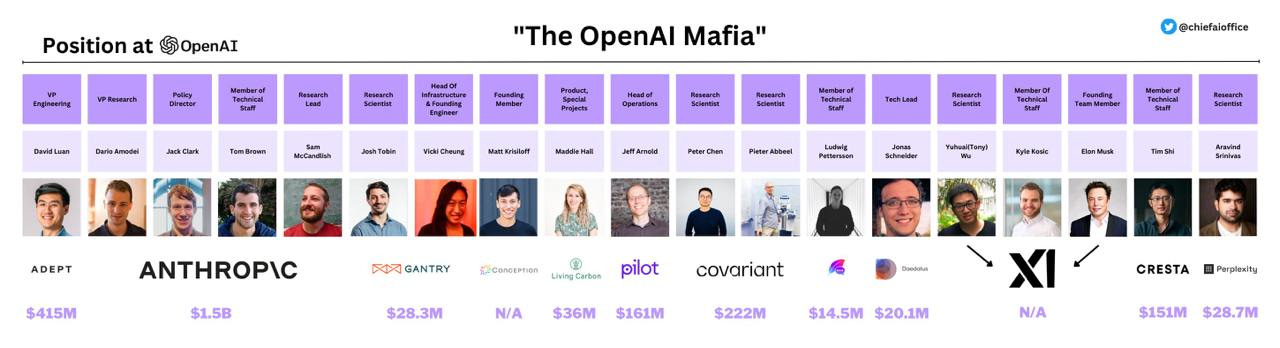
The thing is, the mafia has continued to grow lately (thanks primarily to Exodus). Today, I want to discuss this with those who will be joining the new lineup.
I suggest starting almost a year ago, more precisely, from November 2023, when Sam Altman was fired from OpenAI and then returned as the head of the company (a very corny comparison to Steve Jobs is called for here, which you can come up with yourself). We still don't know all the details, but we understand that the underhanded games started during this period.
I also find it very amusing that the story of the OpenAI layoffs began... Well... With the firing of Altman himself, the company's CEO.
Sharing is caring! Refer someone who started a learning Journey in AI!
In November, the board announced that it no longer had confidence in Sam Altman's ability to lead OpenAI, citing that he had “not always been forthright in his communications.” However, it quickly became clear that the board had underestimated Altman's importance. So, just within days, the OpenAI founder was reinstated. And then a lot of things changed.
Here's a list of the most significant professionals who have left in 2024:
- Andrej Karpathy: Founding member & VP of Research, left in February 2024
- Jan Leike: Co-head of the Superalignment team, left in May 2024
- Ilya Sutskever: Co-founder & Chief Scientist, left in May 2024
- Diane Yoon: VP of People, left in May 2024
- Chris Clark: Head of Nonprofit and Strategic Initiatives, left in May 2024
- Peter Deng: VP of Consumer Product, left in August 2024
- John Schulman: Co-founder & Research Scientist, departed in August 2024
- Mira Murati: Chief Technology Officer, left in September 2024
- Bob McGrew: Chief Research Officer, departed in September 2024
- Barret Zoph: VP of Research, exited in September 2024
- Tim Brooks: Executive on the Sora project, departed in October 2024
- Greg Brockman: President, on leave of absence until the end of 2024
I didn't include people like Helen Toner and Tasha McCauley because they are less relevant to OpenAI products. But you can also keep in mind that the Board of Directors has undergone a major transformation.
The reasons for departures vary and are not always publicly disclosed. Some speculate it could be due to philosophical differences, competitive offers from rivals, or disagreements over the company's direction as it transitions from a nonprofit to a more commercially oriented entity.
But facts are facts; OpenAI has lost a lot. (And the Mafia got new members)
Ex-OpenAI Talents Have Something to Do
Now, let's take a look at what these talents are doing.
Andrej Karpathy | Eureka Labs
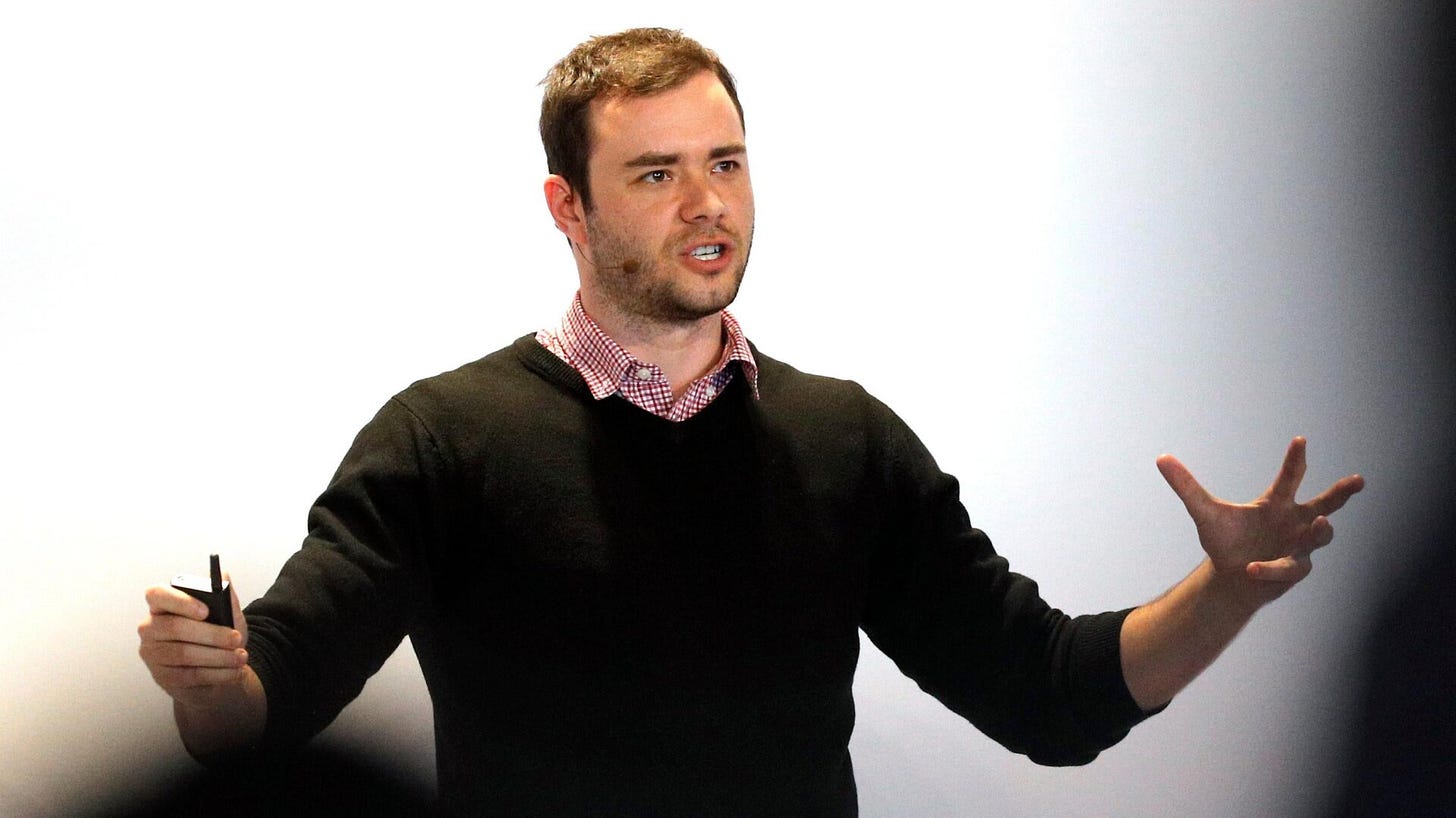
We’ll start with one of the first AI enthusiasts who left OpenAI.
Andrej Karpathy left in February 2024 and announced his startup, Eureka Labs, in July. The project aims to develop AI education and raise a new “AI native” generation. Eureka's first course, which is not yet available, should teach its students how to create their own large language models (LLM). The student learning process will be closely linked to the use of AI.
Here's how the founder explained it in a post on X:
Our first product will be the world's obviously best AI course, LLM101n. This is an undergraduate-level class that guides the student through training their own AI, very similar to a smaller version of the AI Teaching Assistant itself. The course materials will be available online, but we also plan to run both digital and physical cohorts of people going through it together.
It is easy to understand why Karpathy decided to build this particular company. He has long maintained his own YouTube channel, where he discusses the principles of language models and explains how to create them to aspiring engineers. He also previously developed a deep learning class at Stanford University.
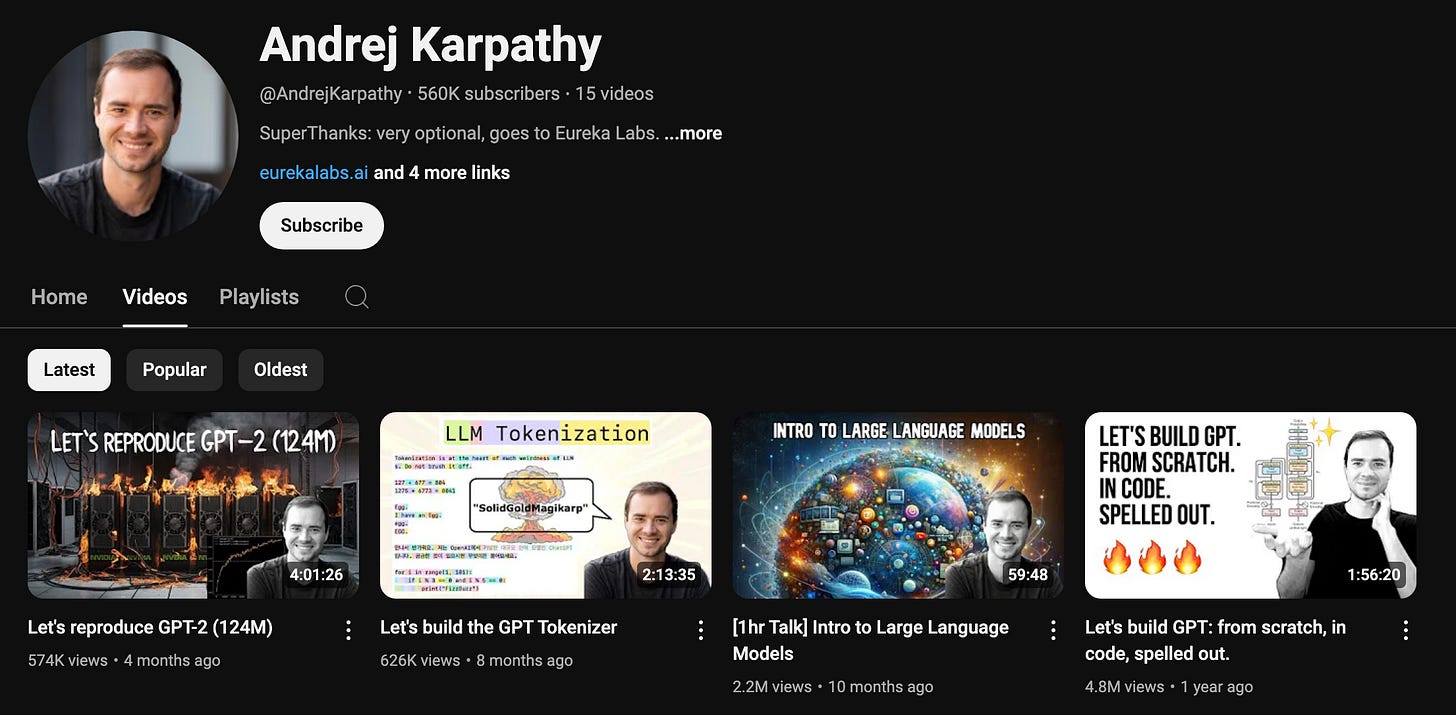
Let's wish Andrej good luck and move on.
Ilya Sutskever | Safe Superintelligence Inc
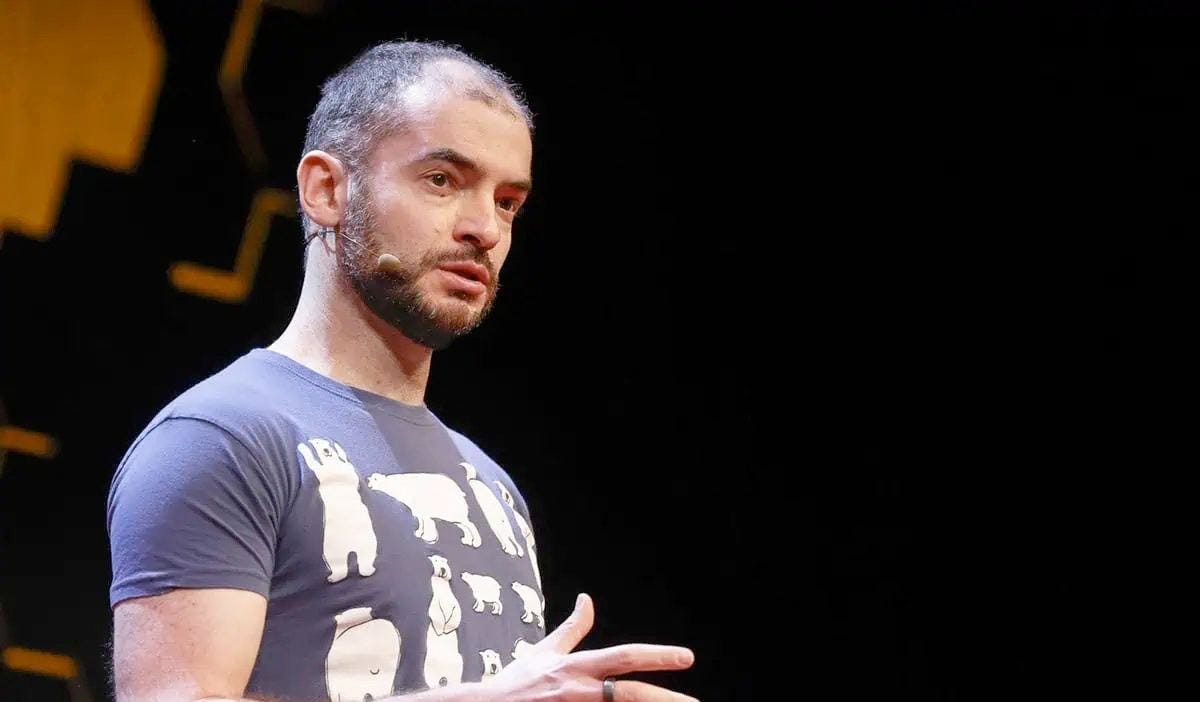
The next one is Ilya Sutskever.
He was OpenAI's Chief Scientist and led the Superalignment team (along with Jan Leike, discussed below). In May, Sutskever announced a new company called Safe Superintelligence Inc (SSI). Among its co-founders was Daniel Gross, who oversaw Apple's AI and search efforts, and former OpenAI employee Daniel Levy. The new startup, consisting of these three employees, immediately hit the ground running, opening offices in Palo Alto, California, and Tel Aviv, Israel.
SSI's purpose and mission are both clear and vague. As Sutskever explained, the startup aims to create a safe supermind with direct action, one focus, one goal, and one product. Simply put, it's about an extremely productive model that will act solely for good. How this will be realized from a technical standpoint is hard to say (there's a chance that even the founders can't give a full answer yet). And Sutskever also revealed that SSI will have an unusual business model:
Our singular focus means no distraction by management overhead or product cycles, and our business model means safety, security, and progress are all insulated from short-term commercial pressures.
Investors loved it. Early last month, SSI told X that it had raised $1B (!) from major firms, including NFDG, a16z, Sequoia, DST Global, and SV Angel. Now, the company is expanding: It's hiring engineers and researchers who will be “dedicated to focusing on SSI and nothing else.”
Mira Murati | Stealth Startup
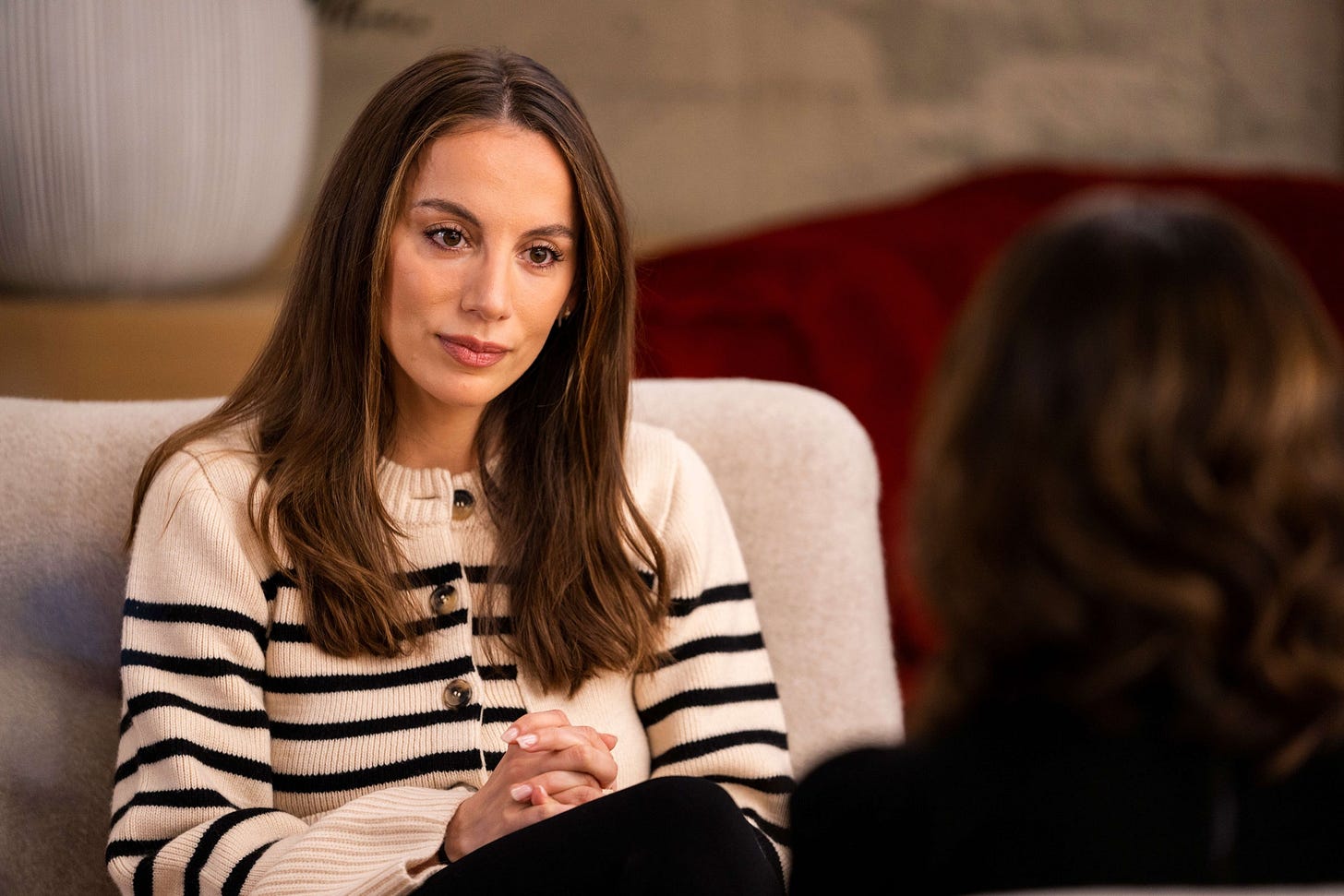
OpenAI's latest loss proved to be its most active. Less than a month after leaving, ex-CTO Mira Murati is starting fundraising for her startup. According to TechCrunch's anonymous sources, she aims to raise $100 million in the first round. The money will allow Murati to launch a business focusing on “proprietary models” for AI.
At the time of her departure, Murati wrote that OpenAI had “fundamentally changed how AI systems learn and reason through complex problems.” She left to free up time and space for her own exploration. Apparently, the former CTO has already formulated an implementation plan. We can assume that it won't be the usual chatbot technology but something more significant.
Probably, even exceeding the capabilities of the latest OpenAI models.
Do you believe in the prospects of the Mira Murati startup?
John Schulman & Jan Leike | Anthropic
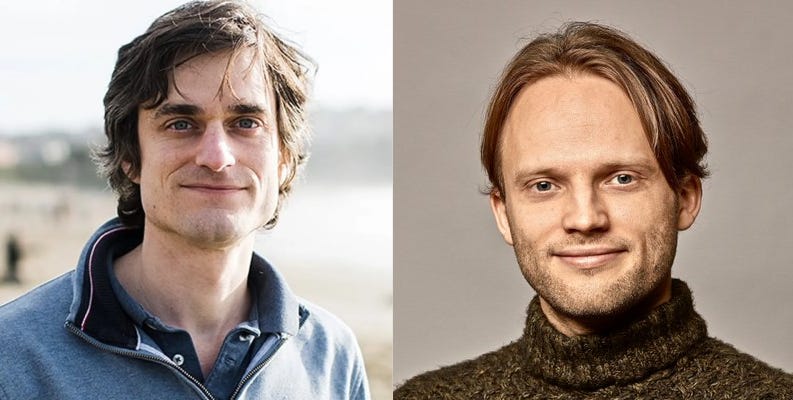
Some former OpenAI employees do not create their own startups but leave to join competitors. Jan Leike and John Schulman, in particular, have done so.
Leike, one of OpenAI's top security researchers who resigned in early May, announced the same month that he was joining rival AI startup Anthropic. His new team works on scalable oversight, weak-to-strong generalization, and automated alignment research. Speaking about leaving OpenAI, he also added that leaving that job was one of the hardest things he's ever done because people urgently need to figure out how to manage and control AI systems that are much smarter than us.
As for John Schulman, he left OpenAI a little later in August. He had previously worked on improving models that then became part of ChatGPT. Schulman's transition was motivated by a desire to return to hands-on technical work. At Anthropic, the former OpenAI talent is focusing on AI alignment. Thus ended Schulman's 9-year history at OpenAI.
Tim Brooks | DeepMind
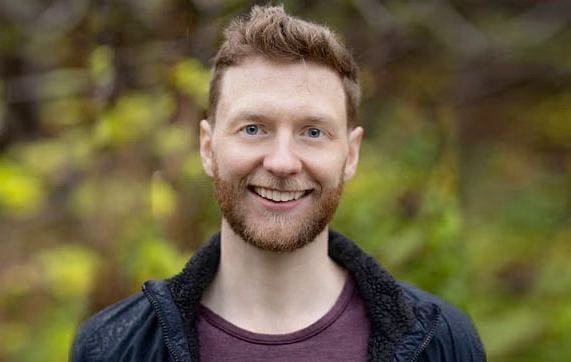
Tim Brooks is another recent loss to OpenAI.
He was previously heading development on Sora with William Peebles and, earlier this month, joined Google DeepMind to work on video generation technologies and “world simulators.” Here's what they wrote on X:
I will be joining @GoogleDeepMind to work on video generation and world simulators! Can't wait to collaborate with such a talented team. I had an amazing two years at OpenAI making Sora. Thank you to all the passionate and kind people I worked with. Excited for the next chapter!
What exactly “world simulators” are is not very clear. However, in an article last year, Google DeepMind explained that it's about controlled content for games and movies, as well as training agents embodied in simulations who can then be deployed in the real world. Without denying the importance of Sora's video generator, it seems as if working at DeepMind will be a more significant opportunity for Brooks.
Final Thoughts
And these are the new members of OpenAI's Mafia.
They don't have significant results and achievements yet (okay, a few have raised huge amounts of money, you know what I mean), but they've already gotten a lot of attention. Personally, I'm not sure there's room in the market for all of them, but you can't deny the growing trend of OpenAI's Mafia.
It seems that this talent smithy has a good chance of reaching (or maybe even outgrowing) the level of Stripe Mafia, Netflix Mafia, and others.
Which of them do you believe in?
Share this edition with your friends!
This article was first published in the Creators AI newsletter. View the original edition.