Write With AI: Guide to Craft Bestsellers with AI Tools
Beat Writer's Block, Bad Dialogs, and Deadlines With AI
👋 Hey, I’m Stepan and welcome to a ✨ subscriber-only edition ✨ of Creators’ AI. By subscribing, you directly support Creators' AI's mission to deliver top AI insights & practical knowledge without ads or clutter. Your subscription allows us to grow our dedicated team and curate the most important AI Tools, Stories, and Tutorials in one place. - Stepan
Why Writing With AI?
How do you write a good book using AI? If you ask this question publicly, you risk raising a big ruckus from skeptics. Many people will say this approach is destructive and that algorithms have no right to interfere with human creativity. I strongly disagree with this.
And today, I will try to prove it. We'll discuss how talented writers outsource their work to AI, look at three cases of successful authors, and discuss a few AI Tools that will shorten your path to creating a really good piece of art.
In this episode:
- The writer who outsourced 95% of his work to AI
- ChatGPT wins writer's block lasting 20 years
- How authors write poetry collections in less than 12 hours
- The most valuable AI tools for aspiring writers
By the way, if you want to know how creators earn $1M+ by using AI to write books, we have a newsletter with a step-by-step tutorial for you:
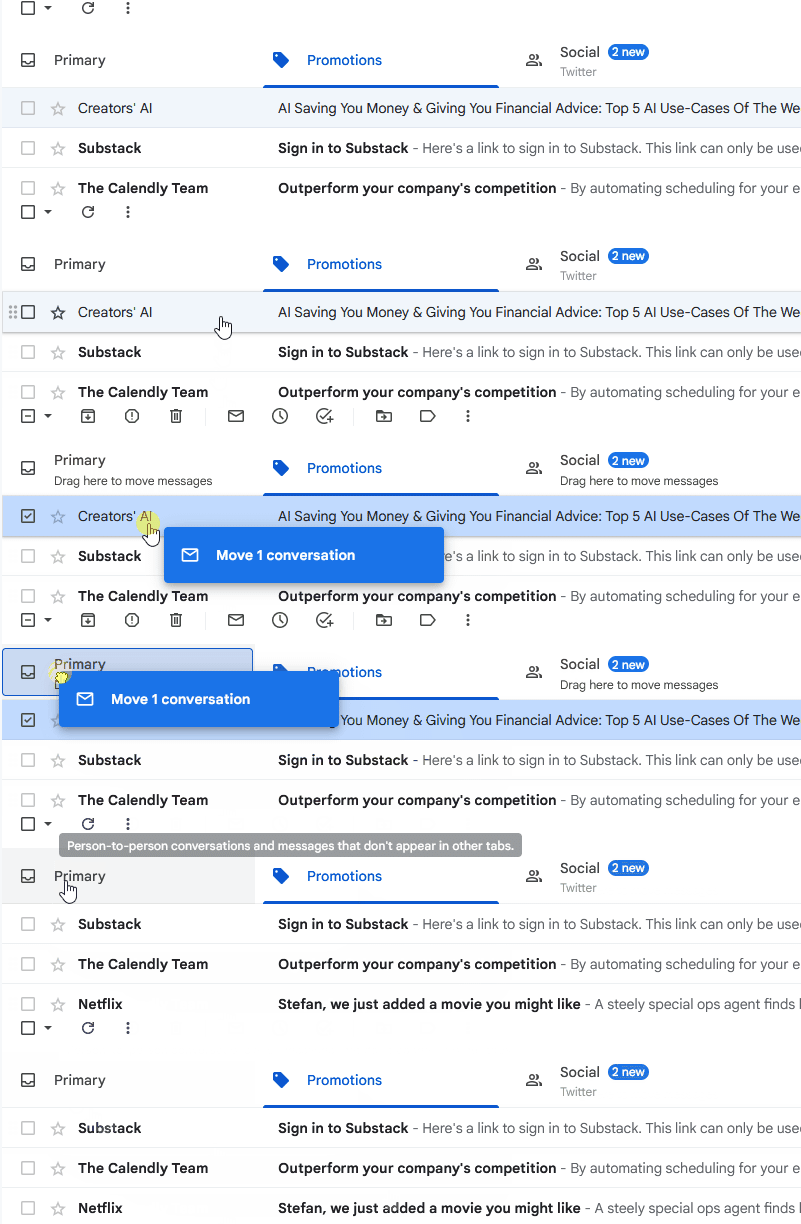
🔗 Are you already subscribed and want to ensure you don’t miss our newsletters? Move our newsletter from “Promotions” to “Primary” in your inbox! (video instructions below)

Is Writing With AI Worth It?
The short answer is yes. From small to large, even experienced writers, journalists, and entrepreneurs use AI to simplify their work, find inspiration, or reach their target audience. Let's take a look at a few stories of how very different creators have used AI to improve their writing.
An AI That Took Over 95 Percent of The Work
Our first case study is the story of Stephen Marche, a Canadian writer and journalist. You may have heard his name if you follow contemporary publicists and novelists. Marche has authored several well-known political books, including The Last Election and The Next Civil War, and is now a contributing editor at Esquire. His columns are also in The New York Times, The Atlantic, and other global media.

However, not everyone knows Marche is a tech enthusiast and one of the world's first writers using AI to write novels. One of them, "Death of an Author," was written under the pseudonym Aidan Marchine.
Yes, if you're a true cryptographer, you'll quickly realize that this name encrypts the involvement of artificial intelligence.

"Death of an Author" was published on May 9, 2023, less than a year ago. The novel has been honored with mentions in The New York Times, Wired, and many others. According to reviewers, it is one of the best works written with AI.
How did Marche achieve this?
He used three programs to work on the book: ChatGPT, Sudowrite, and Cohere. Marche ran an outline of the plot through the chatbot, along with numerous prompts and notes. AI was good at many things, especially dialogue, but according to the author, its plots were terrible. Then, he used Sudowrite, asking the program to improve sentences and adopt a more conversational tone.
And finally, he used Cohere to write "the best lines in the book". The writer trained the neural network on examples of real writers and then asked it to generate beautiful descriptions. After going through several variants, he found the ones that fit best. As a result, the book was 95 percent generated by AI!
I am the creator of this work, 100 percent, but, on the other hand, I didn’t create the words
In the afterword of his book, Marche said that writers will soon use AI in the way hip-hop producers work with samples. He believes those with the best taste and the most knowledge will do the best things, and some will even be brilliant.
ChatGPT vs. Writer's Block
Our next writer using AI is Vauhini Vara. Like Stephen Marche, she is a well-known journalist and writer. You can find her articles in The Atlantic, The New Yorker, and The New York Times, and her debut book, The Immortal King Rao, was a finalist for last year's Pulitzer Prize for Fiction. So yes, she also understands a thing or two about writing, though her history of working with AI is much more emotional.
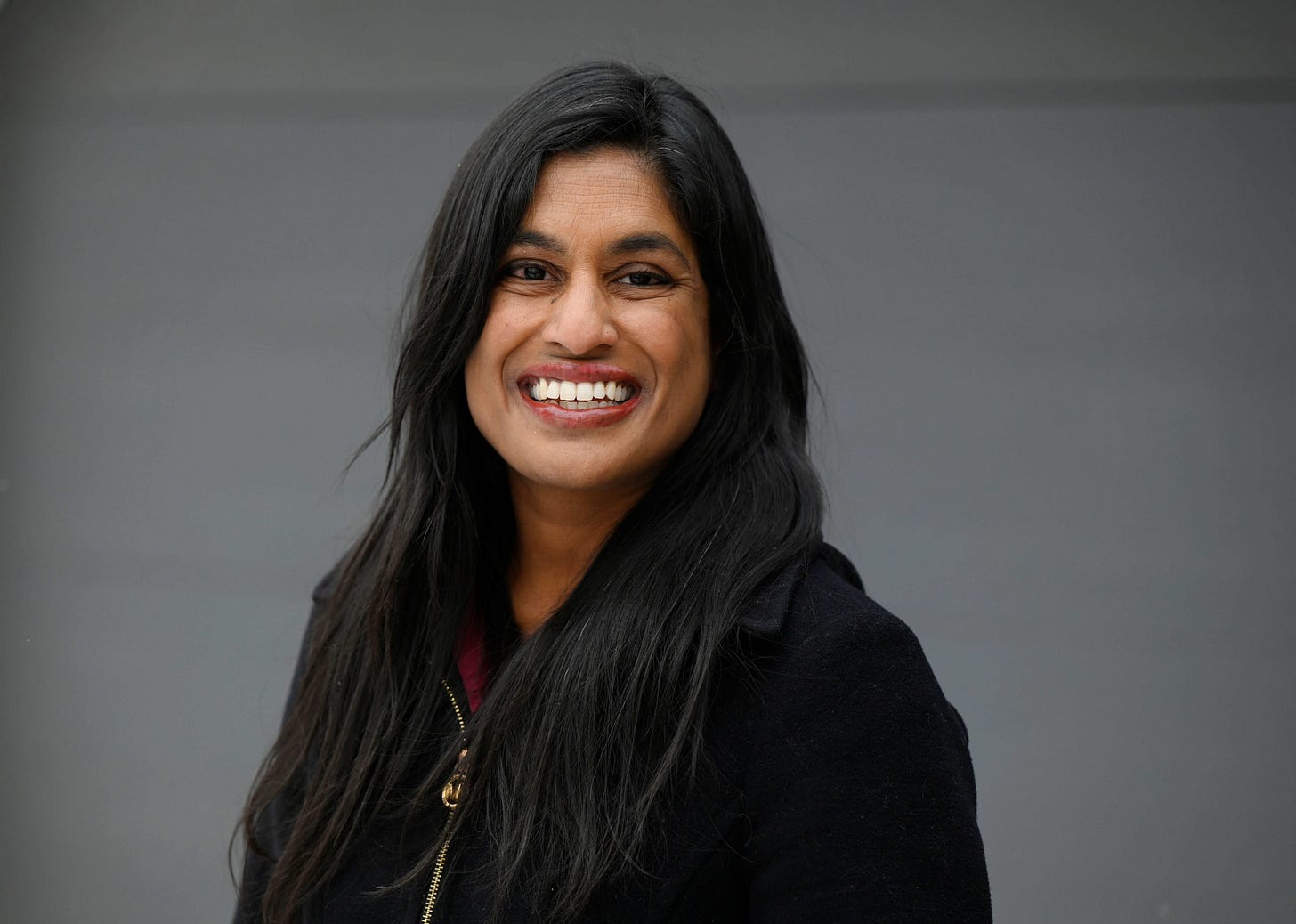
Vara worked as a journalist for many years and had all the skills she needed to create stories. However, she couldn't find the words for one topic. When Vara was in college 20 years ago, her sister died. One evening, she decided to use the GPT-3 (the most current model at the time) to overcome her block and speak out on the topic.
After several failed attempts, the chatbot adapted to the situation and found common ground with the writer. On the fourth or fifth attempt, the AI began to describe the grief in language that seemed more truthful, and with each subsequent attempt, it came closer to defining what Vara was going through.
Eventually, in the summer of 2021, this dialog evolved into an essay called Ghosts. When Vara published it in The Believer, the publication quickly went viral on the internet. People heard the author. The essay was adapted for This American Life magazine and became part of the Best American Essays anthology.

As Vara later recounted, artificial intelligence had succeeded in moving her with a sentence about the most important experience of her life.
In summary of her work with AI, Vara said that GPT-3 was an important part of her journey. She also noted that she fears a future in which authors become dependent on algorithms and art will, perhaps partially, lose its value to humanity.
If you're unfamiliar with Vara's essay, I recommend reading it. It's a heavy and personal but important story about how AI already impacts our lives. Plus, it explains how chatbots can defeat even the toughest writer's block.
Keep your mailbox updated with practical knowledge & key news from the AI industry!
Writing Bestsellers In Less Than 12 Hours
To digress from the last case study, I suggest discussing something more enjoyable. For example, some authors are speeding up their poetry writing with AI. Our next case study is Finnish writer, entrepreneur, marketer, and TEDSpeaker Jukka Aalho.

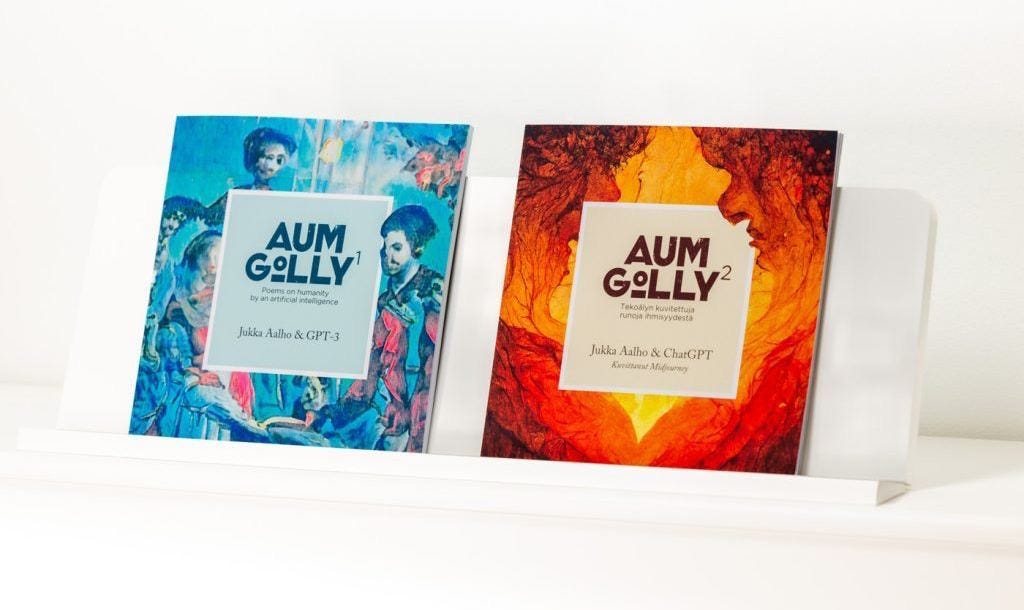
Aalho has a complex background that combines creativity as a writer with the technical skills of an entrepreneur and startup founder. To avoid lingering on introducing the author, let's focus on his work with artificial intelligence. So, Aalho is known for his two-book series, Aum Golly.
The series consists of two collections of poems released in 2021 and 2023. Their main feature is that the author took less than 24 hours to write each one! Both books were warmly received by critics, sold well on Amazon, and Aum Golly was number 52/100 on the Most Popular Fiction on Adlibris (the biggest Nordic online bookstore).
In the case of Aum Golly 2, it took the writer less than 12 hours to complete.
But how did he do it?
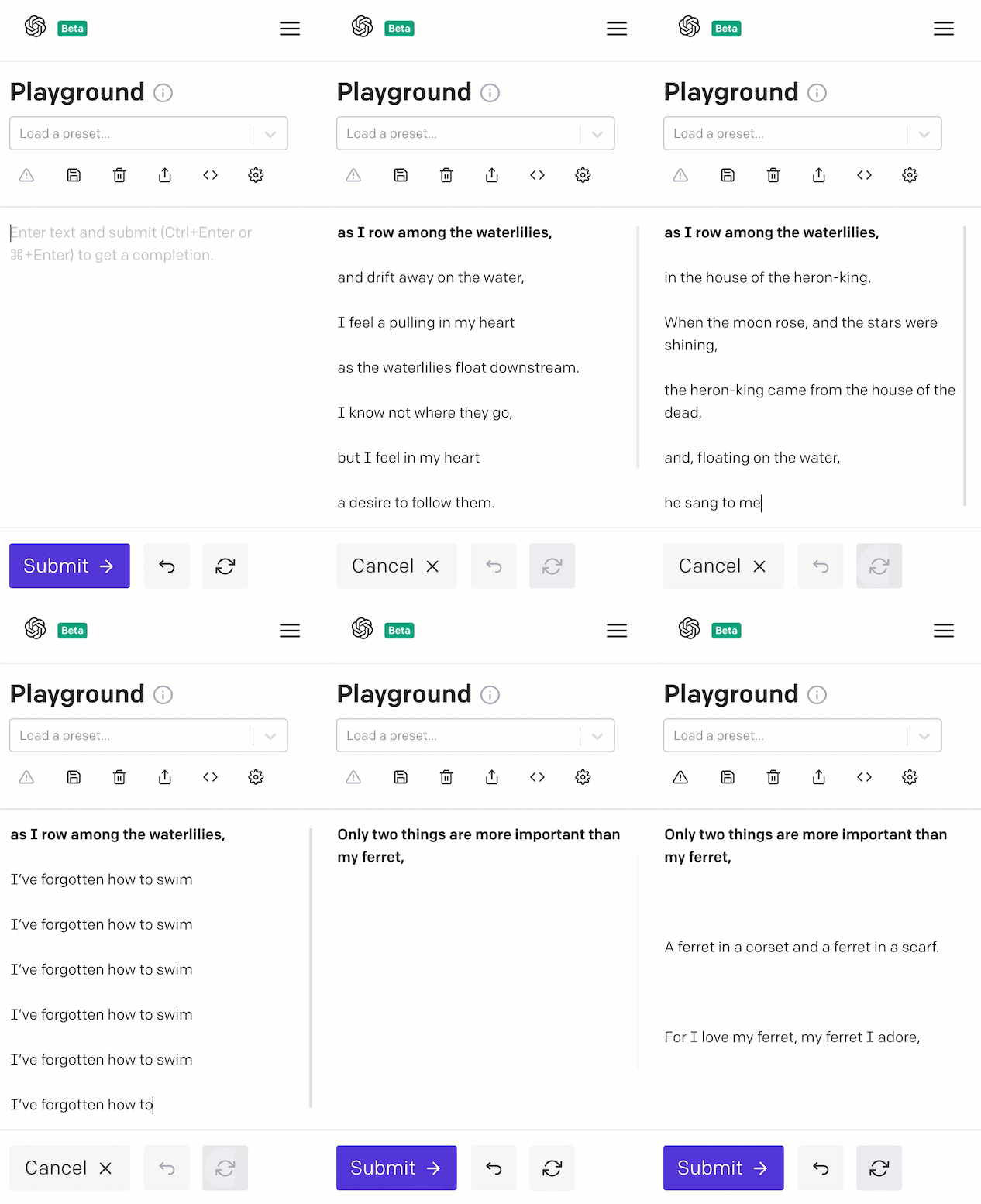
In January 2021, Aalho realized that the deadline he had set for himself to write a collection of poems was ending. The writer had only 24 hours left, while he had written only 5 of the planned 60 poems. To finish the job, he ran GPT-3 and asked it to write poems based on short text prompts.
The model accepted the user's request and produced the desired result. After one day, Aalho entered new prompts and edited the punctuation and some lines, and the book was ready for publication. GPT-3 developed themes, titles, and content for 55 poems.
The book quickly appeared on the shelves of Finnish stores, and then an electronic version, translated from Finnish to English, was made available on Amazon.
The story in the second book, Aum Golly 2, was about the same. Two years later, the writer repeated his experiment, making the task more difficult. He decided to make a collection of poems with illustrations generated by Midjourney. With the necessary skills, the writer created 29 poems and 23 illustrations in less than 12 hours.
Want to generate images using AI Tools as a pro? This newsletter is for you:
In total, Jukka Aalho spent about $54.1 (AI Tools subscription) and about 36 hours of work to become a world-renowned poet. That's impressive.
In one of his posts, Aalho summarized his work with GPT and wrote that AI will help new kinds of literature emerge. He said it would open up the field for new entrants and might even level the playing field.
Creators’ AI could be a valuable gift for your friend, colleague, or family member. Gifting books is bright, but giving an AI newsletter is a superb move 😎
What Сan We Learn From These Cases?
Looking at the stories of Stephen Marche, Vauhini Vara, and Jukka Aalho, several important conclusions can be drawn about the collaboration between writers and AI.
- The combination of tools and skills makes finding new ideas for novels easier. Stephen Marche was able to turn multiple models into a plot engine and diversify the narrative as well
- AI can solve one of the worst problems of all writers - breaking writer's block, as in the case of Vauhini Vara. If you feel like you're ready to create a real bestseller but there's no way you can get started, ChatGPT might be just what you need
- Optimization and speed of operation. By reducing labor costs, writers realize their creative potential faster. Instead of weeks of thinking about a single poem, Jukka Aalho could write an entire collection in just one day.
Also, you should note that although all the writers in our newsletter outsourced their work, they kept a close eye on how the AI worked and edited out the unfortunate moments.
Sharing is caring! Refer someone who started a learning Journey in AI!
AI Tools to Create Your First Bestselling Novel

So, we've established that AI enables the creation of quality literary works. But what tools are best suited for this? Thanks to our case studies, some of them may be obvious to you, but these are not all valuable platforms. Here they are.
- ChatGPT
The first place is ChatGPT. I will not bore you with the list of its features and data about the size of this model. In addition, Stephen Marche, Vauhini Vara, and Jukka Aalho proved that this chatbot can be useful with their examples. Instead, I'll give prompts that will make writing your novel easier.
Idea Generation
"I need a premise for a [genre] novel set in [unusual location]. Make it strange and compelling.""Give me 3 high-concept ideas for a science fiction story that challenge a common trope of the genre.""What's a unique 'what if' scenario that could be the foundation for a gripping thriller?"Character Development
"Create a deeply flawed but sympathetic protagonist. They [key personality quirk] and have a hidden past that involves [brief event description].""Develop a morally ambiguous antagonist. Their primary goal is [goal], but they have a deeply humanizing reason for it.""My main character needs a quirky best friend with a contrasting personality. Outline their traits, a potential backstory, and some ways their friendship might evolve."Plot and Scenes
"Generate several escalating conflicts that could arise from this premise: [your premise]. Include both internal and external struggles.""Outline a dramatic opening scene for my novel. It should introduce the protagonist in the midst of a problem and hint at a larger issue to come.""My plot needs a climactic midpoint twist. I know that [character] must betray [character], but I want it to have more profound consequences than expected."Refining Your Writing
"This passage feels flat: [insert passage]. Can you give it a more evocative atmosphere, keeping the same events?""The dialogue between these two characters feels stilted. How could I make it both more natural and reveal subtle tensions between them?""Help me make this description of [object/place] more engaging. I want readers to vividly imagine it."You should also be specific. The more detail you provide (preferred genre, specific quirks, etc.), the more tailored the responses will be. And, of course, try to get multiple results: experiment by running the same prompt several times to see variations.
- Sudowrite
Sudowrite is your AI writing partner. Get help with plot development, character descriptions, scene building, and overcoming writer's block with the power of the chatbot. This is the tool Stephen Marche used to work with dialog and characters.
- Squibler
Squibler is a favorite among many authors. It assists with outlining and structuring your story, generating text based on your ideas, setting goals and tracking progress, and collaboration features for team writing. It was designed specifically for writers.
- Jasper.ai
Jasper.ai is known for its prowess in creating general content. This platform is also good for rephrasing and improving style and could help refine your book's descriptions or marketing materials.
- Cohere
Although Cohere is positioned as an enterprise platform, its AI is great for writing books. The chatbot quickly processes large amounts of data, understands context well, and can adapt to your unique style.
- Hemingway & Grammarly
Never forget grammar and punctuation. One of two tools that can help you with this is Grammarly or Hemingway Editor. Both are excellent guides to working with text and, in addition, will help you pick a good tone of voice.
Bonus Tools
The tools listed are a base for writers who want to create novels with AI. If you find common ground with these models, you'll easily get comfortable with any other platform. And, just so you have a choice, here are some more great tools.
Is your book almost ready? Then it needs an audio version too. This post will show you how cretors are using AI to create them:
Final Thoughts
The conclusion leads me to two thoughts. On the one hand, I want to say that no matter how AI develops, it cannot replace a real creator. On the other hand, I look at Jukka Aalho's case and realize that his poetry collections are almost entirely written by ChatGPT. Well, I guess time will tell.
I'd like to believe that no matter how art evolves, we will only benefit from the symbiosis of modern technology and human creativity. And here's my final piece of advice. Even if you are a skeptic, I suggest you try to experiment with these tools. Maybe you will see how they can streamline your process and spark new ideas!
What do you think about writing with AI? Tell us in the comments!
This article was first published in the Creators AI newsletter. View the original edition.