AI Agents Are Better Than SaaS
Exploring the tectonic shift away from the agent economy (+ tools)
If you open up literally any predictions for 2025 focused on technology, you'll see a big bet on AI agents. Creators, entrepreneurs, enterprises, and investors are thinking about this niche. Integration costs are estimated at $1T (!) for the next couple of years.
But few are specifying what the next tectonic shift will look like.
So today, we will:
- Discuss what AI agents are impacting SaaS and traditional businesses
- Who qualifies as the next decacorn (a startup with a valuation over $10B)
- Is there room for newcomers who want to join the race?
- Look at tools for building & improving AI agents
Keep your mailbox updated with practical knowledge & key news from the AI industry!
How It Works

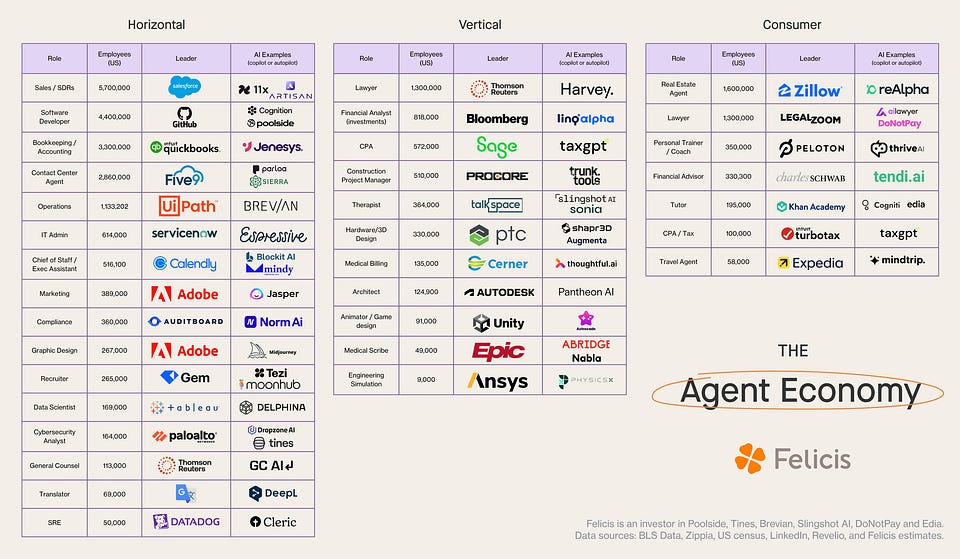
Analyzing the prospects for AI agents, venture capital firm Felicis concluded that the new industry will hit SaaS companies hard. To show this more concretely, the investors divided the products into three categories:
- Horizontal - AI sold horizontally to in-house teams at enterprises
- Vertical - A specific AI for one industry
- Consumer - AI as a full-stack service for the public
As you can see from the image above, Felicis suggests that the most attractive and in-demand area will be horizontal agents. In sales/SDRs alone, the number of employees affected by AI will soon exceed 5.7M (more than all vertical niches together).
So unless you have a unique killer app, it's probably worth targeting the top of these lists. Even if there is more competition, this space has too much demand.
The best entry points into the agent industry are:
- Sales
- Customer Service
- Legal
- Real Estate
Now, let's examine a few relevant cases (all claiming a huge piece of the pie), compare them with familiar businesses, and evaluate the current results.
Creators’ AI could be a valuable gift for your friend, colleague, or family member. Gifting books is bright, but giving an AI newsletter is a superb move 😎
AI Agents in Sales

11x is one of the best examples of how AI works in sales. Founded in 2022 by Hasan Sukkar in London (later HQ moved to San Francisco), the company develops AI-powered sales development bots. These bots are designed to streamline Go-to-Market (GTM) operations, thereby reducing operational inefficiencies and costs associated with traditional sales processes.
Right now, 11x offers two “digital workers.” The first, Alice, is an AI SDR responsible for production, research, and customer acquisition. It can ingest both first- and third-party data to find, engage, and qualify prospects. Alice reportedly achieves a response rate three times higher than that of human SDRs
The second is Jordan, an AI phone sales representative who speaks over 30 languages and can handle inbound and outbound conversations with prospective human buyers.
In 2025, 11x plans to launch 25 agents, including bots for talent acquisition and human resources.
Of course, 11x is following Salesforce in its work. And it's not afraid to criticize the giant with a traditional model. 11x says the software products that make us more efficient and productive have hit a ceiling. So, the first thing businesses look at when they want to scale is automation, and 11x provides the necessary foundation.
It's not just us who think so, but the startup's customers. 11x is the highest valued ($350M) and fastest-growing company in its field. In September 2024, founder Hasan Sukkar said his company's ARR is approaching $10M.
To learn more about AI + sales, check this out:
AI Agents in Customer Service
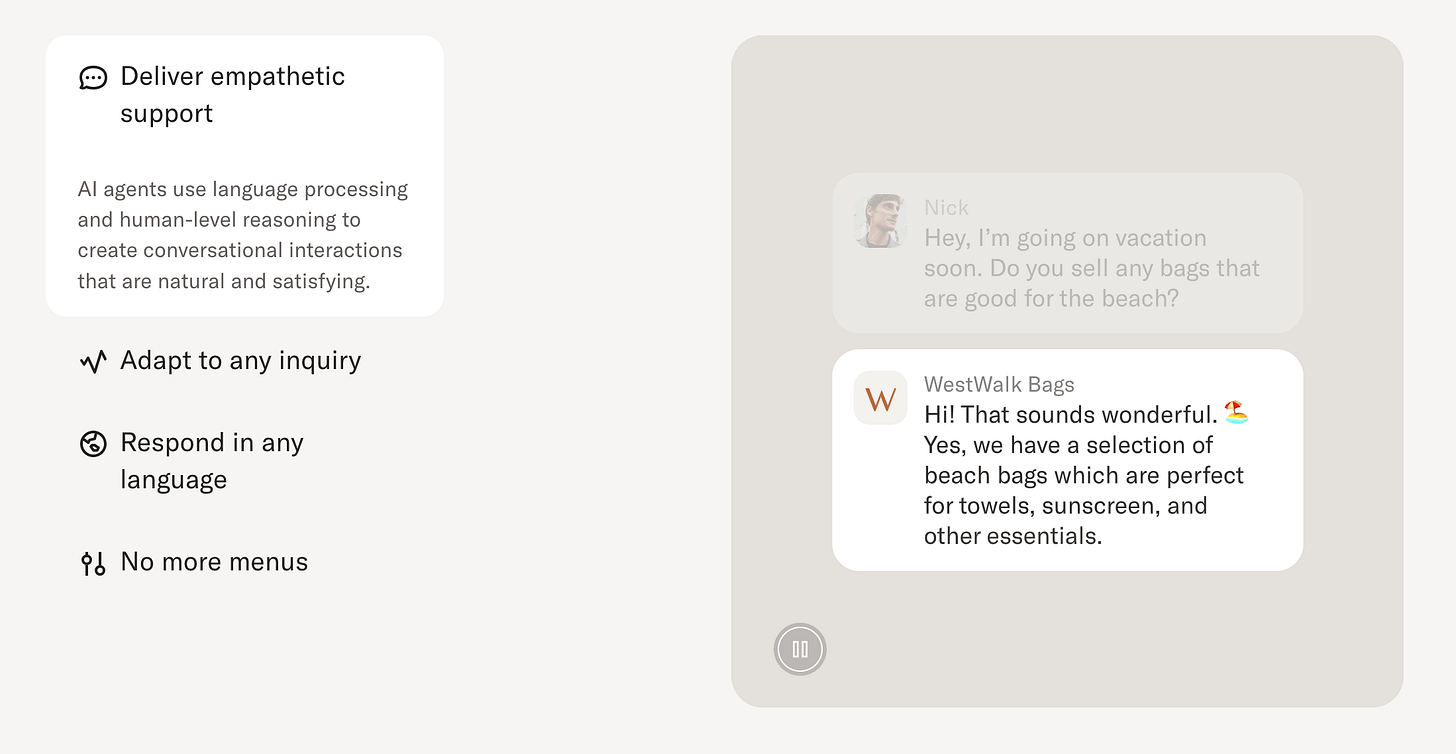
Sierra is an AI startup specializing in conversational AI to enhance customer service interactions. The company was co-founded by Bret Taylor, former co-CEO of Salesforce, and Clay Bavor, a long-time Google executive. Founded in 2023, Sierra quickly gained traction within the industry. (thanks to the impressive growth rate)
This company was among of AI startups that raised $1B last October:
Sierra's platform applies LLM to create support agents that reflect the brand's tone and style. Its capabilities include tasks such as updating CRM records, processing orders, and 24/7 customer support. The product focuses on customer service automation, troubleshooting, and order management.
Like 11x, Sierra wants to disrupt the status quo by arguing that SaaS is a thing of the past. Even with streamlining operations with solutions like Five9, companies have to keep additional employees on staff and spend time handling each request. Agents, on the other hand, don't incur major costs and work around the clock.
Sierra's clients include WeightWatchers, SiriusXM, Sonos, OluKai, and others. Due to a large and solvent base, the startup's small team has achieved annual revenue of over $20M and raised $285M ($4.5B valuation) in less than two years.
Share this post with friends, especially those interested in AI Insights!
AI Agents in Legal
No one likes to deal with legal issues (well, except lawyers, although they don't seem to want to do that either). According to Felicis, this will be one of the most popular destinations for AI agents in both vertical and customer categories.
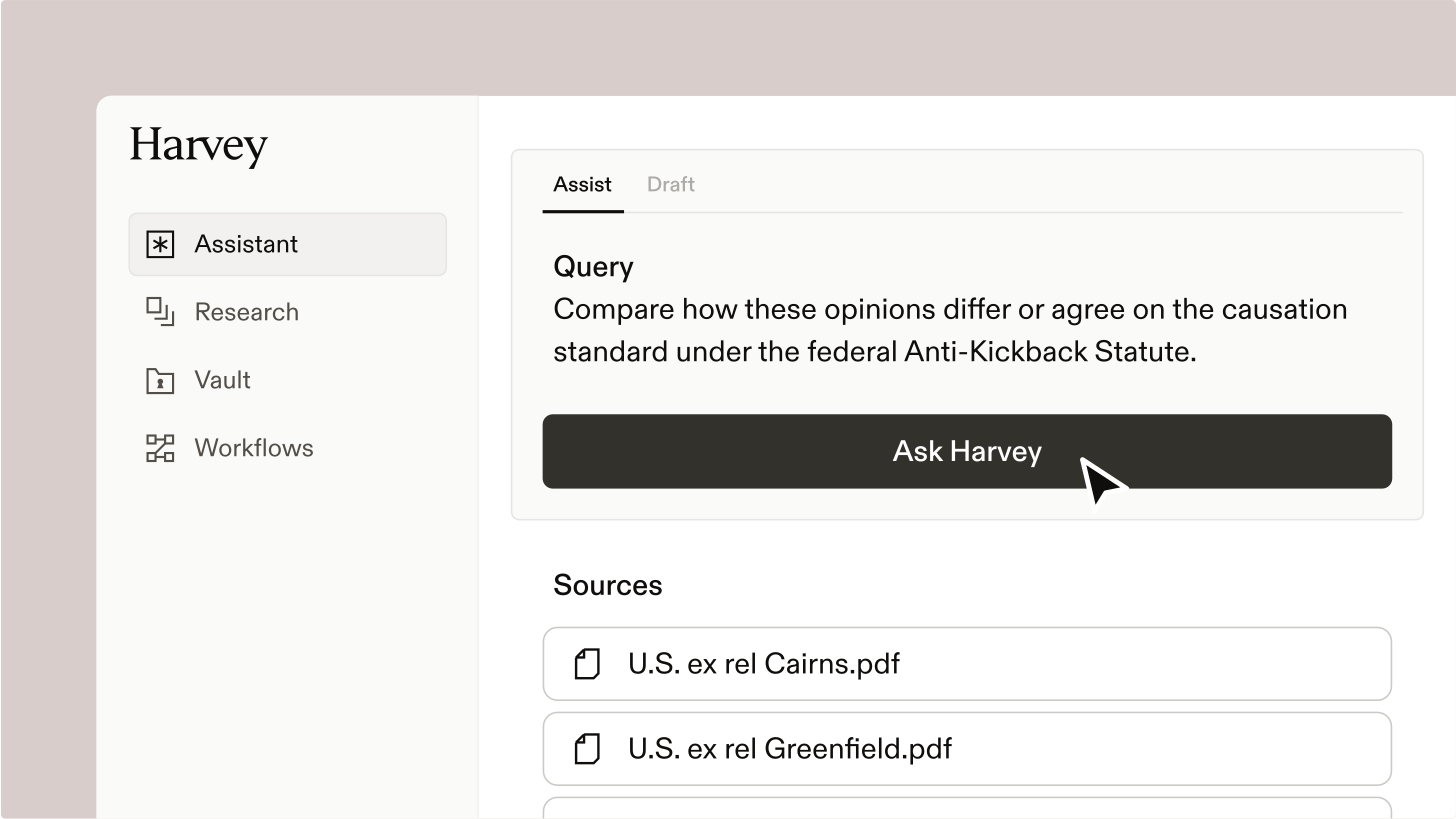
That's why there is Harvey, an AI platform specifically designed for lawyers. The startup, founded by Winston Weinberg and Gabriel Pereyra, leverages natural language processing and legal-specific datasets to assist lawyers with contract analysis, document drafting, and legal research. It allows to customize agents by training with documents, enhancing its utility across jurisdictions and practice areas.
Harvey AI has gained traction among major law firms and Fortune 500 companies, including notable clients like Allen & Overy and PwC. The platform is reportedly used daily by tens of thousands of legal professionals. This allowed Startup to raise a total of $206M in multiple funding rounds.
Exact revenue generation numbers are unknown, but the company says its annual recurring revenue has climbed 10x from April to December 2023 to around $10M.
Harvey AI is simultaneously competing with both small law firms and heavyweights like Thomson Reuters (which has also been using AI as of late). Whether the promising startup can beat the competition, we'll find out over the course of 2025.
We're not lawyers, but we know AI can help with taxes and save money:
AI Agents in Real Estate

If there's anything less fluid than the legal market, it's real estate. This is an area that is extremely difficult to enter as a new player and even more difficult to get a foothold in. And yet, some AI startups manage to do it, such as reAlpha.
It isn't easy to describe the company model succinctly. ReAlpha combines elements of an AI startup that creates agents to automate the work of real estate agents and a marketplace similar to Zillow. You can use it to sell, buy, or invest in real estate.
I would highlight two key features to be aware of:
- No Commissions: reAlpha eliminates traditional real estate commissions, which can average around $10,000, making home buying more affordable.
- AI-Powered Assistance: Their platform features an AI agent named Claire, which assists users 24/7 in finding properties, answering questions, and managing the buying process.
This approach allowed the company to quickly gain the attention of customers and investors after launching in 2020. It also has raised approximately $206M, including funds from its IPO on November 2023, which generated about $8M in gross proceeds.
The market cap of reAlpha now exceeds $115M.
Tools for Building AI Agents
If you want to create your own AI agent—for personal use or to sell it to businesses—you can try the tools below as a starting point. Some will help to learn more about the development, and some will allow you to refine the model and possibly make the best solution on the market.
Beginner-Friendly Tools
- Dante: Ideal for new entrepreneurs, Dante provides a no-code interface with pre-made settings, simplifying the development of basic AI agents. It allows startups to experiment and prototype solutions without deep technical expertise.
- Brevian: Another tool that empowers business users to create and deploy agents without requiring any coding knowledge, bringing custom agents to the masses.
Natural Language Processing Tools
- LangChain: A powerful framework for creating applications centered around large language models. Startups can leverage LangChain to develop chatbots and question-answering systems, making it an excellent choice for projects focused on text interaction.
- Chatvolt: Utilizing advanced models like ChatGPT, Chatvolt enables the creation of highly customizable AI agents. This tool is perfect for entrepreneurs looking to enhance customer interactions and offer intelligent automation services.
Multi-Agent Collaboration Tools
- AutoGen: This framework enables startups to orchestrate multiple AI agents that collaborate on complex tasks. It’s perfect for entrepreneurs aiming to build sophisticated solutions that require teamwork among agents.
- CrewAI: Designed for automating workflows, CrewAI allows the development of multi-agent systems that can be easily integrated into various platforms. This tool is ideal for those looking to streamline operations and offer automation solutions to businesses.
Enterprise Integration Tools
- Semantic Kernel: This tool allows entrepreneurs to integrate AI models into existing applications across multiple programming languages. It’s an excellent choice for creators looking to enhance their offerings without extensive rewrites.
- Vertex AI Agent Builder: A no-code solution from Google Cloud that enables rapid development of enterprise-grade generative AI apps. It combines foundational models with conversational capabilities, making it easier for entrepreneurs to create market-ready solutions.
Final Thoughts
In the end, I would like to mention two things. The first is that in the title, we made a rather provocative statement: AI agents are better than SaaS. And while I am sure that many people still doubt this, I am willing to stand by that position. The thing is, I'm not saying that SaaS projects are going to die anytime soon.
I am convinced that throughout 2025 (and beyond), AI agents will gradually fill the space until they establish themselves as the central solution. You can consider this another personal prediction.
The second one is about whether there is room for new players who are just planning to start. Unequivocally, yes. If you pay attention to our startups list, you’ll notice that they offer rather raw and limited products. They already have customers and a good reputation, but the business models are not yet perfect. So, if you have the interest and motivation to try yourself in this field, now is the time!
Share this edition with your friends!
This article was first published in the Creators AI newsletter. View the original edition.