Your First Game with Manus 🎮
Tutorial. Prompts. Challenge Accepted?
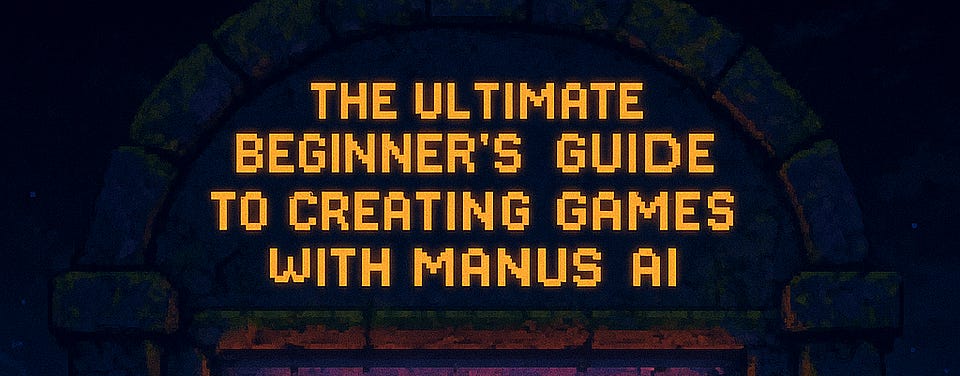
Hey Game Dev has always had barriers to entering the market. Now, Vibe Coding Tools are changing that by converting our thoughts into fully functional games, no coding needed. So in this post, we discover how to use Manus (Free-to-use powerful AI agent) for Game Development, so basically everyone can develop their own game!
This post is prepared with Guest Author - Souradip. Thanks, Souradip!
If you also want to write for Creators AI - send us email here
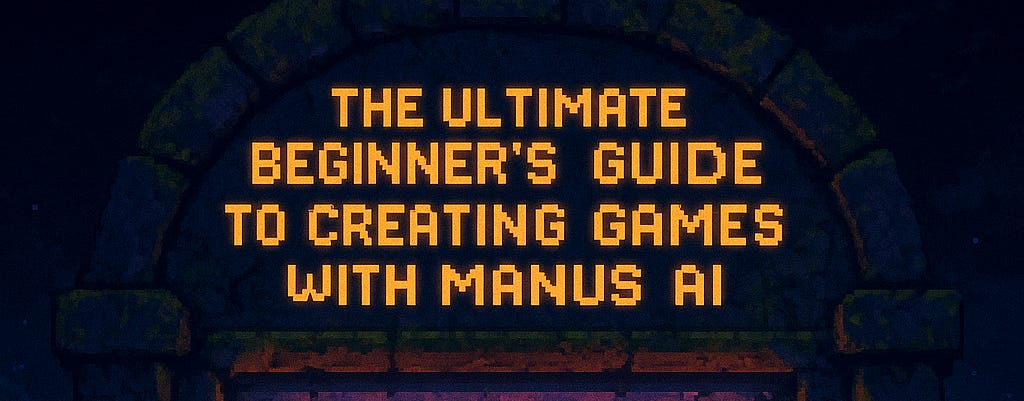
This comprehensive guide will take you on a personal journey, starting with my own excitement about discovering Manus AI and culminating in you building your very first game in under an hour. We'll not only explore the fundamentals of game development and dive deep into practical prompts and techniques, but I'll also share the stories of how I and others have pushed the boundaries of what's possible with AI-powered game creation.
What is Manus AI?
We picked Manus for this project because it’s one of the few agents that feels powerful and authentic at the same time. While many tools shine in quick “vibe coding” hacks, Manus stands out when you throw something complex at it - research + creativity, lots of context, and no room for freezing or endless clarifications. Its big context window and ability to run long operations without breaking flow made it perfect for testing wipe-coding in a real scenario. In short: Manus deserves a shot.

What you need to know:
Manus AI has a layered architecture. When you submit a game idea, the system deploys three specialized agents:
- Planner Agent: Acts as your game designer, breaking down your concept into actionable development tasks
- Execution Agent: Functions as your programmer and artist, implementing the planned features using various tools and external systems
- Verification Agent: Serves as your quality assurance tester, monitoring results and triggering corrections when needed.
This collaborative approach means you're not just getting AI assistance - you're getting a full-stack project development.
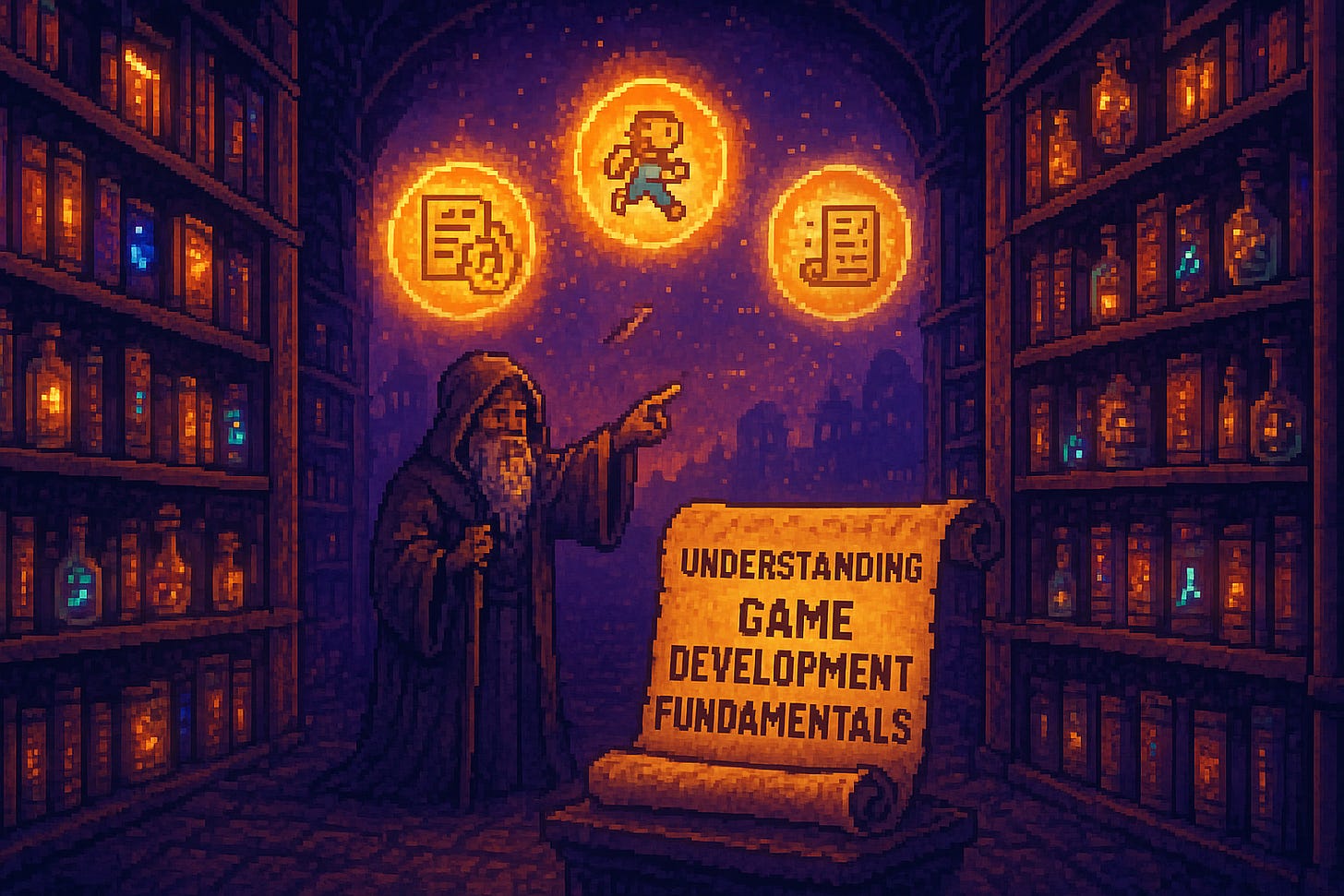
Understanding Game Development Fundamentals
Before diving into work with Manus AI, it's essential to grasp what game development actually involves. This foundation will help you communicate more effectively with the AI and understand the impressive scope of what it's accomplishing behind the scenes.
The Core Components of Any Game
Game development is fundamentally about creating interactive experiences. Every game, regardless of complexity, consists of several key elements:
Game Design and Mechanics form the backbone of any gaming experience. This includes the rules that govern how players interact with your game world, the objectives they're trying to achieve, and the systems that make gameplay engaging. Think of mechanics as the "verbs" of your game - jumping, shooting, collecting, solving puzzles.
Visual and Audio Assets bring your game world to life. This encompasses everything from character sprites and background environments to sound effects and musical scores. Traditionally, creating these assets required specialized artistic skills and expensive software.
Programming and Logic handle the technical implementation. This includes the game loop (the core cycle that updates and renders your game), input handling, collision detection, and all the behind-the-scenes code that makes your game functional.
The Traditional Development Challenge
Historically, game development required mastery of multiple disciplines. A solo developer needed to be part artist, part programmer, part designer, and part tester. Even simple games like Pong or Tetris involve complex technical implementation.
Consider the creation of a basic endless runner game through traditional methods:
- Art Creation: Designing character sprites, background elements, obstacle graphics, and UI components
- Programming: Writing movement code, collision detection, scoring systems, and game state management
- Audio Integration: Creating or sourcing sound effects and background music
- Testing and Polish: Debugging code, balancing difficulty, and ensuring smooth gameplay
This process typically requires weeks or months of dedicated work, extensive learning, and often collaboration between multiple specialists.
The No-Code & Revolution
AI and no-code platforms are revolutionizing game development, letting anyone build complex, playable games by simply describing ideas—no programming required. Real examples include Rosebud AI’s prompt-based game creation suite, Bitmagic’s 3D game builder with natural language input, and GDevelop’s open-source, AI-assisted engine for easy 2D and 3D games.
Indie titles such as "The Last Free Man," "Castle Destroyer," and "Happy Llama" are built almost entirely using Rosebud’s AI-powered game creation tools. The code, assets, and much of the gameplay logic, including enemy AI, are generated and modular, allowing rapid prototyping for creators and students. These games have solid user engagement and player communities.
I love the case of our beloved solopreneur Pieter Levels. He built a flight simulator mainly with Cursor, the game went viral and turned out to be a $75k MRR business.
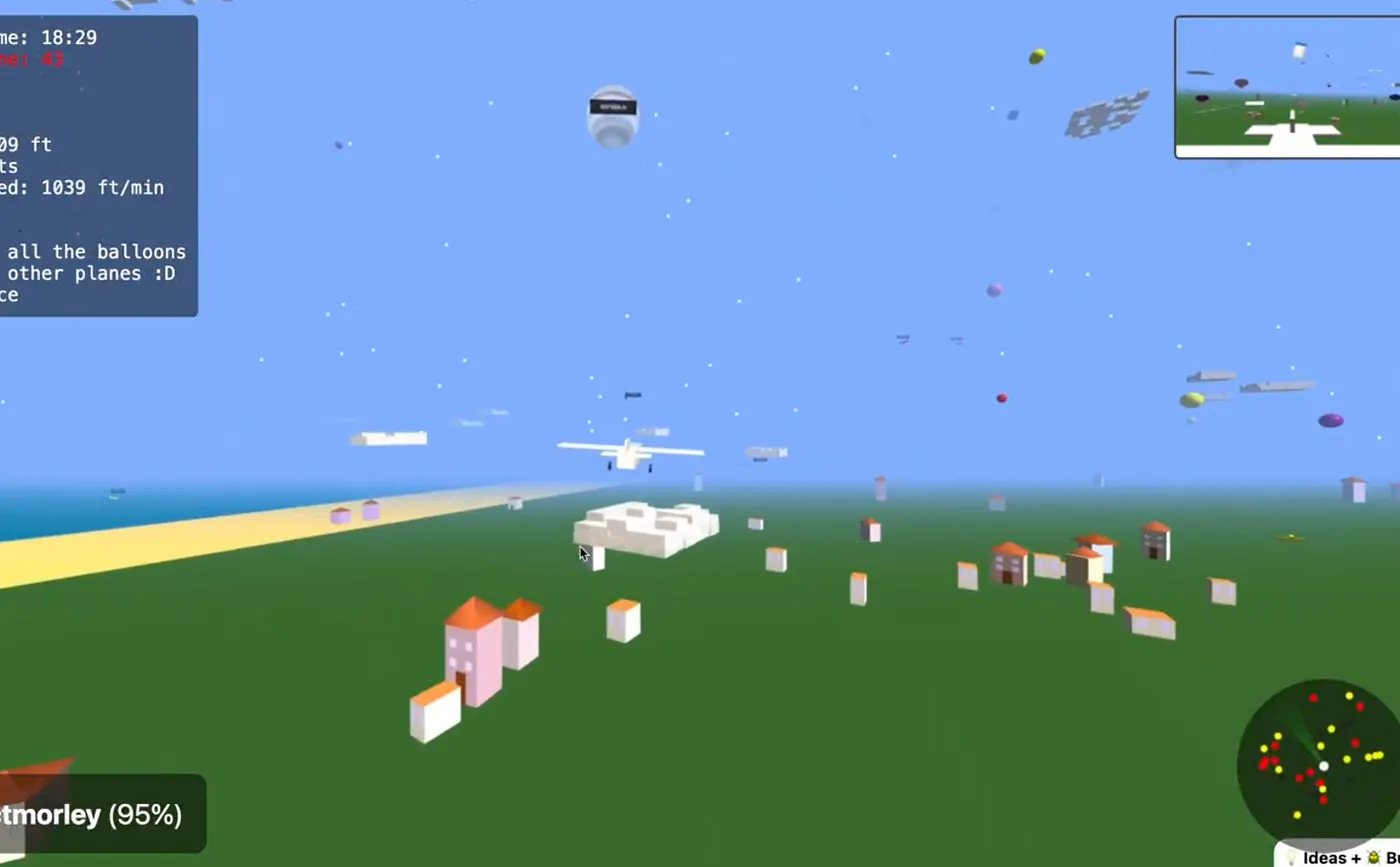
Link to check it yourself - Fly Pieter
Subscribe and never miss a use case for Vibe Coding and AI Agents!
How to Create Games Without Programming Knowledge in Manus AI
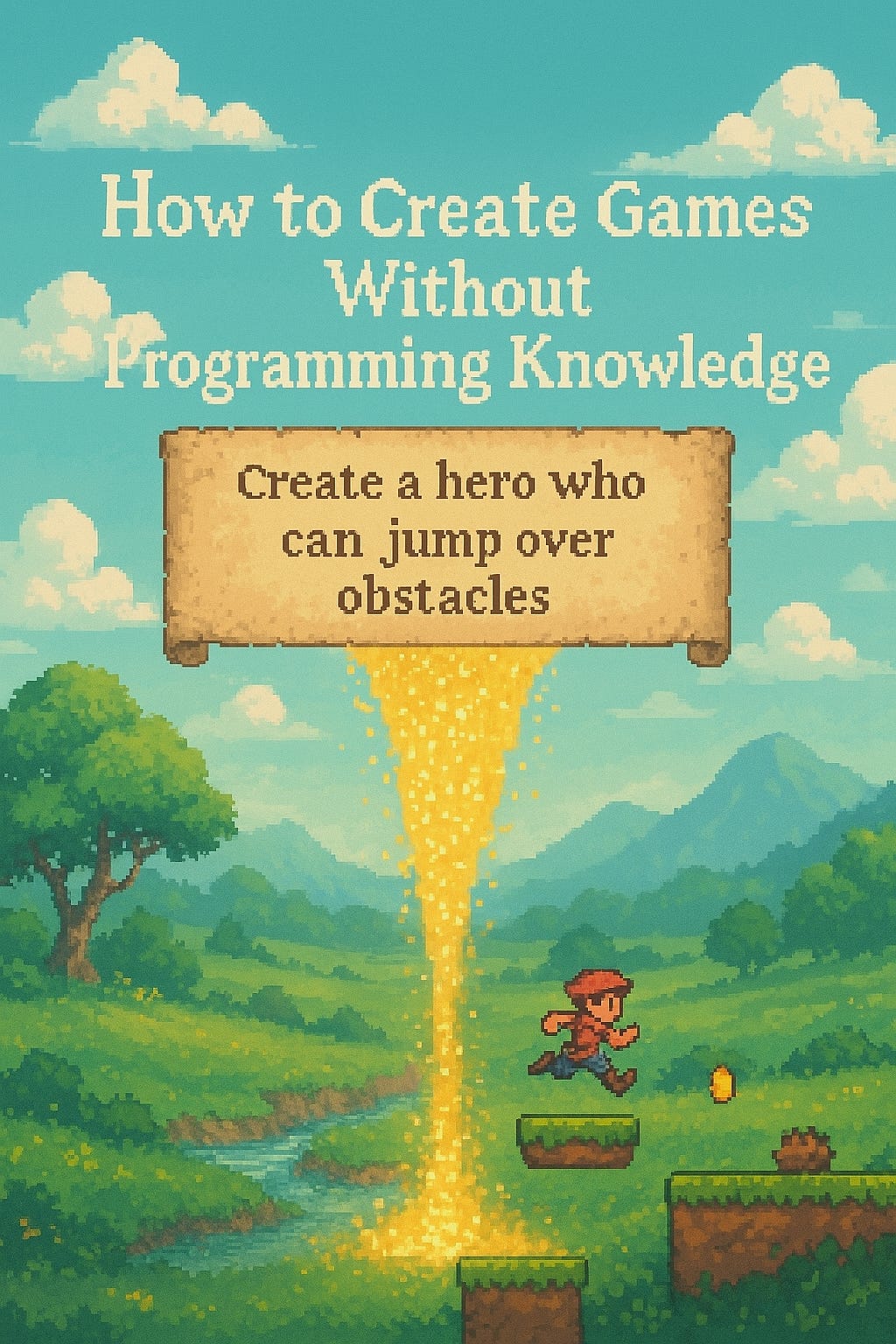
The beauty of vibe coding is in the ability to transform natural language descriptions into fully functional games. This section will walk you through the exact process of creating games without writing a single line of code.
The Prompt-to-Game Pipeline
We will operate Manus entirely through conversational prompts. Simply describing what we want, and watching/calibrating results.
Here's how it works:
Step 1: Conceptualization Through Natural Language Instead of creating design documents or technical specifications, you communicate your game idea in plain English. For example, rather than programming jump mechanics and collision detection, you might simply say: "Create a side-scrolling game where a character runs automatically and can jump over obstacles."
Step 2: AI-Driven Asset Generation Manus AI automatically creates all necessary game assets. This includes:
- Character sprites and animations based on your descriptions
- Environmental backgrounds that match your game's theme
- Sound effects and audio appropriate for the gameplay
- User interface elements for menus, scores, and controls
Step 3: Automated Code Implementation While you're describing gameplay mechanics in everyday language, Manus AI is simultaneously:
- Writing the underlying game code
- Implementing physics systems
- Creating input handling systems
- Building game state management
- Establishing scoring and progression mechanics
Step 4: Integrated Testing and Refinement The AI continuously tests your game as it builds it. If something isn't working correctly, it automatically debugs and refines the implementation without requiring your technical intervention.
Real-World Application: From Idea to Playable Game
Let's examine how this process works with a concrete example. Imagine you want to create an endless runner featuring a duck escaping from a crocodile:
Traditional Approach Would Require:
- Learning a game engine like Unity or Godot
- Programming character movement and animation systems
- Creating or purchasing art assets
- Implementing collision detection and game physics
- Designing and programming enemy AI behavior
- Building user interface and scoring systems
- Testing, debugging, and polishing
Wrapping this up: You simply describe your vision: "Create an endless runner where a cartoon duck runs from a crocodile, jumping over obstacles and collecting power-ups." The AI handles everything else automatically.
The Power of Iterative Refinement
Key elements of building something with Manus or any other vibe coding tool are iterative feedback and modifications.
For instance, if your initial duck game feels too easy, you might add: "Make the crocodile move faster when the player hits obstacles" or "Add a second crocodile that occasionally appears from the front."
Breaking Down Complex Mechanics
Consider these examples of how natural language translates to sophisticated game systems. Well, here your main power is experience in games and knowing the names of these elements. Don’t worry if you don't know, you can explain it to Manus.
- "Add power-ups that give speed boosts" → AI creates collectible objects, implements temporary speed modifications, and designs visual feedback systems
- "Make obstacles harder to avoid as the game progresses" → AI implements dynamic difficulty scaling, progressive spawn rate increases, and adaptive challenge systems
- "Add particle effects when the duck jumps" → AI creates visual effect systems, animation triggers, and performance-optimized rendering
My 60-Minute Game Development Journey
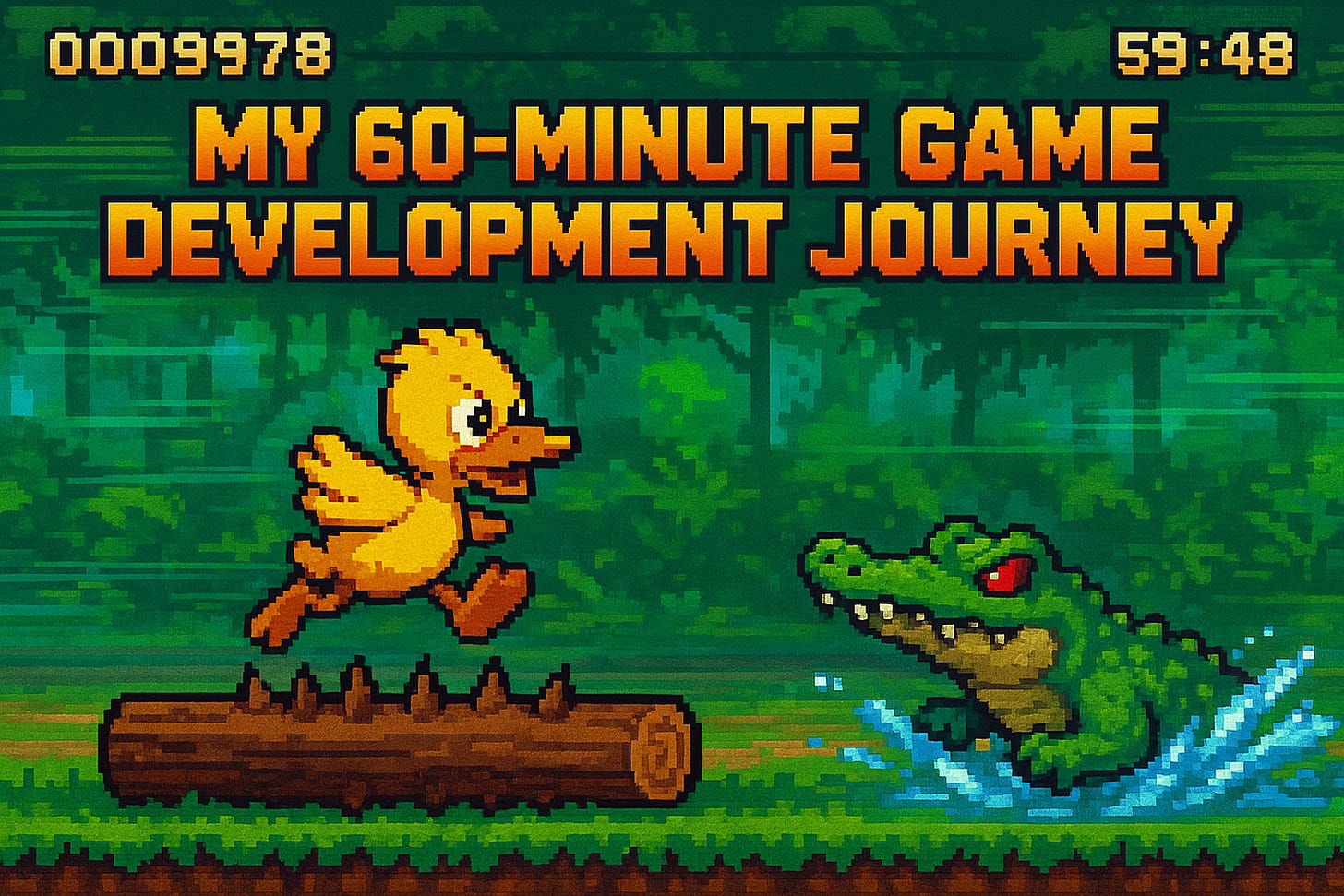
To demonstrate the true power of vibe coding for GameDev, we decided to put it to the ultimate test: creating a complete, playable game from concept to deployment in under one hour. In this post, you will see our step-by-step tutorial (Prompts included).
Last Thursday morning, I opened Manus AI with nothing more than a vague idea: an endless runner game featuring some kind of chase sc
enario. I had no assets, no detailed design document, and certainly no code prepared. Just curiosity about how far I could push this AI platform in a single session.
Minute 0-5: Initial Concept and First Prompt
I started with this simple prompt:
Create a 2D endless runner game where a cartoon duck is running away from a crocodile. The duck should be able to jump over obstacles, and the crocodile should chase from behind. Make it colorful and fun.[](https://substackcdn.com/image/fetch/$s_!sm90!,f_auto,q_auto:good,fl_progressive:steep/https%3A%2F%2Fsubstack-post-media.s3.amazonaws.com%2Fpublic%2Fimages%2Fac50e062-4d16-44ab-8f27-95b8074b77a3_871x371.png)
Within minutes, Manus AI had generated:
- A complete game framework with working mechanics
- Cartoon-style duck and crocodile sprites
- Basic obstacle generation system
- Jump controls and collision detection
- A simple scoring mechanism
The first playable prototype was ready in under 5 minutes.
Minutes 5-20: Iterative Refinement Through Conversation
The initial version worked, but felt basic. This is where Manus AI's conversational development approach truly shone. I continued refining through natural language:
The game feels too difficult at the start. Can you delay the crocodile spawning for a few seconds so players can learn the controls?Add speed boost power-ups that the duck can collect. When the duck gets hit by obstacles, it should slow down, making it more likely the crocodile will catch up.Each modification was implemented within 2-3 minutes, and I could immediately test the changes. No recompiling, no debugging sessions, no hunting through code files.
Minutes 20-35: Advanced Mechanics Integration
Feeling ambitious, I pushed for more sophisticated gameplay elements:
Make the crocodile smarter. If the player hits several obstacles in a row, the crocodile should move faster to create more pressure. Also, occasionally spawn a second crocodile from the front of the screen for surprise attacks.Add holes in the ground that the duck can fall into. These should be high-risk, high-reward areas—dangerous but with valuable power-ups nearby.The AI implemented these complex behavioral systems seamlessly. The crocodile now exhibited adaptive AI behavior, responding dynamically to player performance.
Minute 35-50: Polish and Visual Enhancement
With core gameplay solid, I focused on polish:
Add particle effects when the duck jumps and when power-ups are collected. Improve the background with moving clouds and distant mountains to create a sense of speed.Create a simple start screen with the game title and a 'Press Space to Start' message. Add a game over screen that shows the final score and allows restarting.[](https://substackcdn.com/image/fetch/$s_!TUGz!,f_auto,q_auto:good,fl_progressive:steep/https%3A%2F%2Fsubstack-post-media.s3.amazonaws.com%2Fpublic%2Fimages%2Ff66fb2c5-2f3c-47d9-87ab-761d259aeefc_1037x675.png)
Manus AI generated professional-looking visual effects and user interface elements that would have taken hours to create manually.
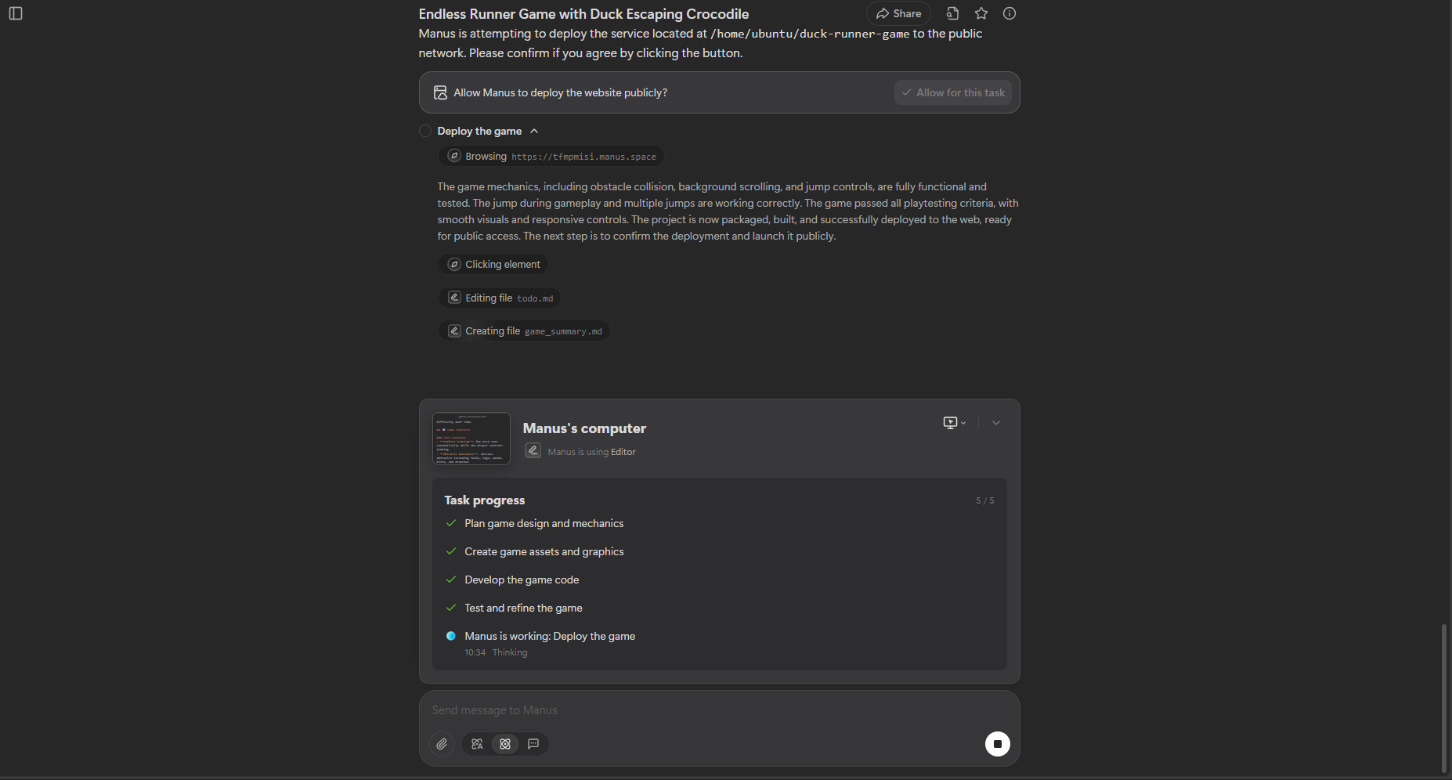
Minutes 50-60: Final Testing and Deployment
The last 10 minutes involved final tweaks and testing:
Remove the hole mechanic-it's making the game too chaotic. Keep everything else but simplify the obstacle placement.Make the game mobile-friendly and create a web build that can be shared easily.By minute 60, I had a complete, polished, endless runner game featuring:
- Smooth character animation and responsive controls
- Dynamic enemy AI that adapts to player performance
- Progressive difficulty scaling
- Visual effects and professional UI
- Web deployment is ready for sharing
Try this game at Duck Runner - Escape the Crocodile! It's the game I created!
The Shocking Realization
What struck me most wasn't just the speed of development, but the quality of the result. This wasn't a crude prototype or tech demo - it was a genuinely fun, playable game with mechanics sophisticated enough to engage players for extended sessions.
The entire experience felt less like programming and more like directing a highly skilled development team. I focused entirely on creative decisions - game feel, difficulty progression, visual style - while Manus AI handled all technical implementation.
Beyond the Hour: What This Means
This experiment revealed something profound about the future of game development. The traditional barriers - programming knowledge, asset creation skills, understanding of game engines - had completely disappeared. Creative vision became the only limiting factor.
More importantly, the iterative development process felt natural and intuitive. Unlike traditional development, where changes require careful planning and risk introducing bugs, I could experiment freely, knowing that Manus AI would handle the technical complexities seamlessly.
So I am more excited now. How about you?
Share this post with friends, especially those interested in AI :)
Game Ideas and Prompts You Can Try
Ready to start creating? Here are proven game concepts and specific prompts that work exceptionally well with Manus AI, organized from beginner-friendly to more advanced projects.
Classic Game Foundations
Starting with familiar game mechanics helps you understand Manus AI's capabilities while creating something immediately recognizable and fun.
Simple Platformer Adventure
Create a 2D platformer where a small robot character can run, jump, and collect glowing orbs. Add moving platforms, simple enemies that patrol back and forth, and a goal flag at the end of each level. Make it retro-styled with bright colors.This prompt teaches you about character control, level design, and basic enemy AI while creating a solid foundation for expansion.
Puzzle Block Game
Build a falling block puzzle game similar to Tetris, but with hexagonal pieces instead of rectangles. The pieces should rotate and fit together to clear lines. Add satisfying particle effects when lines are cleared and a progressive difficulty system.Perfect for understanding game logic, pattern recognition, and user interface design.
Endless Runner Variations
Building on the duck game concept, these prompts explore different themes and mechanics.
Space Explorer Runner
Create an endless runner set in space where an astronaut character jets through asteroid fields. Include different types of asteroids that require different strategies -some to jump over, others to slide under, and some that can be destroyed by collecting laser power-upsFantasy Forest Chase
Design an endless runner where a fairy character flies through a magical forest, avoiding twisted branches and collecting magical flowers. Add wind currents that can boost the fairy's speed and occasional storm clouds that darken the screen and make navigation harder.Urban Parkour Adventure
Make an endless runner featuring a parkour athlete running across city rooftops. Include wall-running sections, zipline segments, and the ability to slide under air conditioning units. Add a day/night cycle that changes the available paths.Innovative Gameplay Concepts
These prompts push Manus AI to create unique mechanics and demonstrate its creative problem-solving abilities.
Gravity-Switching Platformer
Create a game where the player character can reverse gravity by pressing a button. Design levels where the player must switch between floor and ceiling to navigate obstacles. Add gravity wells that pull the character in different directions and switches that must be activated from specific gravity orientations.Time Manipulation Puzzle
Build a puzzle game where the player can rewind time to undo moves, but with limited rewind tokens. Create puzzles where the player must plan several moves ahead, sometimes allowing mistakes to happen so they can rewind and use previous positions strategically.Ecosystem Builder
Design a game where players create a balanced ecosystem by placing different animals and plants. Each species has specific needs and relationships - predator/prey, symbiotic relationships, habitat requirements. The goal is to create a stable, thriving ecosystem within a limited space.Multiplayer and Social Concepts
These prompts explore Manus AI's ability to create interactive and competitive experiences.
Cooperative Escape Room
Create a two-player puzzle game where both players must work together to escape a series of rooms. Each player sees different information or has different abilities, requiring communication and coordination. Include puzzles that can only be solved through simultaneous actions.Creative Building Competition
Design a timed building game where players compete to create the most impressive structure using limited resources. Include physics simulation so buildings can collapse if not properly supported, and add a voting system where players rate each other's creations.Advanced Experimental Ideas
For those ready to push boundaries, these prompts explore cutting-edge game design concepts.
Adaptive Difficulty AI
Create a platformer that learns from player behavior and adjusts difficulty in real-time. If a player excels at jumping puzzles but struggles with timing challenges, the game should emphasize their strengths while gradually improving their weak areas. Include data visualization showing how the game is adapting.Procedural Narrative Game
Build a choice-driven story game where the narrative branches dynamically based on player decisions, but also incorporates elements from current events or trending topics. Each playthrough should feel completely unique while maintaining narrative coherence.Augmented Reality Integration
Design a mobile game that uses the phone's camera to turn real-world objects into game elements. Players point their camera at different colored objects to collect resources, solve puzzles using real-world spatial relationships, and defend virtual characters against threats mapped to physical locations.Prompt Crafting Best Practices
To maximize success with Manus AI, structure your prompts with these elements:
- Clear Core Mechanic: Start with the fundamental player action
- Visual Style Direction: Specify the aesthetic you want
- Progression System: Describe how difficulty or complexity increases
- Specific Features: Include 2-3 unique elements that make your game distinctive
- Technical Requirements: Mention platform preferences or special functionality
Thanks for reading! Share it with someone who is interested in GameDev
Iteration Prompts for Refinement
Once your initial game is created, use these follow-up prompts to enhance the experience:
Add particle effects and screen shake to make actions feel more impactfulCreate a progression system where players unlock new abilities every few levelsImplement a scoring system that rewards creative play rather than just completionAdd ambient sound effects and background music that matches the game's moodCreate multiple difficulty modes to accommodate different skill levelsRemember, Manus AI excels at understanding context and building upon previous interactions. Don't hesitate to iterate and refine your concepts through continued conversation.
Pro Tips for Success with Manus AI

Mastering Manus AI requires understanding not just what to ask for, but how to communicate effectively with an AI development team. These proven strategies will help you create better games faster while avoiding common pitfalls.
Crafting Effective Prompts
I believe Prompt Engineering is always important. Go through Rabbit Hole of Prompt Engineering with us:
Start with the Core Experience Begin every project by clearly defining the fundamental player experience. Instead of listing features, describe what the player actually does.
Weak prompt: "Make a space game with shooting and enemies" Strong prompt: "Create a top-down space shooter where the player pilots a small fighter ship, dodging asteroid fields while shooting down aggressive alien drones that attack in coordinated waves"
The stronger prompt gives Manus AI a clear direction on perspective, core mechanics, environmental challenges, and enemy behavior patterns. And feel free to prompt your prompt, if needed.
Layer Information Strategically Manus AI handles complexity well, but introducing too many concepts simultaneously can lead to unfocused results. Use a progressive disclosure approach:
- Foundation prompt: Establish core mechanics and basic visual style
- Enhancement prompts: Add specific features, polish, and complexity
- Refinement prompts: Adjust balance, fix issues, and optimize experience
Use Sensory and Emotional Language Manus AI responds exceptionally well to descriptive language that goes beyond pure mechanics. Include emotional tone and sensory details:
Create a relaxing puzzle game where soft, glowing orbs float gently across a starfield, making subtle chime sounds when connected. The pace should feel meditative and peaceful.This approach helps the AI understand not just what to build, but the intended player emotional experience.
Technical Implementation Strategies
Understanding how Manus AI processes requests allows you to structure your prompts for optimal results.
Embrace Iterative Development Unlike traditional programming, where changes are costly, Manus AI excels at incremental refinement. Use this to your advantage:
- Start with minimum viable gameplay
- Test and identify what feels most engaging
- Iterate based on actual play experience rather than theoretical design
Specify Constraints Clearly When you have specific requirements, state them explicitly:
Create a mobile-friendly endless runner that works well with touch controls. Ensure all interactive elements are large enough for finger taps and avoid mechanics requiring precise timing.Request Explanations When Needed Manus AI can explain its implementation decisions, helping you understand why certain design choices were made:
Explain why you chose this particular enemy movement pattern and suggest two alternative approaches.Managing Complexity and Scope
Successful Manus AI projects require thoughtful scope management.
Build Systems Incrementally Rather than requesting comprehensive games immediately, build complexity gradually:
- Core loop: Basic gameplay that's immediately fun
- Polish layer: Visual effects, audio, smooth animations
- Progression systems: Scoring, unlockables, difficulty curves
- Advanced features: Unique mechanics, AI behavior, social elements
Test Early and Often Unlike traditional development, you can test Manus AI games immediately after generation. Use this advantage:
- Play-test after each major prompt
- Identify the most engaging elements
- Double down on what works before adding complexity
Communicate Design Intent Help Manus AI understand your vision by explaining the player experience goals:
The goal is to create a sense of flow where players enter a meditative state, so prioritize smooth, predictable movement over challenging precision requirements.Troubleshooting and Optimization
Even with Manus AI's sophisticated capabilities, you may encounter challenges that require strategic problem-solving.
When Games Feel Too Complex If your game becomes overwhelming or unfocused:
Simplify the core mechanics to focus on just the jumping and collecting elements. Remove the combat system for now and make the experience more accessible to casual players.When Performance Issues Arise For games running slowly or inconsistently:
Optimize the game for smooth performance by reducing particle effects and simplifying background animations. Prioritize consistent 60fps gameplay over visual complexity.When Mechanics Feel Disconnected If game elements don't work well together:
Redesign the power-up system to complement the core jumping mechanics rather than adding separate abilities. Make power-ups enhance what the player already does well.Advanced Collaboration Techniques
As you become more comfortable with Manus AI, these advanced strategies unlock even greater creative potential.
Reference and Inspiration Integration Manus AI can understand and build upon existing game concepts when given appropriate context:
Create a puzzle platformer that combines the tight jumping mechanics of Super Meat Boy with the perspective-shifting concepts from Fez, but set in a cyberpunk environment with hacking mini-games.Multi-Modal Development Leverage Manus AI's ability to work with different types of input:
- Describe visual concepts and let the AI interpret artistic direction
- Provide gameplay examples from other games for mechanical reference
- Use emotional and thematic language to guide aesthetic choices
Systematic Experimentation Use Manus AI's rapid iteration capabilities for systematic design exploration:
Create three different versions of this enemy AI: one that's highly aggressive, one that's defensive and strategic, and one that adapts its behavior based on player performance. Let me test all three to see which feels most engaging.Quality Assurance Mindset
Developing a systematic approach to testing and refinement ensures your Manus AI games reach their full potential.
Player-Centric Testing Always evaluate your games from the player's perspective:
- Is the core loop immediately engaging?
- Are the controls responsive and intuitive?
- Does the difficulty progression feel fair and motivating?
- Are the goals and feedback systems clear?
Cross-Platform Considerations If you plan to share your games widely, specify platform requirements early:
Ensure this game works well on both desktop and mobile devices, with appropriate control schemes for each platform and UI elements that scale properly across different screen sizes.By following these strategies, you'll develop an intuitive sense for how to communicate effectively with Manus AI, leading to faster development cycles and higher-quality results. Remember that, like any powerful tool, Manus AI becomes more effective as you learn its capabilities and limitations through hands-on experience.
Challenge for the Reader
Now that you understand Manus AI's capabilities and have a toolkit of strategies and prompts, it's time to put your skills to the test. This challenge is designed to push your creative boundaries while helping you master the platform's advanced features.
The 48-Hour Game Creation Challenge
Your mission: Create a complete, original game using Manus AI within 48 hours, documenting your process and sharing your results with the growing community of AI-powered game developers.
Ready to take on the challenge? Join us for the 48-Hour Game Creation Challenge! Create your own original game with Manus AI in just two days. Document your journey and share your incredible results with the Creators AI Community. We can't wait to see what you build!
The Creative Renaissance Ahead
Despite these challenges, the overall trajectory points toward an unprecedented renaissance in interactive entertainment. We're moving toward a future where:
- Every creative individual can bring their game ideas to life, regardless of their technical background
- Player experiences become increasingly personalized and adaptive
- Development costs and timelines shrink dramatically, enabling more experimental and diverse content
- Human creativity is amplified rather than replaced, leading to more innovative and emotionally resonant games
The next decade will likely see game development evolve from a specialized technical discipline to a fundamental form of digital expression. Just as anyone can now create videos, write blogs, or design graphics using accessible tools, game creation is becoming a universal creative medium.
For aspiring game developers, this represents an extraordinary opportunity. The barriers to entry have never been lower, the tools have never been more powerful, and the potential audience has never been larger. The key is to start creating now, learning through hands-on experience as these technologies continue to evolve.
Your ideas matter. Your perspective is unique. And now, finally, the tools exist to bring your creative visions to life without technological barriers standing in your way. The next great game could come from anywhere—from anyone. It could come from you. The only question remaining is: what will you create first?
Start with a single prompt. Experiment with the techniques shared in this guide. Join the community of AI-powered creators who are redefining what's possible in game development. Your creative journey in this new era of accessible game development begins the moment you decide to take action.
The future of games is being written right now, one creative prompt at a time. Make sure your voice is part of that story.
This post is prepared with Guest Author - Souradip. Thanks, Souradip!
Souradip is also creator on Medium: <https://medium.com/@souradip1000>
If you also want to write for Creators AI - send us email here
Thanks for reading Creators' AI! This post may change someone’s evening, week or even life. Who may be interested?
####
This article was first published in the Creators AI newsletter. View the original edition.