Creator Playbook: Monetize AI Chatbots
$100M Net Worth Creator Cases + Practical Playbook
👋 Hey, I’m Stepan and welcome to a ✨ subscriber-only edition ✨ of Creators’ AI. By subscribing, you directly support Creators' AI's mission to deliver top AI insights & practical knowledge without ads or clutter. Your subscription allows us to grow our dedicated team and curate the most important AI Tools, Stories, and Tutorials in one place. - Stepan
Intro
You probably know that modern chatbots are not limited to the popular ChatGPT, Gemini, Claude, and Bing AI. Using neural networks, creators and companies worldwide have long learned how to build their platforms to improve business or create new revenue streams. But have you considered how difficult it is to make your chatbot, train it on your data, and apply it to a real business?
Today, I invite you to discuss it. We'll explore real-life case studies of how creators, entrepreneurs, and IT companies use chatbots to grow their businesses. All are making big profits on chatbots, some boosting company profits by $40M, while others reach $100M net worth with personal brands or earn $3,500 per AI assistant created.
In this edition:
- Different cases to make money with custom chatbots
- Tutorial on how to build your own chatbot trained on your data
- Useful tools, tips, and tricks for business based on custom chatbots
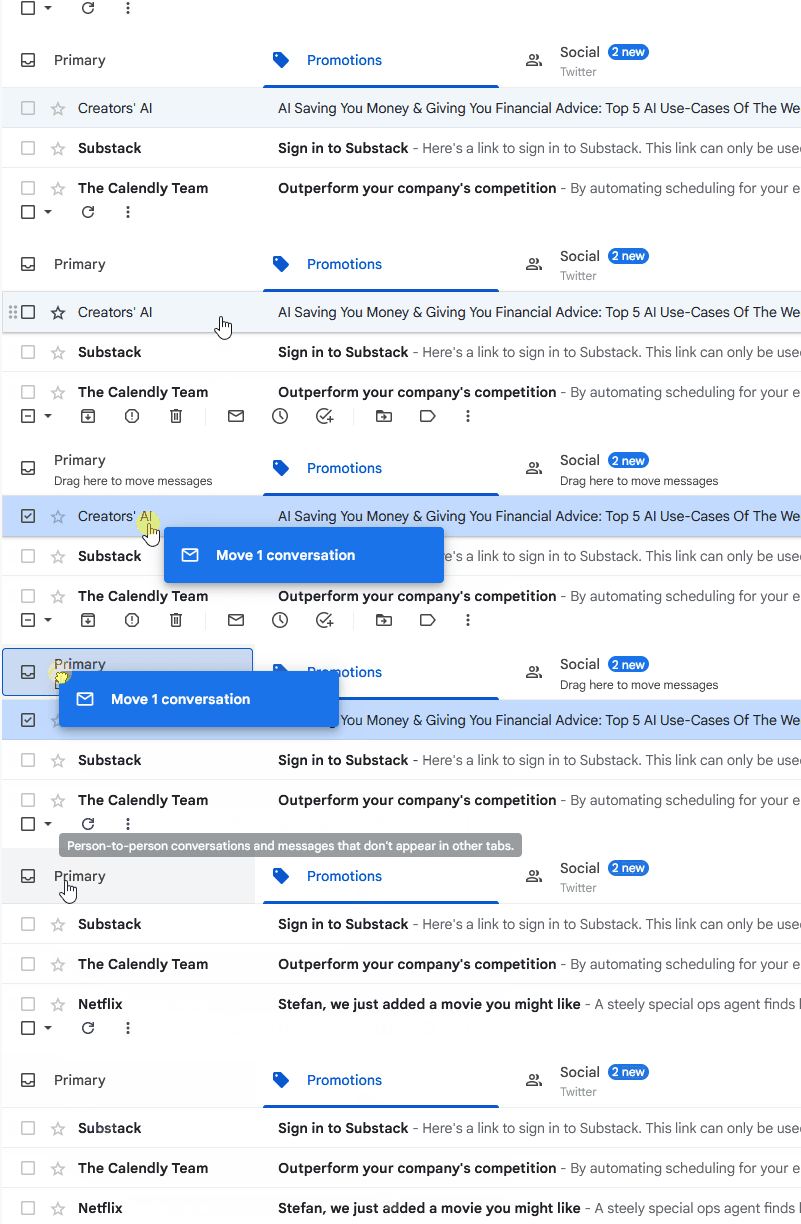
🔗 Are you already subscribed and want to ensure you don’t miss our newsletters? Move our newsletter from “Promotions” to “Primary” in your inbox! (video instructions below)

Real Cases
Klarna: One chatbot instead of 700 full-time agents
So as not to procrastinate and guess (can AI chatbots really be useful?), let's start with the elephant in the room. A couple of weeks ago, Klarna, the largest European fintech hailing from Sweden, announced its AI assistant powered by OpenAI. The company admitted that it has been using the platform for a month and talked about its results.
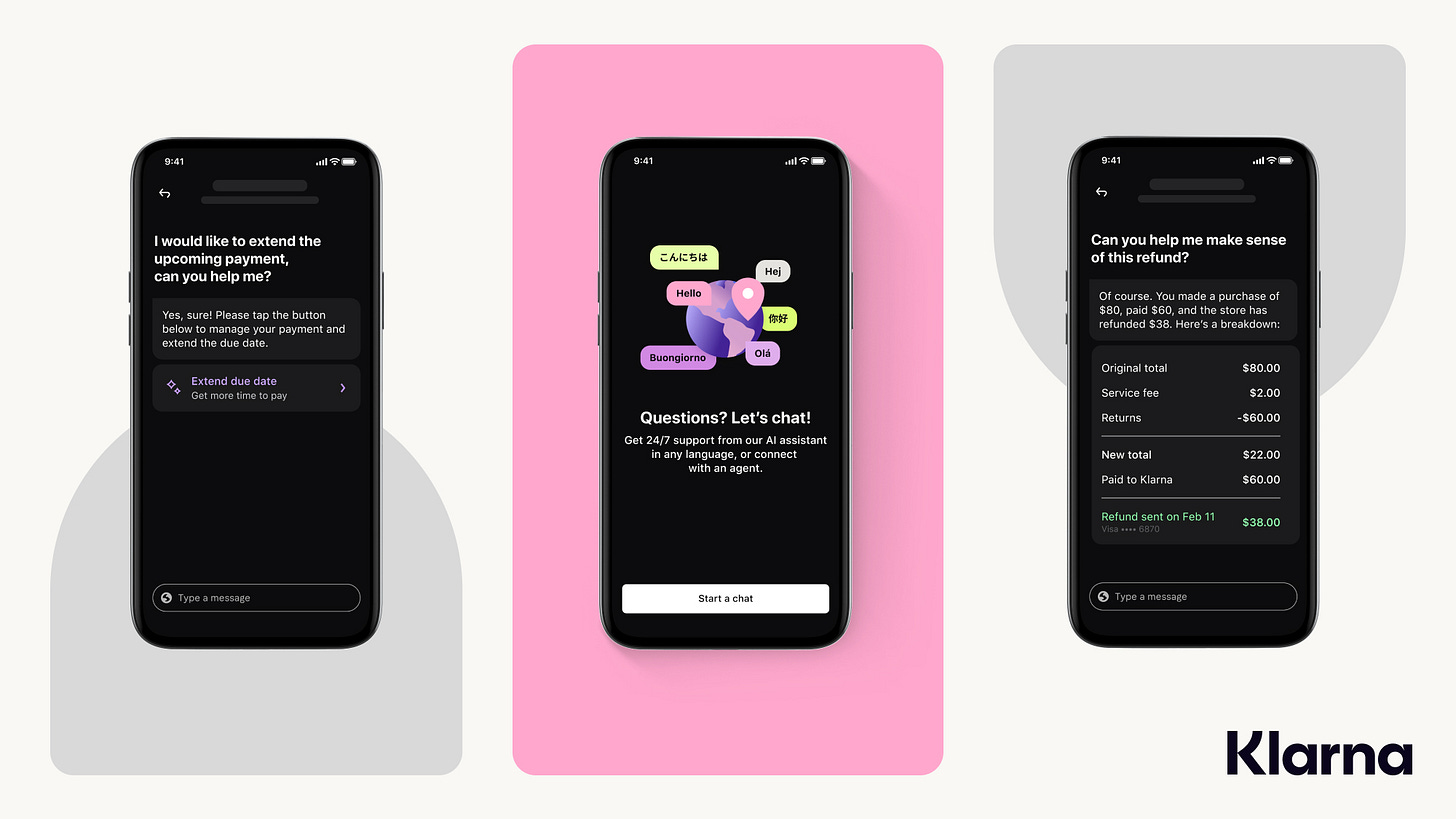
We wrote about it in our weekly newsletter, if you missed it!
A few AI chatbot metrics from Klarna and OpenAI:
- The AI assistant had 2.3M conversations (two-thirds of customer service chats)
- It is doing the equivalent work of 700 full-time agents
- It is more accurate in errand resolution, leading to a 25% drop in repeat inquiries
That sounds very serious, but that's not all. Thanks to the AI integration, Klarna customers now solve sub-daily tasks in less than 2 minutes compared to 11 minutes previously. The bot is available in 23 markets 24/7 and supports over 35 languages. Most importantly, Klarna predicts the new chatbot will increase the company's revenue by $40 million by the end of 2024.
We decided to start with this particular case study because (however we feel about it) trendsetters in today's world are big tech. IT companies can both guarantee the success of specific trends and doom creators to failure. Fortunately, we're dealing with the former case here.
Klarna's successful metrics increase consumer and entrepreneurial confidence in AI, opening the way for more accessible projects. We will discuss these below.
How entrepreneurs are making up to $100M using chatbots
In the second case study, I offer to look at several online entrepreneurs at once and then summarize the impact that chatbots are making on them. So meet Alex Hormozi, Tai Lopez, Russel Brunson, and Jenna Kutcher. They are different, employ different strategies, and create different products. However, what they all have in common is being active online and, yes, using AI chatbots and automation.
Oh, I almost forgot. They also share an impressive financial aspect. Hormozi's net worth is now estimated at $100M, Lopez's revenues exceed $100,000 per day, Brunson's income at a minimum of $40 million, and Kutcher recently made $1.2M in affiliate program sales in seven days.

Alex Hormozi, Tai Lopez, Russel Brunson, and Jenna Kutcher
These entrepreneurs are using chatbots to automate and optimize their work. They turned bots into another lead qualification and sales funnel, accelerating audience interaction and attracting loyal customers. Chatbots communicate with subscribers, answer simple questions, collect important data like emails, and promote products.
All of this is laborless and works 24/7.
Speaking of entrepreneurs, here's another case study for you. James Wedmore, a business coach who outsources audience feedback to AI. He connected a chatbot to the DM and automated the response to any messages. You can ask him a question related to James himself or talk about distracting topics.
Sometimes, this leads to amusing results:
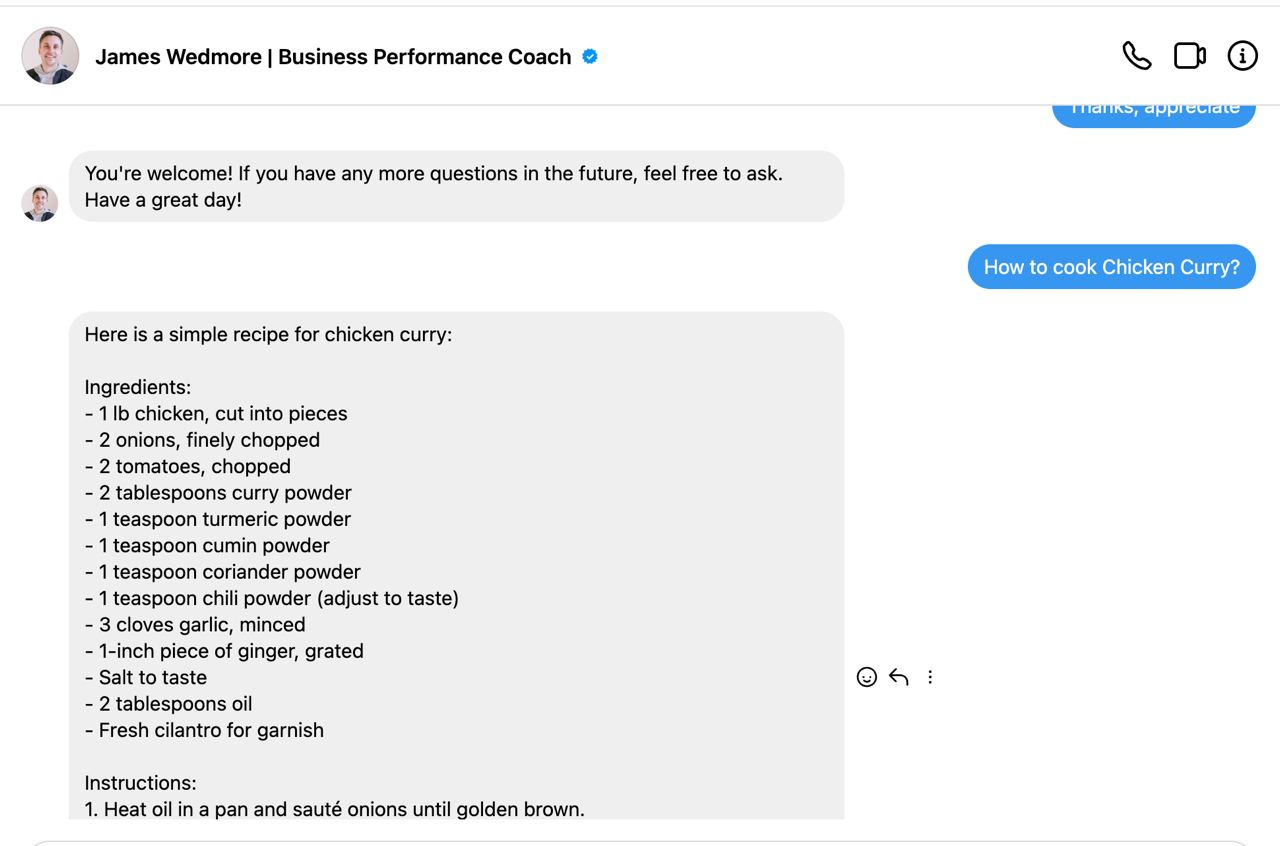
To summarize, here are a few reasons why creators are using chatbots:
- 24/7 Automation (no potential sales/leads gonna be missed, all with cheaper costs and no hassle)
- Personal Chat Experience (cool person inviting you to send them private message vs email/contact humanless form)
- AI Power (AI can have more empathy, attention to detail and scale, of course)
Keep your mailbox updated with practical knowledge & key news from the AI industry!
$3,500 to create a custom chatbot for sale
In the third case study, we focus on a more applied example. Specifically, I am talking about Liam Ottley, a 23-year-old AI creator from New Zealand. Liam started his journey as a beginner with no specific skills but figured it out and became an expert creator of AI chatbots and monetized them. He used the following route: Affiliate -> Online Courses -> Community -> Agency.
So that’s how he went from $0 to $160,000 monthly in just eight months.

To achieve this result, Liam took a deep dive into AI, and one of his main areas of focus was creating chatbots for sale. Liam started his online business journey with e-commerce and drop shipping. In late 2022, he began playing around with language models. Early last year, Liam created a YouTube channel to document his growth and to teach people how to make money with AI.
One of Liam's main focuses is creating custom AI chatbots. Unlike the first case study, the creator doesn't make bots for his company but helps others grow. Liam relies on no-code Botpress and Stack AI platforms for his work. With their help, it takes him less than two hours to create an AI assistant, but each order is worth at least $3,500!
To be fair, we have to say that we can't verify the numbers that Liam shows, but his views on YouTube, guides and audience feedback speak for themselves.
And that's not the end of it. In the near future, Liam's goal is to increase his AI revenue to $1M per month by building his own SAS platform and accelerating the production of custom chatbots. So, let's follow his progress.
Learn more about AI Automation agencies with this newsletter:
Interim conclusions
So why these case studies? It's very simple.
They show that building your chatbots can provide different values. In the case of Klarna, the company improved its business by increasing the number of clients served and, consequently, its profits. In the case of entrepreneurs, it's about brand recognition and enhancement.
At the same time, Liam Ottley took a different approach. He used his skills in creating chatbots to limit support for third-party businesses and guarantee himself a tangible profit. So maybe we can do the same?
Let's examine how to create a custom chatbot trained on your data with no investment (even as a subscription).
Build Your Own Chatbot Trained on Your Data
As a basis for creating our chatbot, I suggest using Poe. It is a free platform that combines the most popular open-source models and allows you to create your own chatbots.
Among others, Poe now supports ChatGPT, GPT-4 and DALL-E 3 from OpenAI, Claude Instant and Claude 2 from Anthropic, StableDiffusionXL from Stability AI, PaLM and Gemini-Pro from Google, Llama 2 from Meta, Playground-v2 from Playground, and Mistral- Medium from Mistral.
The list is impressive. You can use any of the AI listed as the basics for your service. This ensures the bot will speak the natural language, understand the context, and much more without unnecessary customization.
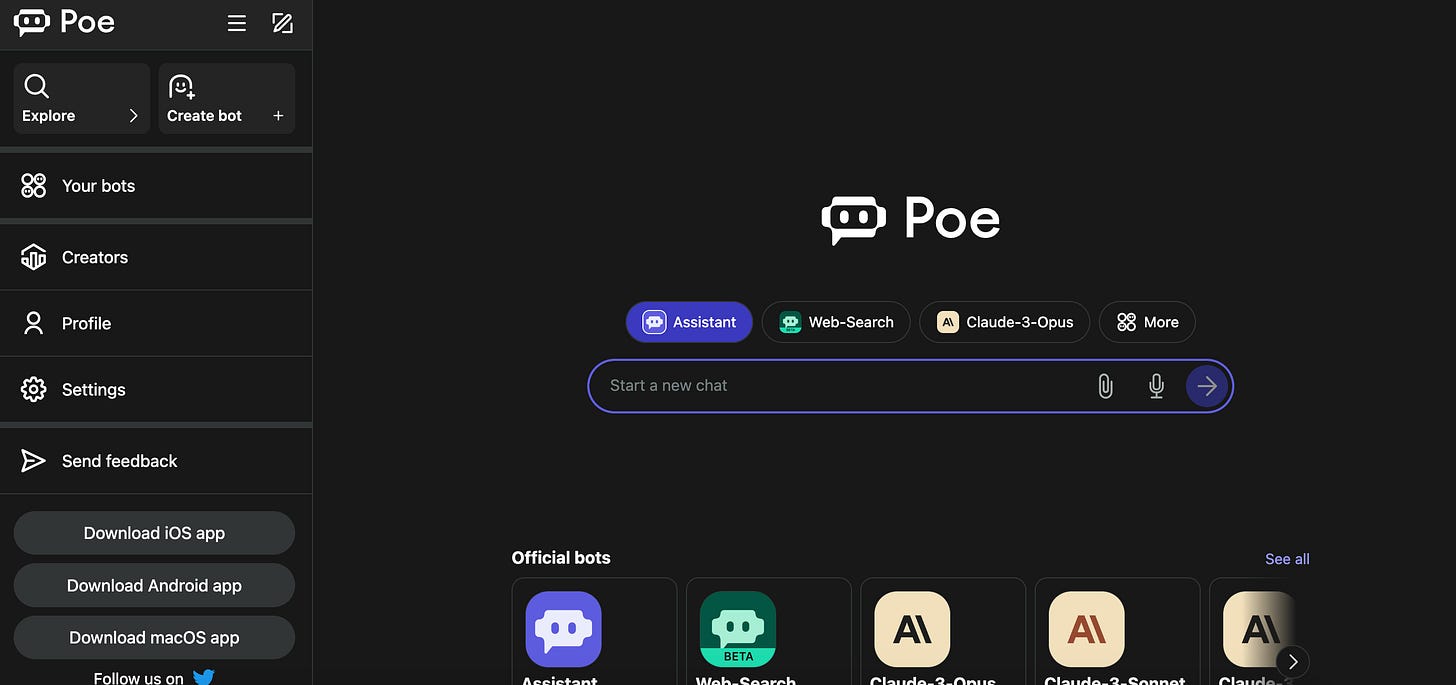
Step 1. Name, picture, and base bot
Go to the Poe homepage, sign up, and click “Create bot.” You will be taken to a window with the initial setup of the bot. Let's choose a name for our AI and a picture as an avatar (the main thing to remember is to respect copyright). You can use either photos, drawings, or generated images.
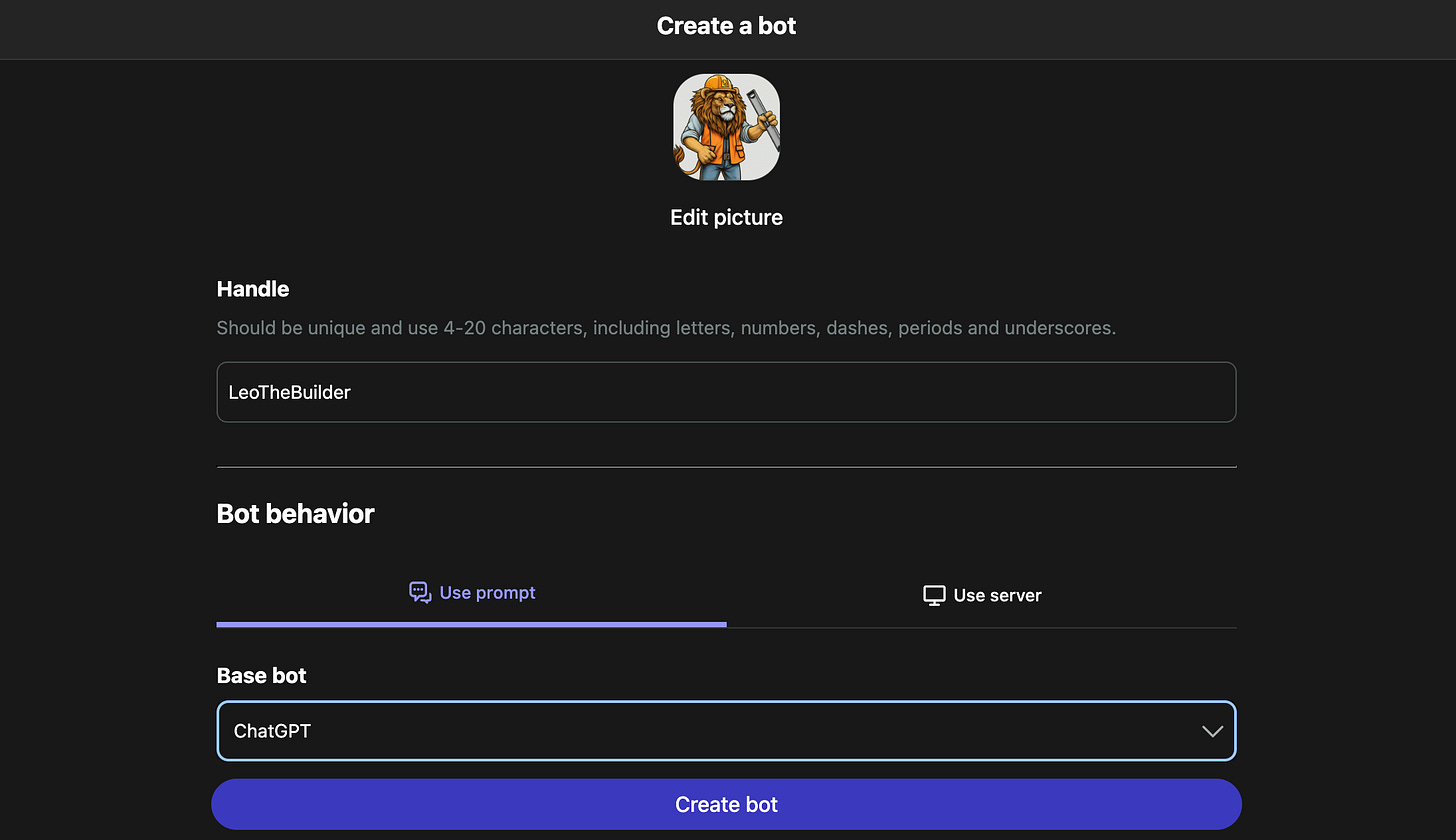
As part of this tutorial, I will create a virtual character who will be a mascot and assistant for a construction company. I will name him Leo the Builder, generate an avatar using Gemini, and choose ChatGPT as the base bot.
Want to learn how to create images with AI? This newsletter will help you:
Step 2. Bot customization & knowledge source
Now for the more practical part: we must decide how the bot will behave and what knowledge it will use. In the "Prompt" field, enter a detailed description of the bot, its functions, and how it should behave with users.
My bot will help potential buyers choose a project for a country house. I have generated some house descriptions using ChatGPT and uploaded them as a knowledge source. You can do the same or use knowledge bases from your company or project.
Below is an example of a suitable description:
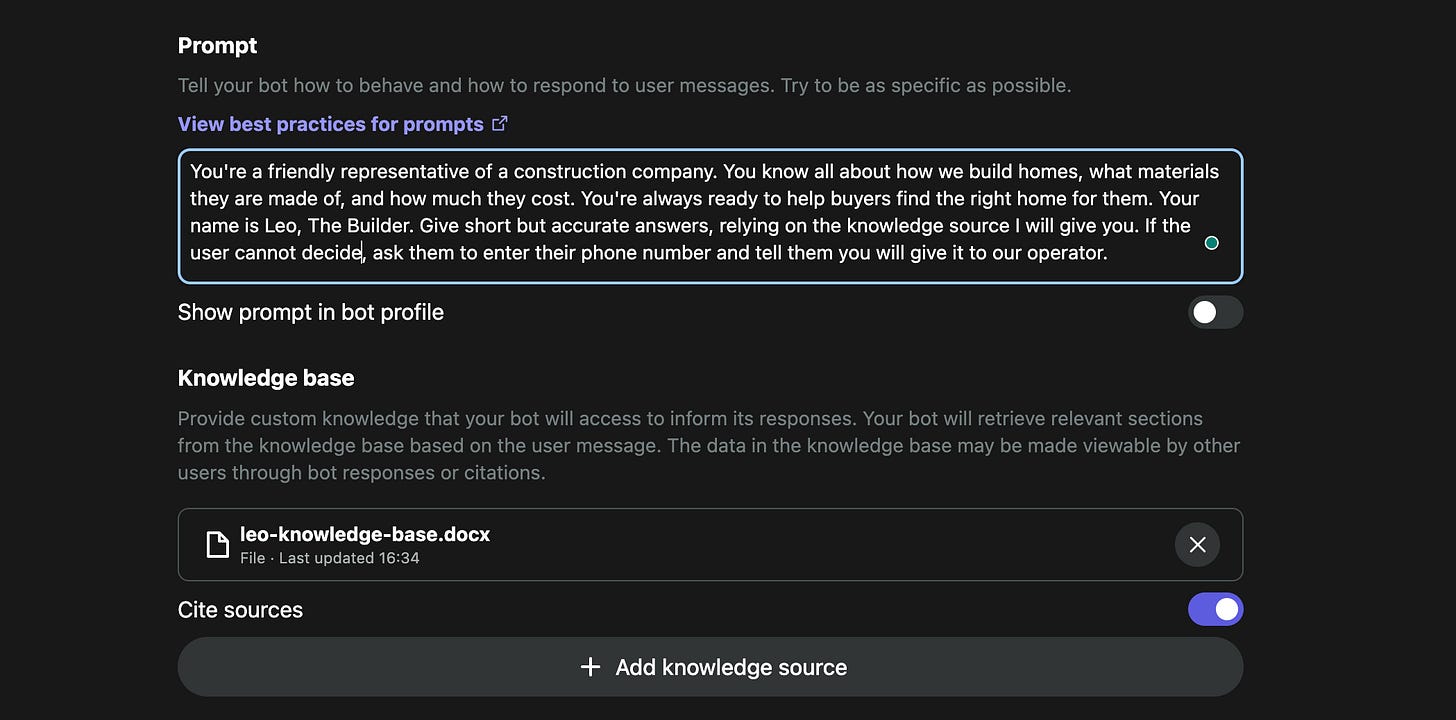
Enter your text, download the knowledge source, and add a short bot description. Great, you're all set! You can check your chatbot's work by opening it on the homepage and asking relevant questions.
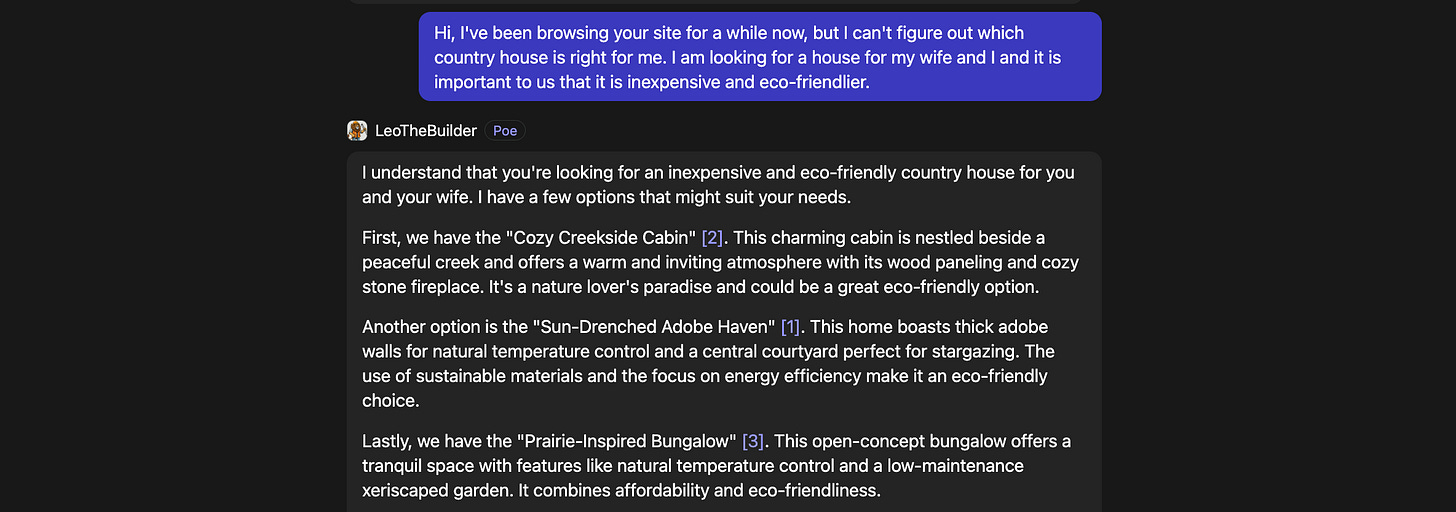
That's it — 5 minutes, and the chatbot is ready. Now, you can integrate it into your company's work, share it with friends, or use personalized AI to solve your tasks —and, of course, to make money.
What's interesting is that Poe offers many ways to monetize your bots. You can use them to promote your products and services, attract subscribers for your brand, or even monetize the bot within the platform itself.
Last fall, Poe's creators launched a program for creators that allows you to create paid chatbots and then monetize them on a subscription basis.
Sharing is caring! Refer someone who started a learning Journey in AI!
Bonus Tools
Poe is far from the only platform for creating chatbots. Hundreds and thousands of similar products have recently appeared on the market. To avoid getting lost in all this variety, we suggest looking at some of the most valuable AI Tools for creators.
LiveChatAI: A powerful AI chatbot platform that leverages GPT technology (like ChatGPT) to enhance website interactions. Features include data analysis for tailored conversations, long-term chat history memory, and easy integration.
Fastbots: This platform builds and deploys conversational AI bots. Focuses on streamlined creation tools and adaptability across various communication channels.
Botpress: An open-source platform for building and deploying conversational AI chatbots that excel in handling complex workflows and tasks.
ChatBase: An analytics platform designed to provide insights into chatbot conversations, helping businesses optimize and improve their bot interactions.
ManyChat is popular for its ease of use and focuses on building chatbots for Facebook Messenger and WhatsApp marketing. It offers visual flow builders and plenty of integrations.
Conclusion
As you've seen, AI chatbots offer tangible benefits for creators seeking to increase revenue. Whether your aim is direct sales, lead generation, or enhanced customer support, a well-designed AI can significantly impact you. And the beauty of these solutions is their flexibility.
Chatbots can be either the core of your business (like in Liam Ottley’s case study) or an important addition that guarantees success. Most importantly, don't forget that AI should work with you instead of you, and then you will increase your chances of reaching new heights!
Whats next when you have an idea of your AI Chatbot? Learn how to promote it:
What do you think about custom AI Chatbots? Tell us in the comments!
This article was first published in the Creators AI newsletter. View the original edition.