The Signal Was There. Nobody Caught It
Eight years later, it became a $50B crisis.
Katie Harbath spent a decade running Facebook’s global elections team — she was in the room when the decisions were made. Now she advises AI companies on how to catch the next crisis a quarter earlier. This is the story she wants every AI builder to read.
At a Glance
In this piece, you will learn:
- Why signals die — not because they’re wrong, but because there’s nowhere for them to live
- The traffic-light framework that forces honest conversations before a decision becomes a crisis
- What “knowing your red lines” actually means when your salary depends on looking the other way
This post is prepared with Guest Author — Katie Harbath, founder of Anchor Change, former head of global elections at Facebook, and author of the upcoming book Disrupting Politics (fall 2026). If you also want to write for Creators AI — send us email here
Hey, I’m Daniil and welcome to a special edition of Creators’ AI.
Most of us here aren’t building Facebook. We’re shipping AI agents, training models on scraped data, plugging Claude into client work. Small operations, moving fast.
Here’s the uncomfortable part. Every “reasonable” call you’re making right now has the same shape as Facebook’s 2010 decision to open user data to developers. Eight years later, that became Cambridge Analytica.
Katie Harbath was in the room for it. She ran Facebook’s global elections team for a decade. Foreign Policy calls her “the election whisperer to the tech industry.” Now she helps AI companies catch the next crisis a quarter earlier.
Over to Katie.
In December 2015, I saw the news story that would eventually become the Cambridge Analytica scandal. I escalated it. Then I let it go.
Eight years, one congressional hearing, and roughly $50 billion in Facebook market cap loss later, here’s what I wish I’d done differently — and why every AI team I advise today is one decision away from their own version of that story.
What happened
In 2010, Facebook launched a product that seemed like a complete no-brainer at the time.
The company was under pressure to share more data with developers and advertisers. So they built Open Graph, a product that let anyone create an app where users could log in with their Facebook credentials, giving developers access not just to that user’s data but also to their friends’ likes and interests.
Five years later, in 2015, Harry Davies of The Guardian published the first story about Cambridge Analytica. Cambridge University researcher Dr. Aleksandr Kogan used access to the Open Graph to pull data on Facebook users, then sold it to a political modeling firm. A few of us flagged it internally. The data had already left our servers. We had one person investigating violations. I didn’t want to overstep.
And then I let it go.
It went quiet for 27 months until 2018, when the New York Times and The Guardian were both working on it again with a whistleblower. Cambridge Analytica had paid $800,000 for Kogan to build the app. Eighty-seven million profiles affected. Those of us who knew pieces of what had happened were suddenly getting pinged by multiple VPs with no process for who was in charge, what the facts were, or what we were going to say we were doing about it.
That led to five days of silence from leadership and a huge hit to the stock price.
This and many other practical posts on building with AI are available exclusively to our subscribers.
Subscribe now
What I learned, and what it means for you
I want to be careful here, because it’s very easy to look back at a decade-long chain of decisions and say what should have been obvious. Most of it was not obvious at the time. That’s the point.
Signal without a home dies.
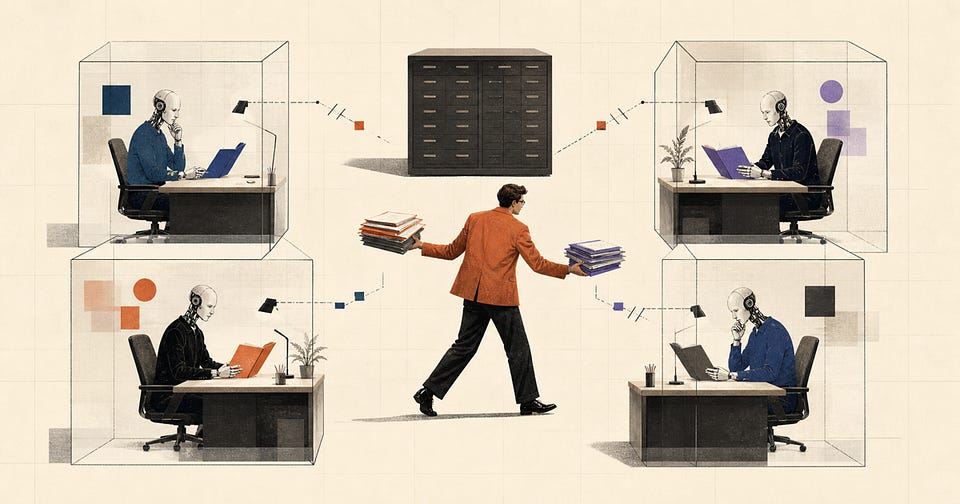
In 2015, I had the signal. I escalated it. It landed in a queue with one overworked person and an organization that had no real process for “this might become a major problem in two years.” The signal died not because it was wrong but because there was nowhere for it to live.
The AI equivalent is happening right now at companies you’d recognize. Take Character.ai — they got an outside signal that their chatbot might be harmful to minors. The next thing you know, families of three teens sued them, alleging their children died by or attempted suicide after interacting with their chatbot. We don’t know the exact decision-making process, but it’s possible the outside signal had nowhere to go.
If you’re building AI products right now, ask yourself: who owns the early flag? Not the crisis — the thing that hasn’t become a crisis yet but has the shape of one. If that person doesn’t exist with dedicated time and actual authority, your signals are dying in someone’s inbox right now.
We’ve documented what happens when AI products skip this question: Biggest AI Failures of 2024
Ambiguity is the operating condition, not the exception.
What makes all of this difficult is that most decisions won’t have a clear right answer. There will be disagreements about whether something is even a problem. Disagreements about prioritization. Disagreements about which risks are acceptable and which aren’t. That ambiguity is not a failure of your team. It’s the nature of the work.
One tool that works is a traffic-light framework I learned from Facebook’s product team. You list every option, including the ones you already know you won’t choose, across the top. You list your evaluation criteria down the side. Then you evaluate every option against every criterion, ruthlessly. Green, yellow, red.
Sample Traffic Light Framework
Here’s what this looks like in practice for an AI product decision. Take the build/buy/partner question — one of the most consequential calls a PM makes right now and one of the most commonly fudged. Do you buy a company with what you need already built, build this AI capability in-house, or partner with a provider? The options go across the top. The criteria run down the side: cost and time to implement, solution stability, team expertise, long-term costs.
When you actually fill that grid out honestly — not diplomatically — the right call usually becomes clearer. Not easy. Clearer.
The ruthless part matters. If everything comes out yellow because nobody wants to be the one who went red, the tool is useless. The value is in forcing an honest conversation about which costs each option actually carries and which ones you can live with.
The individual prep bag.
This isn’t only an organizational problem. It’s a personal one too.
Know your red lines before you’re in the room, not after the ask comes, when the pressure is on, and the culture is moving fast. Decide in advance what you’re willing to build, work on, and put your name on. Because in the moment, you will rationalize. Everyone does.
And don’t let “I don’t want to overstep” become silence. I’ve thought a lot about that moment in 2015. I escalated, and then I stopped pushing. I told myself it wasn’t my place. That instinct — deferring to the process, not wanting to seem difficult — is human and understandable. It’s also how signals die.
If you’re a manager, your job is to make the signal land.
Be honest with your team about what you know and what you don’t. What you can tell them and what you can’t. Build a culture where raising a problem early is received as useful rather than punished as alarmist — because if they’re not sure, they won’t escalate, and you’ll always be reacting instead of preparing.
Share this with a founder who’s moving fast and hasn’t asked “what could go wrong?” yet.
Share
Where it breaks
The traffic-light framework only works if your leadership is willing to sit with the hard trade-offs and be told no. No option is without risk — the question is what risk the company is willing to tolerate. If you aren’t willing to have that conversation, the framework won’t help.
The trust question isn’t just theoretical — here’s a case study on how even the biggest AI companies handle it badly: Can OpenAI Still Be Trusted?
The bottom line
You won’t predict the specific crisis. Nobody does. The question is whether you’ve built the muscle to catch it one quarter earlier than you would have. That’s the whole game.
Facebook got Cambridge Analytica. They eventually built some of the best election-integrity infrastructure in the industry, but it took a scandal, five days of silence, and years to rebuild trust.
You don’t have to wait for your version of that story.
Once you’ve thought through the risks, here’s how to actually build with AI in a way that keeps you in control: How Solopreneurs Are Using Full AI Agents
Who owns the early flag at your company? If you had to name one person right now — could you? Drop it in the comments.
Katie Harbath is the founder of Anchor Change and the author of Disrupting Politics: A Front Row Seat at the Collision of Technology and Democracy (fall 2026). She spent a decade building and leading Facebook’s global elections work and now advises tech companies and policy organizations navigating the collision of technology and democracy. She writes the Anchor Change newsletter and runs the Anchor Change Briefing Network — a private room for senior practitioners in tech, policy, and campaigns who are tired of figuring it out alone. Members get the interpretation layer that doesn’t exist in the public conversation, and a curated group of peers who actually get it.
This article was first published in the Creators AI newsletter. View the original edition.