Prompt Engineer: A Guide to Becoming One
People are making up to $335K on prompt engineering. Maybe it's time to roll in.

I think it's time to discuss prompt engineering. This profession has been around for less than two years, but it is already considered one of the most in-demand in the AI industry. Companies are hunting specialists worldwide, and in some cases, the salaries reach $300K or more.
So, let's look at this topic in more detail.
In this edition:
- What is prompt engineering, and why is it important?
- A guide on how to become a prompt engineer.
- Valuable tools & sources that will help you learn a new profession.
And no, we won't discuss countless courses from platforms whose names start with “U” and end with “demy” or something similar.
Keep your mailbox updated with practical knowledge & key news from the AI industry!
Who is a Prompt Engineer?

Damn it, man, just clear the table.
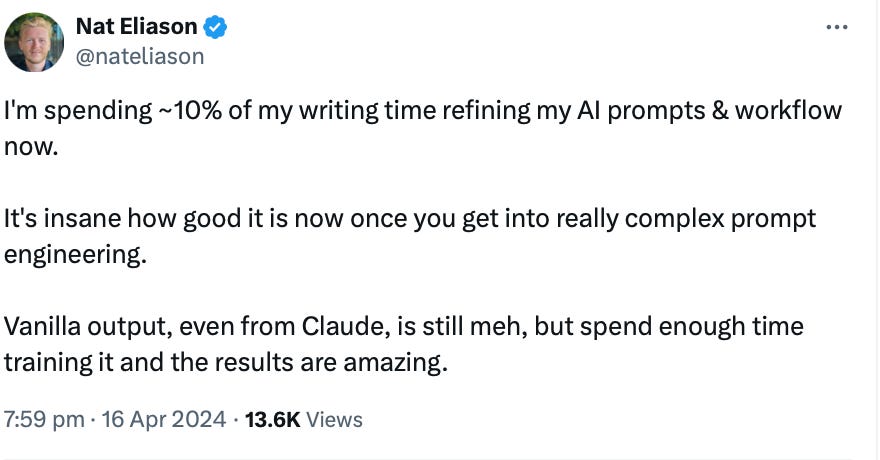
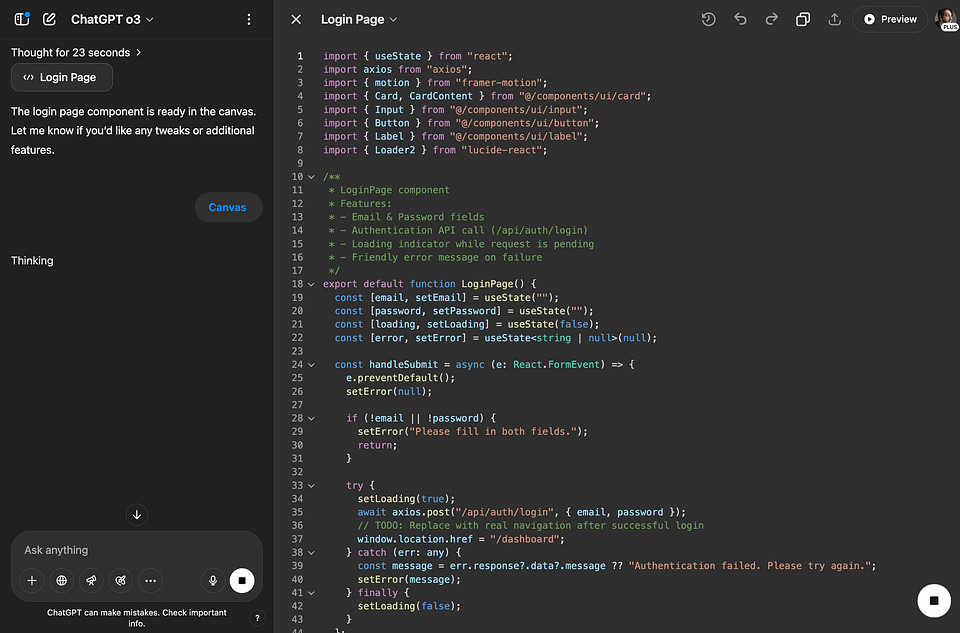
If you work a lot with ChatGPT, Claude, Gemini, or Grok, you are technically already a prompt engineer. Well, apart from the fact that you don't make money from it and only use the data you get for your own benefit. However, let's clarify that prompt engineering is the intelligent use of prompts to make models better understand (and produce) the desired result.
In a more global sense, this work is about making communication between humans and AI better. And that sounds pretty meaningful.
From a practical point of view, a prompt engineer dives deep into conversations with different models, creating quality prompts and analyzing how the AI generates its responses. Sometimes, the professional does this by chatting with chatbots like a regular user, and in other cases, they study how the models work at the code level.
If you're already raring to go, you might want to jump right into our prompt engineering guide:
Sharing is caring! Refer someone who started a learning Journey in AI!
But What About Money?
Let's not deny it—things are pretty good as far as money goes.
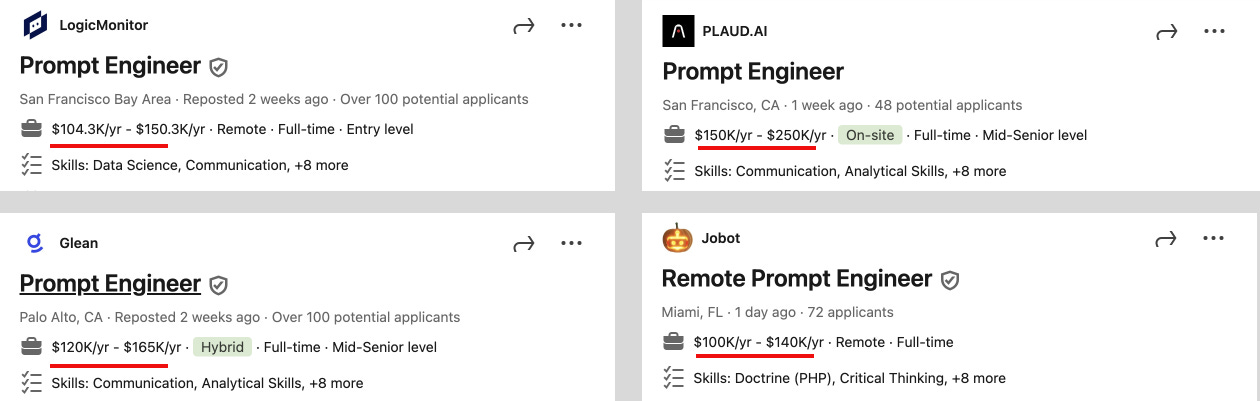
But, as I said, this is a new profession, so the skill requirements and list of tasks vary greatly depending on the employer. In some cases, companies pay at the level of an average coder, and in some cases, they offer really impressive compensation even for those who don't have too much experience.

Here's an example of one of the prompt engineer jobs Anthropic offered last year.
According to Glassdoor, the estimated total pay for a prompt engineer is $182,262 per year, with an average salary of $133,426 per year. Of course, entry-level positions earn slightly less, but some highly skilled professionals earn significantly more. One Velents AI study says prompt engineers earn an average annual salary of $300,000, making them one of the highest-paying professions in the AI industry.
So, let's break down what it will take for us to become a part of this story.
How to Become Prompt Engineer (+ Tools & Sources)
First, we must understand what our potential employers will expect from us. Here, everything is not very obvious (but it's not that complicated either). Prompt engineers differ from more established professions in terms of skill requirements. Typically, they must combine technical knowledge with creativity.
Key Skills
Here are the key skills normally required for this role:
Technical Skills
- AI and Machine Learning Knowledge. It is crucial to have a comprehensive understanding of ML principles, NLP, and LLMs. This includes knowledge of model architectures, training processes, and generative AI technology.
It would be weird if this point weren't here, wouldn't it?
- Programming Proficiency. Prompt engineers should have a solid foundation in programming, particularly in languages like Python. Being familiar with AI frameworks such as TensorFlow or PyTorch is also beneficial.
- Data Analysis. The ability to analyze and interpret data and understand AI model outputs is important for refining prompts and improving model responses.
Soft & Creative Skills
- Creative thinking. Prompt engineers to think innovatively to develop cues that guide models toward desired outcomes.
- Linguistic sensitivity. A deep understanding of language, including syntax, semantics, and pragmatics, is critical to creating accurate prompts. This is the core of the work.
- Problem solving. This is a fairly general skill, but it's vital here. A prompt engineer must quickly troubleshoot problems through iterative testing.
Here are a few posts that will help with learning the above skills:
Getting Started with Prompt Engineering
Now to mastering. Here's how you can start your journey:
Understand the basics. First, you must familiarize yourself with concepts like natural language processing, machine learning, and large language models (LLMs). And I'm not just talking about understanding the definitions but also how these systems work.
Here are some useful resources for this task:
These are the basics for understanding the processes of prompt engineering.
Practice in Real-life Scenarios
The best way to improve your skills is to experiment with prompts. I recommend taking one complex task (e.g., writing a novella or analyzing a financial report) and seeing how different wording affects the outcome. Analyze the answers and look for the best approaches.
What you'll find useful in this process:
OpenAI Playground is a great place to start experimenting with prompts. It's easy to use and allows you to test prompts in real-time, making it ideal for beginners.
PromptLayer is a versatile tool for managing and optimizing your Prompts. It offers features such as cue version control and performance tracking, which can be useful when perfecting your skills.
PromptPerfect is an excellent option if you want to optimize your prompts automatically. It can help you speed up your work with different models.
Emergent Mind is a service designed for computer scientists. It allows users to search for articles, topics, authors, or questions and synthesizes relevant information from the arXiv database to provide concise answers.
Emergent Mind is currently in beta testing, but it can already save you tons of time while you study and work.
Take on Real Projects and Build a Portfolio
As with any skill, having a portfolio demonstrates your competence:
- Sample Prompts for Papers: keep examples of your best work, showing the evolution of the prompts and explaining why each iteration improved.
- Freelance projects: many companies need customized prompts for chatbots or AI for customer service. You can offer your services on Fiverr or Upwork.
- Prompt Engineering Challenges: Sites like PromptHero often publish prompt challenges. Competition can help you learn faster and introduce you to like-minded professionals.
It's probably worth pointing out the usefulness of some of the courses. Yes, you don't need a college degree to become a prompt engineer, but you will be more in demand if you get relevant certifications.
Apply for Prompt Engineer Positions
With a solid foundation and portfolio, you're ready to apply for positions. Look for positions at:
- AI and technology companies, such as OpenAI, Anthropic, Google, and many more, are often looking for Prompt Engineers. There are more such offers every month.
- Startups and consulting: Prompt engineers are needed not only by model developers but also by their clients. Many startups rely heavily on AI and need responsive development to optimize customer interactions.
Extra tip: gain experience with coding or scripting languages (e.g., Python, JavaScript). So, many companies require a basic understanding.
Final Thoughts
Lastly, I will allow myself to give some general additional advice.
- Be curious: The field of AI is constantly evolving. Keep updated with the latest developments and be open to learning new methods.
And we will, of course, try to help you with that. Read our digests and posts!
- Join communities: Connect with other engineers on platforms like Reddit or GitHub. Sharing your experiences can be incredibly valuable, and it's one of the things that makes the coding community so strong.
- Read as much as you can: Explore resources like “learnprompting.org” for comprehensive guides to prompt design techniques.
And in the end, remember that it takes time, patience, and hard work to become good at what you do. Good luck!
Share this edition with your friends!
This article was first published in the Creators AI newsletter. View the original edition.